


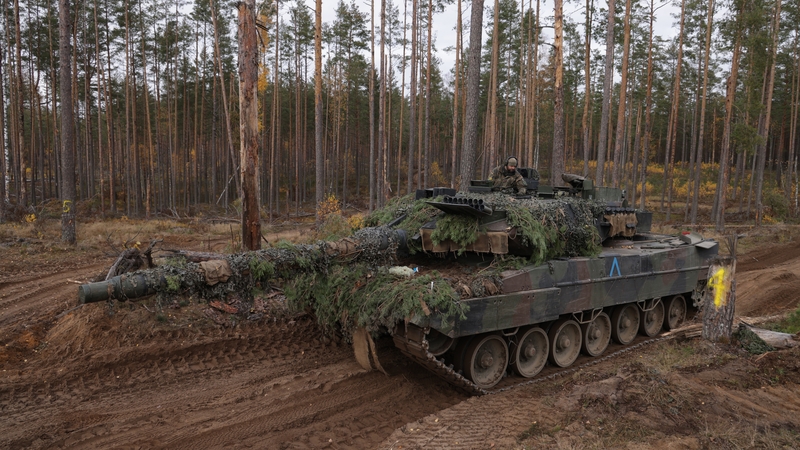
Germany is ready to authorise Poland to send German-made Leopard tanks to Ukraine to help Kyiv fight the Russian invasion if Warsaw makes such a request, Foreign Minister Annalena Baerbock has said.
"If we are asked the question, then we will not stand in the way," Ms Baerbock told LCI television after a Franco-German summit meeting in Paris.
"We know how important these tanks are and this is why we are discussing this now with our partners. We need to make sure people's lives are saved and Ukraine's territory liberated."
Ms Baerbock, who represents the Greens in Social Democrat Chancellor Olaf Scholz's ruling coalition, said that Poland had yet to make a formal request.
Her comments come as Berlin resists pressure from Kyiv to send some of its own stocks of the Leopard tanks to Ukraine.
Poland has announced it is ready to deliver 14 Leopard tanks to Kyiv but Prime Minister Mateusz Morawiecki said he was waiting for "a clear statement" from Berlin whether countries that have the Leopards can transfer them to Ukraine.
He also described Germany's refusal to send its own tanks to Ukraine as "unacceptable".
"Innocent people are dying every day," told the PAP agency.
In a joint statement yesterday, the foreign ministers of the three Baltic states urged Germany "to provide Leopard tanks to Ukraine now".
Ukrainian President Volodymyr Zelensky said Friday there was "no alternative" but for the West to give Ukraine heavy tanks.
Reports earlier in the week indicated Germany would agree to do so only if the US provided its tanks as well.
Washington has said providing its Abrams tanks to Ukraine is not feasible, citing difficulties in training and maintenance.
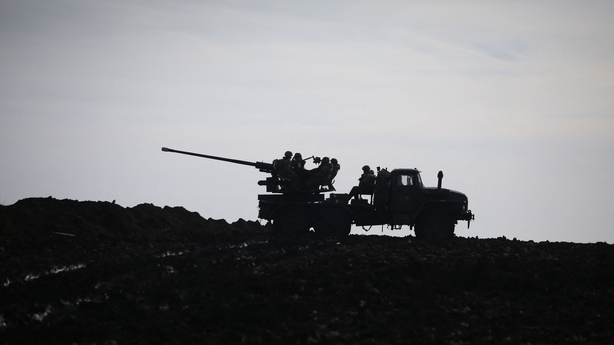
Russia's invasion of Ukraine in February last year raised concerns in the small Baltic states - all NATO members that restored their independence after decades of Soviet rule in 1991 - that they could also come under an attack from Russian forces.
In recent days Russia has increased shelling of Ukraine's eastern regions over outside the main front line in Donbas, with Russia's defence ministry saying its offensive in the Zaporizhzhia region had put its army's units in more advantageous positions.
Russia's defence ministry said a recent offensive had put its army's units in more advantageous positions along the Zaporizhzhia front line, a claim Ukrainian military officials called an exaggeration.
Reuters could not independently verify the battlefield reports.
Since an aggressive Ukrainian counteroffensive in late August, fighting has concentrated in Donbas, which includes most of the Luhansk and Donetsk regions that are partly controlled by Russia and which Moscow claims to have annexed.
After invading its neighbour on 24 February, Russia has attacked other parts of Ukraine's east but failed to capture them.
The intensified shelling comes as President Volodymyr Zelensky and other Ukrainian officials have said Russia would likely attempt a new offensive in the coming months.
Russian's attacks seek to overload Ukraine's defences and deter Kyiv from retaking territory, officials and analysts say.
"Attempting to study our defence, the enemy has activated artillery fire," Oleksandr Starukh, governor of the Zaporizhzhia region of southeastern Ukraine, said on the Telegram messaging app.
Russia fired on the region 166 times through the day, he said, with 113 attacks aimed at populated areas, killing one civilian. Russia says it does not target civilians.
Countering Moscow's claim of recent advances, Yevhen Yerin, a military spokesperson in Zaporizhzhia, told the Ukrainian public broadcaster Suspilne, "At the moment, they have not captured anything. All their attempts have been repulsed and the enemy has suffered losses."
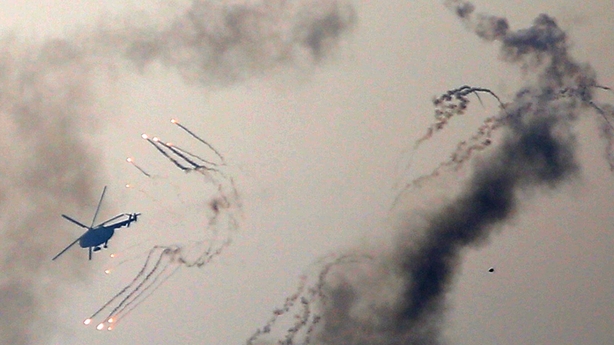
The Ukrainian military's General Staff said Russia continues its offensive in Zaporizhzhia, increasingly using aviation. It said 25 settlements in the region were affected by Russian artillery fire on Saturday.
Russian forces launched 115 strikes in the Sumy region that borders Russia in Ukraine's northeast, regional Governor Dmytro Zhyvytsky said on Telegram.
A 17-year-old was wounded and a number of houses and infrastructure buildings were destroyed, Zhyvytsky said.
Oleh Zhdanov, a military analyst in Kyiv, said the increased attacks in Sumy were a "test" by Russia.
"This is not their first attempt," Mr Zhdanov said in a social media video, adding that the attacks were repelled.
Russia pushes towards two towns in Zaporizhzhia region
Moscow's forces are pushing towards two towns in Ukraine's Zaporizhzhia region, where fighting intensified this week after several months of a stagnant front, Russian state media reported.
Russian-installed official in the region Vladimir Rogov said offensive actions were concentrated around two towns: Orikhiv, around 50 kilometres south of Ukrainian-controlled regional capital Zaporizhzhia, and Hulyaipole, further east.
"The front is mobile, especially in two directions: Orikhiv and Hulyaipole," Mr Rogov was quoted as saying by the Ria Novosti news agency.
He said there was active fighting in those areas, according to the agency.
"The initiative is in our hands."
In its daily report on Sunday, the Ukrainian army said "more than 15 settlements were affected by artillery fire" in Zaporizhzhia.
Earlier this week, Mr Rogov announced a "local offensive" around Orikhiv and said the Russian army had taken control of the village of Lobkove, near the Dnipro river.
He also said this week that fighting has "sharply increased" in the southern region.
Yesterday, the Russian army said its troops held "offensive actions" in the Zaporizhzhia region and claimed to have "taken more advantageous lines and positions."
The front in southern Ukraine has been considerably quieter recently than in the east, with Moscow withdrawing from the major city of Kherson in November.
Russia claims to have annexed the Zaporizhzhia region along with three other Ukrainian regions, but does not control it in its entirety.
While Moscow controls large swathes of the southern part of the region, its main city Zaporizhzhia and northern part did not fall to Russian forces.
Russia has vowed to push Ukrainian forces out of them.
