


By David McCullagh, Justin McCarthy and Fiachra Ó Cionnaith
Gerry Adams told Irish government officials he would not have stopped the Canary Wharf bombing if he had known about it in advance "because of his republicanism."
According to a record of the Sinn Féin leader's secret meetings with Irish Government officials in the days after the explosion, Mr Adams said he would have had "serious dilemmas" if he had known an attack was being planned.
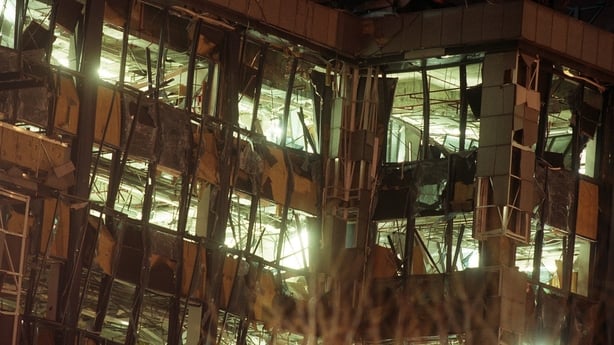
The Canary Wharf bomb which exploded in the London Docklands in February 1996 killed two people and injured more than a hundred others. It also shattered the IRA’s seventeen-month ceasefire.
Adams held confidential talks with Irish government officials a week after the bombing and told them that he did not know in advance about plans for the attack.
A record of the meeting released by the National Archives states: "Mr Adams said that he was glad he did not know in advance about the bomb, because it would have raised serious dilemmas in terms of the moral imperative to prevent or report it."
"He added that he would have been forced to override this: he would not have been able to tell people in advance because of his republicanism."
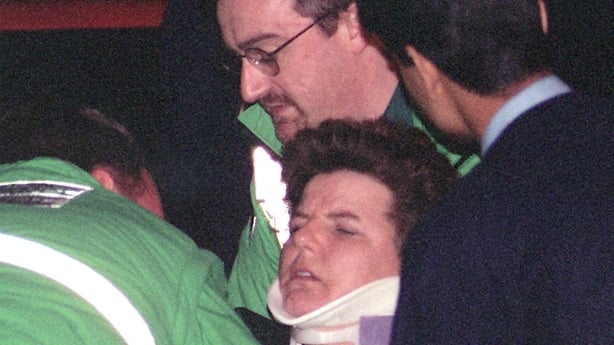
The bomb, placed in lorry packed with Libyan supplied Semtex exploded on the 9 February 1996, causing death, injury and £800-million worth of damage.
It was detonated after the IRA became frustrated at the lack of progress in the peace process, and the continued exclusion of Sinn Féin from multi-party talks.
In a stark warning to officials, which he gave them "only on the basis that it would be kept strictly confidential" Gerry Adams indicated that he had a decision to make about his personal future in the aftermath of the bomb.
"If it was not possible to put things together again, he would have a hard decision to make if he was to avoid becoming useless to the peace process."
"He emphasised that he wanted to repackage things. If he was not able to do so, he would not rule out going back to the IRA on the basis of tactics or strategy."
"This was a very emotional thing. He would not want to abandon people and if he became "like you", as officials, his community would distrust all he stood for" according to the government record of the meeting.
Adams told officials that he did not want his words appearing in the papers "with rubbish about bodies in the streets."
'An awful kick in the balls'
In a further meeting with government officials three days later, the Sinn Féin leader said everyone needed to recognise "that we were in the end game of all of this".
The process, he said, had received "an awful kick in the balls."
Adams told officials: "We needed the British government to sign up in a way that showed they mean business."
The Sinn Féin leader said nobody knew what would happen next. He "didn’t know if there were other bombing teams in Britain or how many" a report of the meeting stated.
He told officials that Sinn Féin wanted space.
"Adams expressed concern that bombs could be used to embarrass Sinn Féin or those who spoke to them. He commented that the great weakness of the military approach was that that it put the future of the struggle in the hands of 'whoever was out there.’"
He said there were different views among republicans about the bombing of Canary Wharf.
"Some people thought it was the best thing ever. Some felt it was justified by the experience of the previous 18 months. However, there were others who saw beyond this, and the debate was continuing."
Outlining the reasons for the bombing Adams said that people had been "stretched" when Sinn Féin was not given any indication that it would be admitted to all-party talks.
He said there had been "unrest" when he returned from a visit to the United States. "There was all that tension about, but he had not paid any attention to it," officials reported.
"Mr Adams commented that he had adopted the approach of not issuing warnings as this had in the past been interpreted as a threat and been used to wrong-foot Sinn Fein."
"So all the time the Sinn Fein leadership had to deal with the tensions and the pressures arising from these types of situations.
The Sinn Féin leader expressed concern that the bombing was likely to weaken his case for a visa to go to the US on a fundraising venture, and that Sinn Féin had, therefore, "all kinds of tactical reasons for not wanting further violence."
Referring to his influence on the IRA, Adams told officials that this depended on what help he was given by the two governments.
He recalled a comment that Northern Secretary Patrick Mayhew had made some time ago which was that Gerry Adams "was in a bad way and needed help."
Appealing for the assistance of the Irish government, Mr Adams recalled a joke he once shared with the Taoiseach John Bruton that the only difference between him and Mr Adams, so far as the British were concerned, was that Mr Adams was the one with the beard."
"The British approach everything from an empire mentality" he said.
