


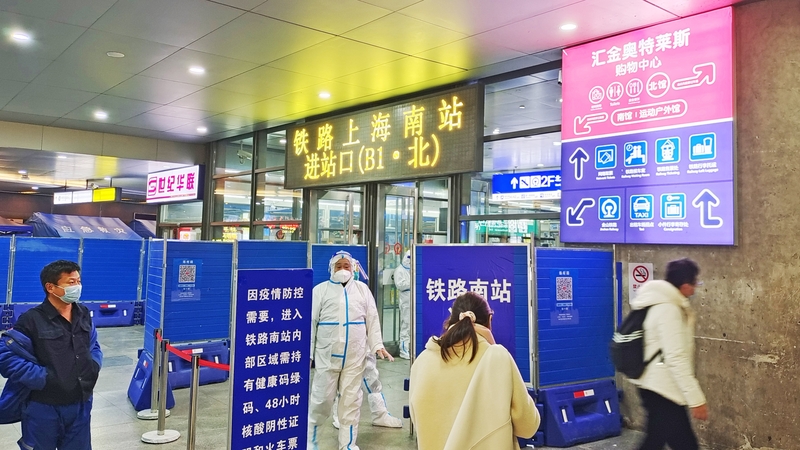
The European Union's health agency has said it believed the introduction of mandatory Covid screenings of travellers from China was "unjustified", despite a surge in cases in China.
The United States and several other countries have introduced mandatory Covid tests on travellers arriving from China.
But such measures are not necessary for the EU as a whole, the European Centre for Disease Prevention and Control (ECDC) said in a statement.
Hospitals across China have been overwhelmed by an explosion of infections following Beijing's decision to lift strict rules that had largely kept the virus at bay but tanked the economy and sparked widespread protests.
China said this week it would end mandatory quarantine on arrival, prompting many Chinese to make plans to travel abroad.
However, the ECDC said it did not currently believe the surge in cases in China would impact the epidemiological situation in the EU "given higher population immunity in the EU/EEA, as well as the prior emergence and subsequent replacement of variants currently circulating in China".
Consequently, the agency considered "screenings and travel measures on travellers from China unjustified".
Potential imported infections were "rather low" compared to the numbers already circulating on a daily basis, which healthcare systems "are currently able to manage", the agency added.
The European Commission convened a meeting of the EU Health Security Committee today to discuss possible measures.
"It is crucial that the EU acts united and in coordination regarding any possible public health measures in view of the situation in China," a commission spokesperson told AFP.
The commission would "continue to facilitate discussions between member states", the spokesperson added.
Italy has urged the rest of the European Union to follow its lead and test travellers from China for Covid-19.
China in rush to bolster Covid defences
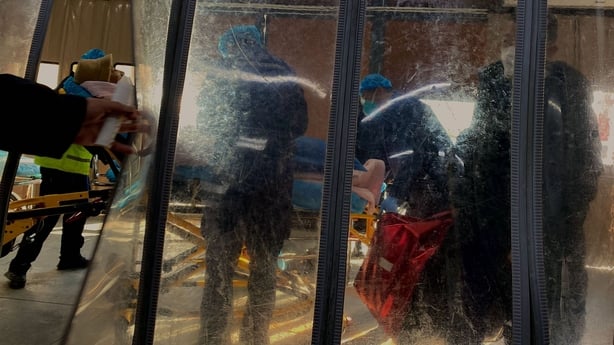
China's sprawling and thinly resourced countryside is racing to beef up medical facilities before hundreds of millions of factory workers return to their families for the Lunar New Year holiday next month from cities where Covid-19 is surging.
Having imposed the world's strictest Covid regime of lockdowns and relentless testing for three years, China reversed course this month towards living with the virus, leaving its fragile health system overwhelmed.
The lifting of restrictions, following widespread protests against them, means Covid is spreading largely unchecked and likely infecting millions of people a day, according to some international health experts.
China officially reported one new Covid death for Wednesday, down from three on Tuesday, but foreign governments and many epidemiologists believe the numbers are much higher, and that more than 1 million people may die next year.
China has said it only counts deaths of Covid patients caused by pneumonia and respiratory failure as Covid-related.
In the southwestern city of Chengdu, funeral homes were busy after dark yesterday, with a steady stream of cars entering one, which was heavily guarded by security personnel.
One van driver working for the funeral home said the past few weeks have been particularly busy and that "huge numbers of people" were inside.
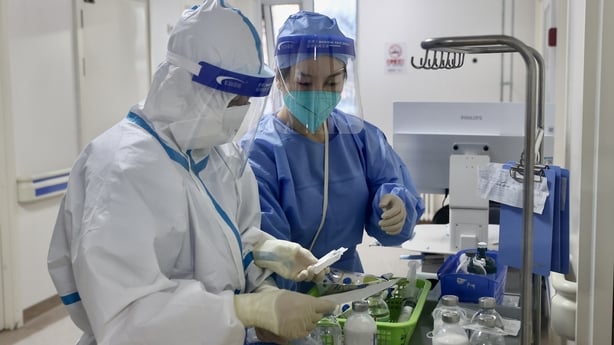
Hospitals and funeral homes in major cities have been under intense pressure, but the main concern over the health system's ability to cope with surging infections is focused on the countryside.
Each year, hundreds of millions of people, mostly working in factories near the southern and eastern coasts, return to the countryside for the Lunar New Year, due to start on 22 January.
The holiday travel rush is expected to last for 40 days, from 7 January to 15 February, authorities said.
The state-run China Daily reported today that rural regions across China were beefing up their medical treatment capacities.
The world's second-largest economy is expected to suffer a slowdown in factory output and domestic consumption in the near term as workers and shoppers fall ill.
The contact-intensive services sector, which accounts for roughly half of China's economic output, was hammered by the country's anti-virus curbs, which shut down many restaurants and restricted travel. As China reopens, many businesses in the services industry have no money to expand.
The reopening also raises the prospect of Chinese tourists returning to shopping streets around the world, once a market worth $255 billion a year globally. But some countries have been taken aback by the scale of the outbreak and are sceptical of Beijing's Covid statistics.
China's official death toll of 5,246 since the pandemic began compares with more than one million deaths in the United States. Chinese-ruled Hong Kong has reported more than 11,000 deaths.
The United States, India, Italy, Japan and Taiwan said they would require Covid tests for travellers from China. The UK was considering a similar move, the Telegraph reported.
The United States issued a travel alert yesterday advising Americans to "reconsider travel to China, Hong Kong, and Macau" and citing "reports that the healthcare system is overwhelmed" along with the risk of new variants.
The main airport in the Italian city of Milan started testing passengers arriving from Beijing and Shanghai on 26 December and found that almost half of them were infected with Covid.
China has rejected criticism of its statistics as groundless and politically motivated attempts to smear its policies. It has also played down the risk of new variants, saying it expects mutations to be more virulent but less severe.
Omicron was still the dominant strain in China, Chinese health officials said this week.
Australia, Germany, Thailand and others said they would not impose additional restrictions on travel for now.
For its part, China, whose borders have been all but shut to foreigners since early 2020, will stop requiring inbound travellers to go into quarantine from 8 January.
