Stormont's MLAs will be the equivalent of €870 worse off each month from January.
It may only be the 25 DUP representatives who are blocking power-sharing but all 90 MLAs are getting their pay cut.
Northern Secretary Chris Heaton-Harris has said they cannot expect full-time wages for doing a part-time job.
But if the Assembly isn’t there to legislate and scrutinise and the Executive isn’t driving policy - who is?
The answer is that nine unelected and unaccountable officials are now taking any critical decisions.
They’re the permanent secretaries, or top civil servants, in the nine Stormont departments.
It flies in the face of the accepted political maxim that civil servants advise and ministers decide.
And there are many important issues to tackle, not least major problems in Northern Ireland’s health service and an education system facing substantial budget cuts.
But the civil servants are in a tricky spot.
They're not supposed to take decisions that would normally fall to a minister unless they’re in the public interest.
That’s a subjective judgement and it may see some of them end up in court.
History repeating
Ann Watt is director of the policy think tank Pivotal. She says relying on civil servants is fraught with difficulty.
"It’s really an inadequate form of government. It’s really poor in terms of providing good government for Northern Ireland and it also lacks the political accountability that you would have with ministers in place," she says.
"The buck really stops with them ... the problem is that civil servants aren’t normally given that sort of responsibility, normally those decisions are taken by ministers and we’ve got an absence of political accountability for that decision-making and an absence of scrutiny and transparency as well."
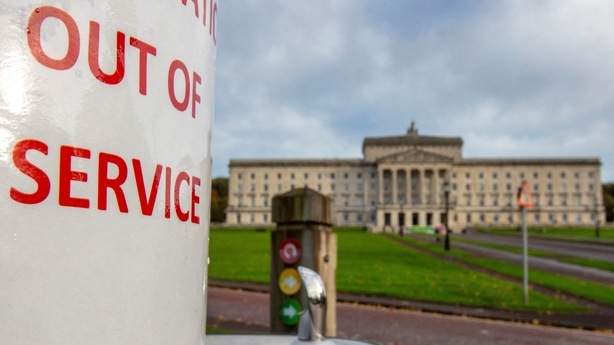
This has happened before.
In 2017, Stormont collapsed in a scandal over a green energy scheme. It was three years before it came back.
During that time, a permanent secretary approved planning permission for a controversial waste incinerator near Belfast.
The £240m project had been vociferously opposed.
Campaigners went to court and had planning permission overturned. The judgment was seismic. It said civil servants could not take decisions meant for ministers. It effectively meant things ground to a halt.
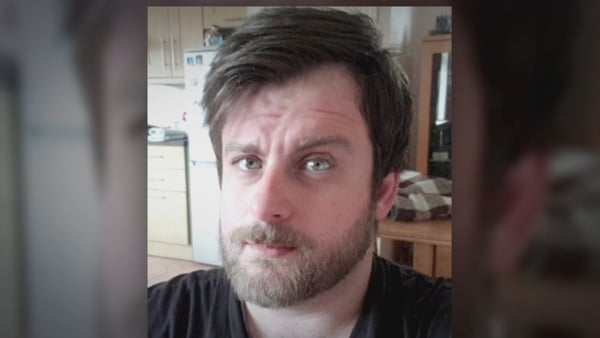
The case entered legal parlance - the Buick Judgment - named after the man who took it, Colin Buick.
"The whole point of having a democracy and ministers in place of a local nature is for the benefit of the community, so that we can put our arguments," he says.
"The civil servants will hide behind a wall of secrecy and will not be accountable to anybody."
'Keeping the lights on'
David Sterling is a former head of Northern Ireland’s civil service. He presided over the last collapse of Stormont and saw how public services suffered in the vacuum that followed.
He said in the absence of political direction from ministers, civil servants had to "make do and keep the lights on".
"That led to what I call decay and stagnation in our public services because the big decisions needed couldn’t be taken.
"Things like how best to configure the health service, how best to develop our education services ... we were really left in a very limited position in terms of what we could do."
Northern Secretary Chris Heaton-Harris has passed legislation and published guidance for civil servants.
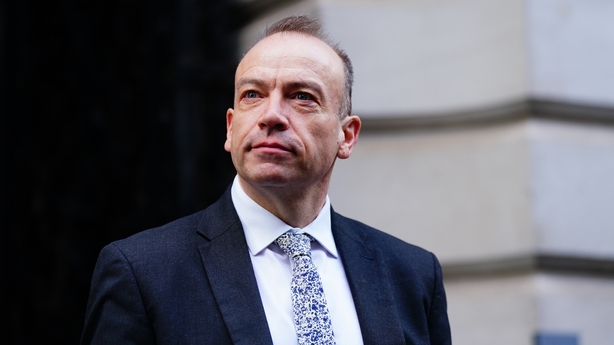
It says they can take decisions in the public interest, but they must stay within what are very tight budgets.
That, says David Sterling, leaves the permanent secretaries in the difficult position of having to provide public services while controlling public expenditure.
'A complete minefield'
"The only way to save money is by probably stopping some services and that is a real dilemma for civil servants, who aren’t democratically elected, who currently aren’t accountable to any assembly committees and who have, in a sense, been given an impossible position.
"One of my former colleagues has called this an affront to democracy and I think he's right on that."
Those senior civil servants probably have a little more legal cover as a result of the new law and guidance, but Mr Sterling says they’ll still be reluctant to make the call on anything controversial.
"I think civil servants will face a dilemma where they’re facing competing public interests. On the one hand, they’re being asked to control and manage public expenditure and on the other, they’re being asked to deliver public services.
"That means they’re going to have to make choices and any time you make a choice like that you always run the risk that someone will find grounds for a legal challenge.
"So I think it's a complete minefield."