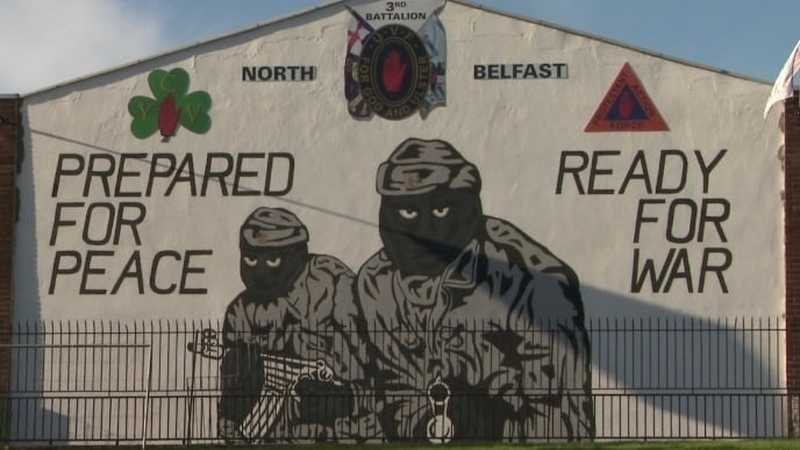

A monitoring body which advises on paramilitary activity in Northern Ireland says armed groups are still part of day-to-day life for people living in communities where they hold sway.
The Independent Reporting Commission was set up by the Irish and British Governments and the Stormont parties to assess the level of violence linked to the security situation.
It says the absence of a proper plan to dismantle paramilitary structures is a major concern.
In its fifth annual report, it said PSNI data showed a reduction in violent incidents, including shooting and bombing incidents and so-called paramilitary attacks.
The past 12 months saw 20 shootings and five bombings. Twelve people were shot in paramilitary style shootings - seven by loyalists and five by republicans. Another 33 people were assaulted by such groups, the bulk of them in loyalist communities.
The report authors also noted the first reduction in the threat assessment in Northern Ireland in 12 years, which it said was another step forward – though the level remains "substantial".
Data from the Housing Executive showed that 142 families had been forced from their homes due to paramilitary intimidation.
The report authors said "political turbulence" around the Northern Ireland Protocol had led to heightened speculation about the possibility of renewed paramilitary activity.
They said for many people, paramilitarism now had no impact on their daily lives, but for those who lived in communities where groups were strong, they were still a part of daily life.
"In reality, paramilitary groups remain embedded in these communities and are part of the fabric of daily life there. Part of the complexity of the situation is that while at one level what is happening is coercive control, that is not the complete picture," the report said.
"It is also the case that in some areas their presence and involvement are reflective of the wishes of cohorts of the community, with the groups involved being seen as in effect part of the so-called authority structure of that community."
The report also said that the absence of a functioning Stormont Executive had hindered work to try and address the influence of paramilitaries in communities.
In conclusion, it said the 25th anniversary of the Good Friday Agreement next April should provide a focus for the two governments and local parties to renew efforts to encourage paramilitary groups to completely disband.