


Veteran Israeli hawk Benjamin Netanyahu appears to be on the cusp of returning to power, with initial election results showing his alliance with the extreme right taking a narrow lead.
With around 87% of the vote counted, according to the Central Elections Committee, initial results put former leader Netanyahu's right-wing bloc ahead after the country's fifth election in four years.
Addressing supporters who chanted "King of Israel", Mr Netanyahu, Israel's longest-serving leader, said his Likud party had received "a huge vote of confidence".
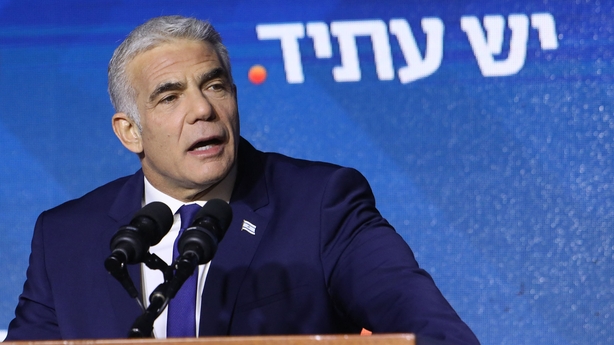
Caretaker Prime Minister Yair Lapid - the architect of the motley coalition which ousted Mr Netanyahu last year - cautioned that "nothing is decided".
"(We) will wait patiently... for the final results," he told crowds backing his centrist Yesh Atid party.
While Israelis are split broadly between those who support or oppose Mr Netanyahu, the former premier has been buoyed by votes for his extreme-right allies.
The Religious Zionism bloc of Itamar Ben-Gvir has made major gains and was emerging as the third-largest party, behind Yesh Atid.
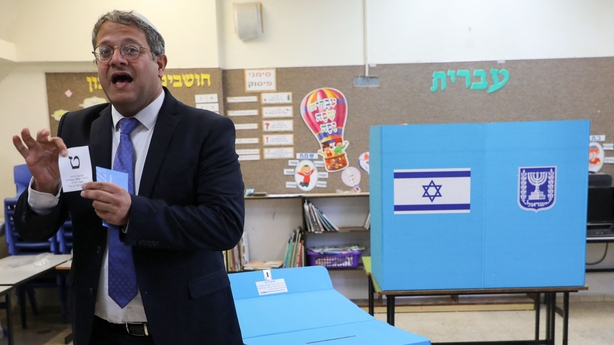
more force against Palestinians
The controversial Ben-Gvir heralded the party's showing as a "great achievement", which is expected to hand the right wing a majority in the 120-seat parliament.
Despite Israel's election fatigue, voters came out in force and pushed turnout to its highest rate since 2015, topping 71%, according to official figures.
The margins appear wafer-thin, however, with two smaller parties opposed to Mr Netanyahu teetering on the edge of the threshold required to win seats in parliament.
Left-wing Meretz was "less than 0.1% below the threshold," party leader Zehava Galon said on, insisting "it was not time to wrap things up yet".
The votes of soldiers, diplomats, prisoners and other special groups would be counted over the night, with final results expected early on Thursday.
The US State Department meanwhile expressed veiled concern over the presence of forces such as Mr Ben-Gvir in a future coalition.
"We hope that all Israeli government officials will continue to share the values of an open, democratic society including tolerance and respect for all in civil society, particularly for minority groups," spokesman Ned Price said, without commenting directly on the election results.
The early signs were positive for Mr Netanyahu, who is on trial on corruption charges that he denies.
The official count put his Likud on track for a first-place finish, with 32 seats, ahead of Yesh Atid's 24.
Those figures, combined with current tallies for Religious Zionism and the two ultra-Orthodox Jewish parties backing Mr Netanyahu, could give the right-wing bloc 65 seats.
Whatever the final result, Mr Ben-Gvir was described as "the big winner of this election" by politics lecturer Julia Elad-Strenger from Israel's Bar-Ilan University.
"He took from the haredim (ultra-Orthodox), from the Likud, of course new young voters and people who had no one to vote for," Ms Elad-Strenger said.
The tireless campaigning of Mr Ben-Gvir could see his alliance more than double its current presence in parliament, picking up 14 seats.
The 46-year-old, who has his eye on the public security portfolio, wants Israel to use more force against Palestinians.
Arab-Israeli politician Aida Touma-Suleiman said Mr Netanyahu might be on track to form a government "with fascists by his side".
The vote was held against a backdrop of soaring violence across Israeli-annexed east Jerusalem and the occupied West Bank.
At least 29 Palestinians and three Israelis were killed in the territories in October.
While many candidates cited security as a concern, none pledged to revive moribund peace talks with the Palestinians.
Palestinian prime minister Mohammad Shtayyeh said the projected results highlighted "growing extremism and racism in Israeli society".
The coalition led by Mr Lapid was formed by bringing an Arab party into the fold, after Mansour Abbas pulled his Raam party from a united slate with other Arab-led parties.
But Raam's pioneering support for a coalition was not viewed positively across Arab society, which makes up around 20% of Israel's population.
A rupture among the community's political leaders resulted in three Arab-led parties running in Tuesday's polls.
One of them, according to the initial results, failed to pass the electoral threshold.
