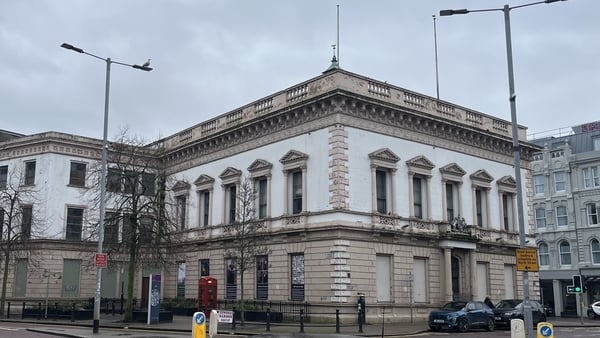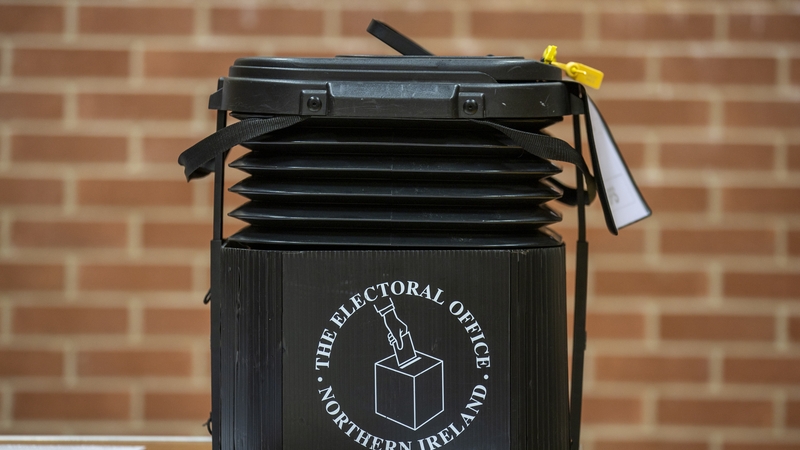

Polling stations across Northern Ireland have closed following a day of voting in the Stormont Assembly elections.
A total of 239 candidates contested the election in 18 constituencies.
The vote toke place amid speculation of a potentially seismic result.
Figures from Northern Ireland's Electoral Office showed a turnout figure of around 55%.
The electoral office said it is an indicative figure only and does not include returns from all of the 600-plus polling stations in Northern Ireland.
The final turnout figure will be provided during the counts tomorrow.
The turnout is down from the 2017 figure of 64.8%.
However, a considerable number of people joined the electoral register recently to avail of a £100 Covid voucher to support High Street retailers.
Stormont Assembly election indicative constituency polling turn outs at 9pm, average 55% @rtenews #NI22 #AE22 pic.twitter.com/DjlyuSF729
— Vincent Kearney (@vincekearney) May 5, 2022
Northern Ireland uses the single transferable vote proportional representation electoral system.
Counting will start at three centres from 8am tomorrow morning.
More than 1,000 staff will be involved in the counting in Belfast, Jordanstown and Magherafelt.
The first results are expected early tomorrow afternoon.
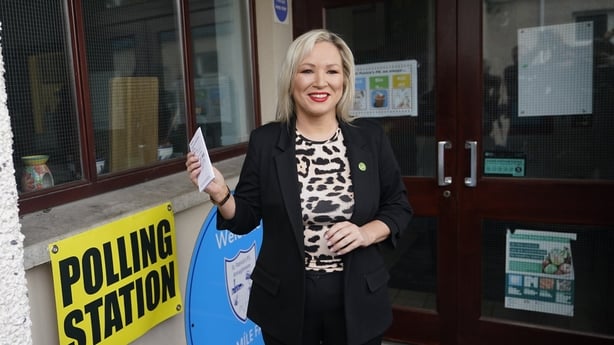
Sinn Féin's deputy leader Michelle O'Neill filled out her ballot paper in St Patrick's primary school in her home village of Clonoe, Co Tyrone, this morning accompanied by party colleague Linda Dillon.
She posed for photographs with some voters before leaving.
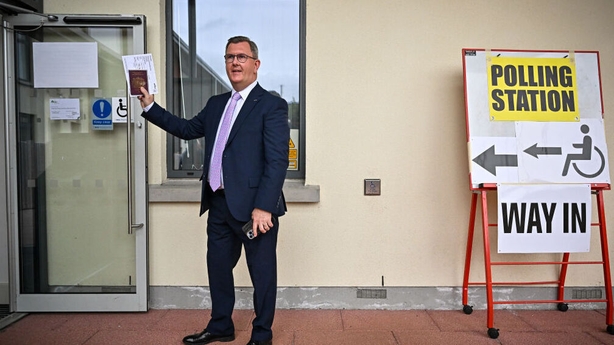
Almost 40km away, DUP leader Jeffrey Donaldson cast his vote at Dromore Central primary school in Co Down.
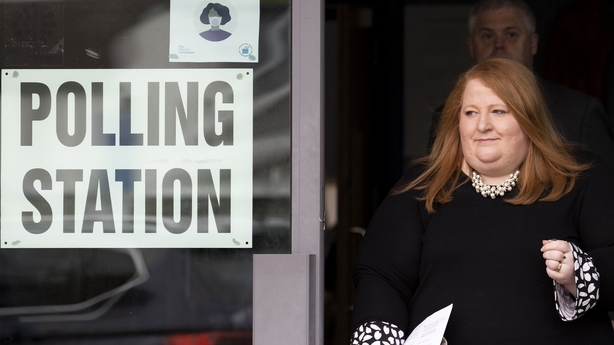
Naomi Long, leader of the cross-community Alliance Party, cast her ballot accompanied by husband Michael at St Colmcille's parochial house in the east Belfast constituency where she was once the MP.
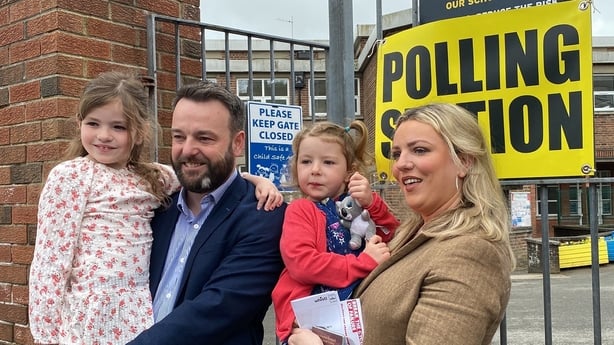
Colum Eastwood, leader of the nationalist SDLP, voted at the Model primary school in his home city of Derry accompanied by his wife Rachael and children.
Just over 600 polling stations opened at 7am and closed at 10pm.
More than 1.3 million people are on the electoral register in Northern Ireland.
A total of 239 candidates, of whom 87 are women, a record figure and 17 more than in the last Assembly election in 2017.
The MLA hopefuls are battling it out for 90 seats, five in each of the 18 constituencies. Sinn Féin is fielding the highest number of candidates with 34, followed by the DUP on 30.
The Ulster Unionists have 27, the Alliance Party 24 and the SDLP 22.
The Traditional Unionist Voice has 19 candidates.
The Green Party has 18 candidates on ballot papers but one of them, in the Mid Ulster constituency, was suspended last week and is no longer being endorsed by the party.
People Before Profit and Aontú are each fielding 12 candidates.