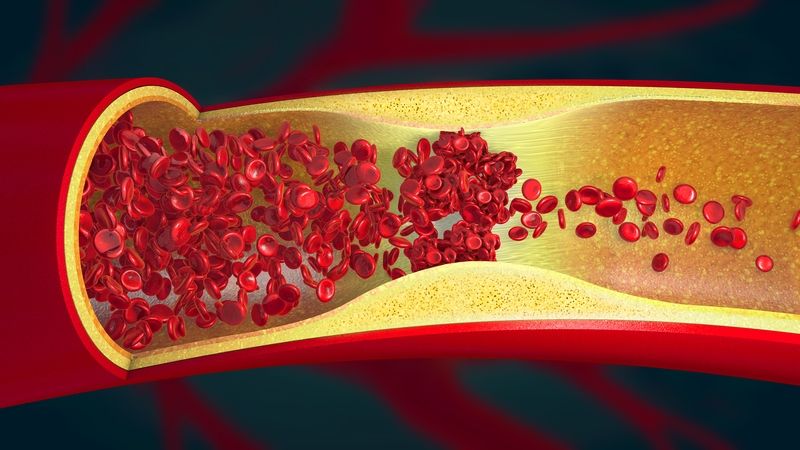

An Irish-led study has identified how and why some Covid-19 patients can develop life-threatening blood clots.
The team said it could lead to targeted therapies that prevent it from happening.
The work was led by researchers from the RCSI University of Medicine and Health Sciences.
Previous research has found that blood clotting is a significant cause of death in Covid-19 patients.
To understand why that clotting happens, the team analysed blood samples taken from patients in the Beaumont Hospital intensive care unit in Dublin.
They found that the balance between a molecule that causes clotting, called von Willebrand Factor (VWF), and its regulator, called ADAMTS13, is severely disrupted in patients with severe Covid-19.
The researchers say more study is needed to determine whether targets aimed at correcting the levels of ADAMTS13 and VWF may be a successful therapeutic intervention.
Research lecturer within the Irish Centre for Vascular Biology at RCSI Dr Jamie O'Sullivan said: "Our research helps provide insights into the mechanisms that cause severe blood clots in patients with Covid-19, which is critical to developing more effective treatments.
"While more research is needed to determine whether targets aimed at correcting the levels of ADAMTS13 and VWF may be a successful therapeutic intervention, it is important that we continue to develop therapies for patients with Covid-19.
"Covid-19 vaccines will continue to be unavailable to many people throughout the world, and it is important that we provide effective treatments to them and to those with breakthrough infections."
The research is published in the Journal of Thrombosis and Haemostasis.