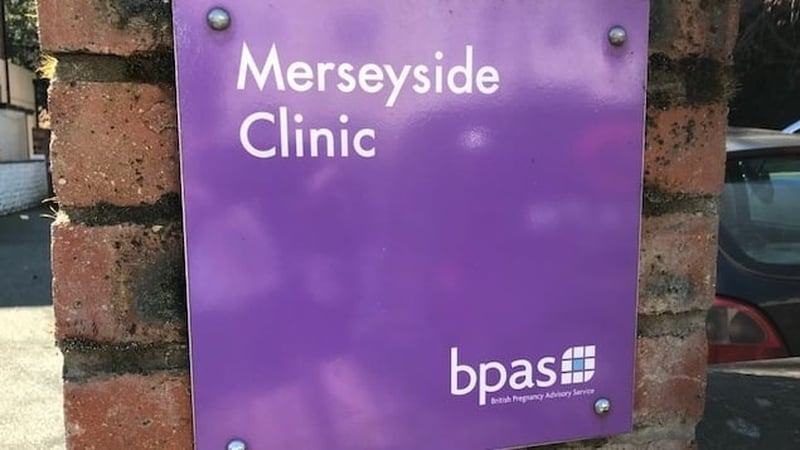

Ahead of the referendum on the Eighth Amendment, which takes place in Ireland on 25 May, Aisling Kenny travelled to Liverpool to visit a British Pregnancy Advisory Service abortion clinic and speak to people at the facility.
Hundreds of Irish women make the journey to the UK every year to avail of abortion services.
At the airport in Liverpool I spoke to taxi driver 'Dave', who told me he takes Irish women to the BPAS abortion clinic on a regular basis.
"To be honest with you most of them seem to be young girls ... and the ones that come over on their own seem to be a little bit scared. And they're telling their mums, their parents, whoever, that they are going shopping in Liverpool, so I find that a bit sad that they feel they have to hide what they're coming to Liverpool for.
"There's 250 taxi drivers who work that airport and we go at least once a week and some girls go home the same day, which I find sad," he said.
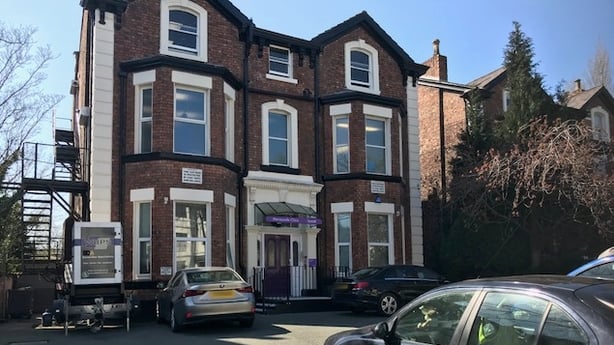
The clinic is a red brick, Victorian building nestled on a quiet street in Merseyside. Inside, the staff told me it is a busy morning.
Catherine Corbett, who is the client care manager, said: "We have quite a few Irish women who come. We open five days a week and we do have quite a few each day.
"I think it's really quiet hard to be honest, you know coming here for the reasons they are - whatever they are - that's hard enough, but also to add on the travel and the cost and time and possibly not being able to come over with a partner or a friend can be very lonely."
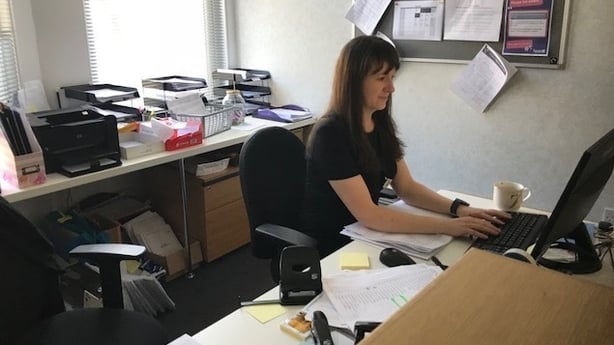
I asked Catherine if it is assumed that women who come to the clinic are going to have an abortion or if they are given options.
She said: "They are absolutely given options. They will have a chat with a client care coordinator first about their decision, anything they want to talk about and go through their options with them.
"There's no pressure. Everybody is reminded that at any time they can change their mind.
"We find some women come and they need to just be here to know that's not what they want and that's absolutely fine, that's all part of the process."
Catherine also said there were various tiers of expense depending on the treatment and the gestation, so at the moment for anyone who is approximately 12 weeks' pregnant they will be paying approximately €500.
"The human being that I see is that lady who sits in front of me and that's a lady who has human rights, she has rights to make an informed decision what's going to happen to her body basically."
Dr Rachel Foggin, the surgeon at the clinic, said she treats Irish women all the time.
"I'd say we have had more Irish ladies today than UK residents actually. Some days it's just one or two but generally eight or nine," she said.
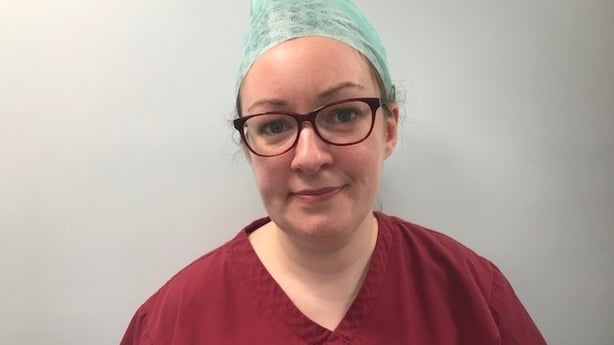
She said the main reasons women give for coming to the clinic include potential fatal foetal abnormalities, domestic abuse, and people who have children with special needs.
Outside the clinic, I met Elizabeth Parsons, a spokesperson for the Life Institute, and she told me why she does not agree with abortion.
"To be in a situation like that where you feel like there's no other option but to book a trip from Ireland to England for an abortion must be a very sad situation to be in," she said.
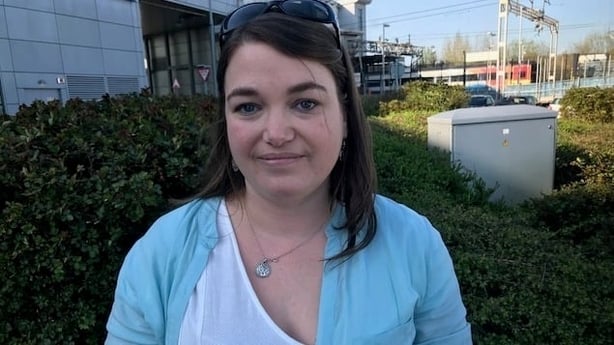
"Sadly, what a lot of the women tell us, not necessarily women from Ireland, but clients in general say they felt like they had no choice, and I wonder sometimes if the other alternatives are presented enough.
"I would wonder if as many women would want to come over if they felt like they had the proper help and support they needed already.
"The word foetus means little one or offspring. It's a Latin word, and unfortunately is used to dehumanise the baby inside the womb.
"From eight weeks it's got everything there that you would find in a newborn baby. Its brain has been working, its heart has been beating from three weeks in, it's exercising its muscles, it's moving around and it's got a regular sleeping pattern.
"Just because it's called a foetus doesn't mean it's not human and therefore worthy and deserving of the same rights as we have."
I asked Elizabeth what she thought of the argument that women should have the right to choose.
"But the right to choose what? Because we are talking about a living human being inside of the womb," she responded.
"We are very lucky, and we live in a free society for the world that we live in and there are many things that we can choose to do, but we are always restricted in choice and how our choice impacts on other people and how it protects ourselves as well.
"But ultimately that human being inside the womb should have equal rights and equal protection."
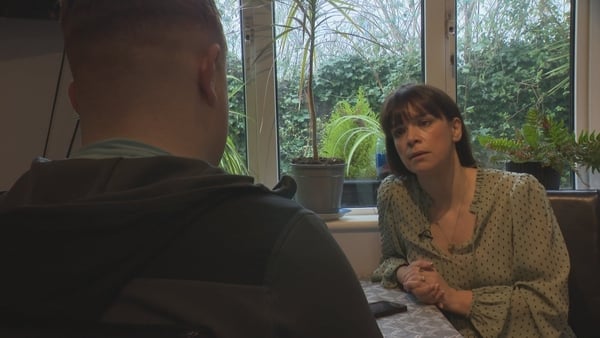
Most of the Irish women who were at the clinic said they did not want to talk to me. But one woman, who asked not to be identified, agreed to tell me about her experience.
She said: "It's exhausting and it's expensive to get over here, it just uses a lot of money that's just not available to everyone.
"I had to get, like, buses to the airport and then the plane and then from arriving here and then, the bus to here and all that and it was just ... it was ... it's horrible.
"It's just, it's so horrible, you're either sick or you're tired, you're exhausted and you just, you just want to go home and be in your own bed and you can't do that ... it's just not an option.
"I'm in college at the moment, I'm still finishing college ... I'm not financially ready at all. I'm not emotionally ready, just not ready for it at all, my life isn't there yet."
I asked the woman if her family or partner knew about her situation. She said: "Yeah I have a partner that knows and a parent that knows and that's it. Like, I wouldn't tell anybody else.
"I'd be too afraid to tell anybody else 'cos like a lot of people would change their opinion of you if they knew and it's just, that's kind of just the way it is like."
When I asked her how she's feeling she said: "Awful. Sick, tired, just want to go home, but I can't do that either.
"Guilty, honestly ... pretty guilty but ... I know it was the right decision for me and it's just, there's just so much stuff from that that I'm going to be stuck with.
"Like, I feel sad that this is a decision that I ever had to make. It was, it was nothing I ever intended to do.
"But like it happened ... I made the right decision for me even though it was, like it was a lesser evil kind of a thing."
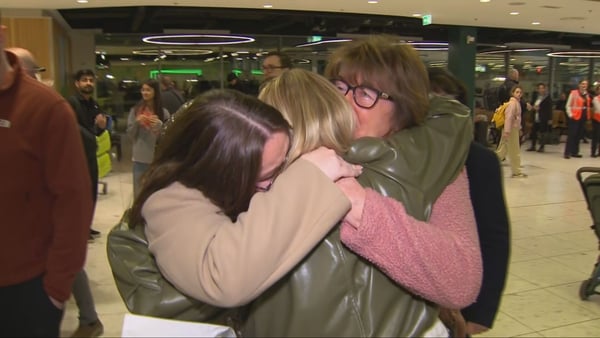
I left the clinic and went back to Liverpool Airport to catch my flight. After 13 hours, two flights, a taxi journey and two bus journeys I arrived back in Dublin Airport.
There are many Irish women who will embark on a similar journey again tomorrow.