


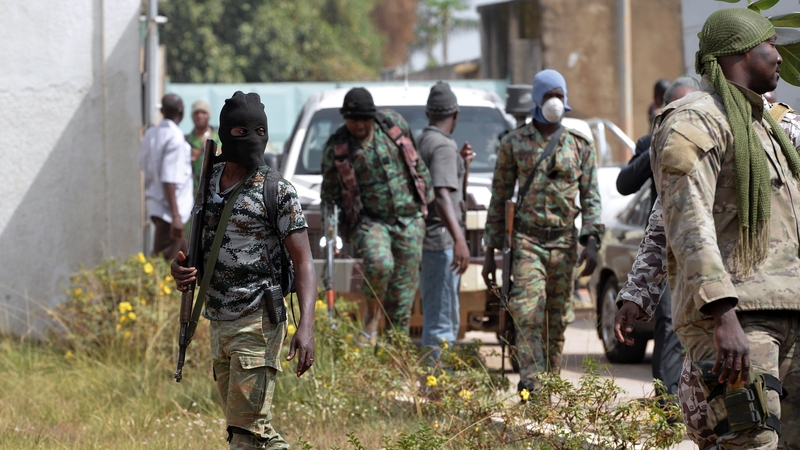
Ivory Coast President Alassane Ouattara said that the government has reached an agreement with disgruntled soldiers to end a revolt but the defence minister was trapped for two hours by soldiers in Bouake.
The uprising began early yesterday when the soldiers - mainly former rebel fighters - demanding wage increases and bonuses - seized Bouake, the second-largest city.
Within 48 hours, soldiers at military camps in cities and towns including the commercial capital, Abidjan, joined the mutiny.
Speaking to his government ministers and reporters, Mr Ouattara said he had agreed to take into account the soldiers grievances concerning bonus payments and living and working conditions.
"I would like to say that this manner of making demands is not appropriate. It tarnishes the image of our country after all our efforts to revive th economy," Mr Ouattara said before calling upon the soldiers to return to barracks.
A member of the uprising close to the negotiations, which took place in Bouake and were led by Defence Minister Alain-Richard Donwahi, said the mutineers were preparing to leave the streets.
"It's over," Sergeant Mamadou Kone said. "Some of our soldiers will remain in place to manage the security of shops and banks, but the majority of soldiers will return to barracks beginning tonight."
However, soldiers in Bouake opened fire on a local official's house this evening shortly after Mr Donwahi appeared to have brokered the deal.
Mr Donwahi was trapped inside by the shooting, a witness said.
Mr Donwahi was released late this evening after two hours of detention and has left the city, an AFP photographer said.
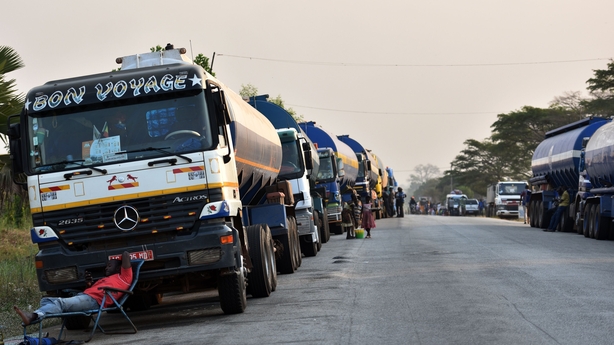
The revolt came two years after hundreds of soldiers barricaded roads in cities across Ivory Coast demanding back pay in a near identical uprising.
Then too the government agreed a deal that included amnesty from punishment and a financial settlement for the mutineers. The repeat of such a solution raises the risk they could be encouraged to do it again.
Ivory Coast - French-speaking West Africa's largest economy - emerged from a 2002-11 political crisis as one of the continent's rising economic stars.
However, years of conflict and a failure to reform its army, thrown together from a patchwork of former rebel fighters and government soldiers, have left it with an unruly force hobbled by internal divisions.
