


One of Ireland's leading infectious disease consultants has raised concerns about the testing used to diagnose Lyme disease.
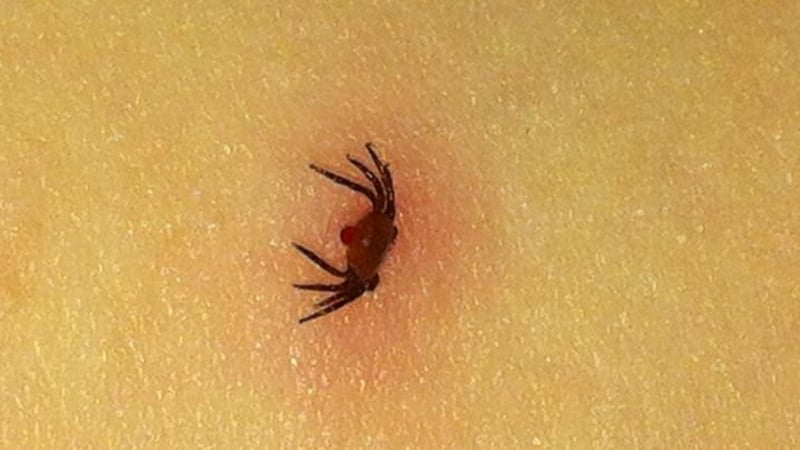
Lyme disease is an uncommon infection spread by infected biting ticks.
Dr Jack Lambert, a consultant in infectious disease at the Mater Hospital and UCD, said that in some cases Lyme infections are being missed by doctors because the tests can often be inaccurate.
He said: "Right now people are having to send their bloods to Germany and other places to do the tests - tests that should be available to Ireland because the consequences of missing a Lyme infection is devastating to people."
Dr Lambert also said that in some cases people with Lyme disease are being diagnosed with conditions that they do not have.
"You may or may not have a rash, but you may have a flu-like illness, you may get neurological problems, you may get joint problems.
"If it goes on for longer and longer you may have lots of non-specific symptoms, which may end up being mis-diagnosed with diseases like arthritis, fibromyalgia or MS."
Edwin Simms from Co Wicklow was infected after being bitten by a tick in Kerry two-and-a-half years ago.
 His 12-year-old son Luke has also been diagnosed with the disease.
"My symptoms started, and it was joint pain all over, in my hips, fingers, back and muscle pain, nerve agitation, stiff neck.
"I'm finding it hard to work now, I had a suckler herd and I'm physically not able to do it.
"I had to make a decision to kill all my herd this year."
Mr Simms and his son were tested for Lyme disease in Ireland but the tests came back negative.
After visiting endless doctors and specialists here, they went to Germany where they underwent more rigorous testing, which came back positive for Lyme disease.
Mr Simms said: "We went over and done three weeks of treatment in Germany and my son’s nails have fully grown back and his hair has grown back.
"We are 70% better but we've a long way to go because we got treated too late."
In a statement, the Health Service Executive said laboratories that test for Lyme disease in Ireland all comply with internationally recognised standards.
However, it said no lab tests will be 100% accurate and occasionally a diagnosis can be missed.
The HSE said there have been instances of patients travelling to other countries to undergo expensive testing only to be given an incorrect diagnosis of Lyme disease.
The statement adds that these patients most likely had an unrelated condition, which could be diagnosed easily within the Irish health system.
Mr Simms said an early diagnosis of Lyme disease and appropriate treatment in Ireland would have saved him a lot of suffering:
"I'm angry about the way we have been treated - two people in a desperate situation looking for help.
"I would love to be treated in Ireland but there's nothing for us here - I've exhausted every avenue."
