


An internal Garda disciplinary review into the conduct of a senior officer has been suspended, following concerns raised over an alleged conflict of interest between the garda who is the subject of the review and another high-ranking officer appointed to carry it out, RTÉ's This Week programme has learned.
Sources have confirmed that the internal disciplinary process has been "paused" in recent weeks.
It came after the case was the subject of a news report by RTÉ and was later raised in the Dáil by Independent TD Clare Daly.
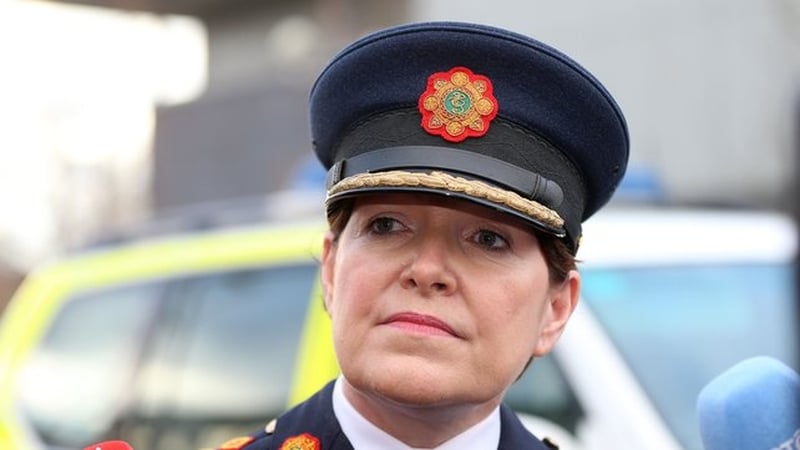
The controversy arose when it emerged that Garda Commissioner Noirín O'Sullivan had appointed a high-ranking garda to take a lead role in a disciplinary process relating to another senior colleague.
This was despite the fact that lawyers for a uniformed garda whistleblower had written to the Commissioner 12 months earlier, expressing concerns over an alleged conflict of interest between the two senior gardaí.
The accused senior garda is a central figure in relation to two serious complaints, made separately by two young garda whistleblowers.
The two young gardaí said they faced harassment, and their careers were damaged, after one of them arrested a garda for drink driving, and after the other uniformed garda raised concerns about investigations into drugs crime.
The first complaint against the accused senior garda was made by Garda A in May 2014, after which the complainant went to the official interim confidential recipient Judge Patrick McMahon.
Subsequently, Ms O'Sullivan appointed a high-ranking garda to examine Garda A's complaint that he was singled out for unfair treatment after arresting another garda for a road traffic offence.
However, lawyers for Garda A subsequently wrote to the Garda Commissioner in mid-2014, expressing concerns that they believed a close relationship existed between the high-ranking garda and the accused senior colleague.
The letter alleged a conflict of interest in the case which had not been disclosed.
While Garda Headquarters did not directly address the concerns raised in that correspondence, they did write back to advise that new procedures were due to be introduced at that time, under the Protected Disclosures Act 2014, and that Garda A could choose to engage with that process alternatively.
Under the new law, confidential disclosures could be made directly to the Garda Ombudsman Commission (GSOC).
However, despite those concerns being raised, the same high-ranking garda was later re-appointed to take a leading role in an internal discliplinary process relating to the accused senior garda, which arose from a complaint made by the second Garda whistleblower, Garda B.
Both whistleblowers claim their careers have effectively been destroyed as a result of bringing their concerns to certain senior staff.
A spokesperson for the Garda Press Office said that while there has been "no formal complaint" made in relation to the appointment of the high-ranking officer to lead the disciplinary review, the issues raised in relation to this matter were now being examined.
The Garda Press Office said this examination would be concluded "shortly" but declined to give further details of what the examination involved.
It is understood that the high-ranking garda has not stepped aside from the role, in relation to the disciplinary process, but that the process was now "paused" pending the outcome of the examination.
At the time RTÉ revealed that the high-ranking garda had been appointed to take a leading role in the disciplinary process, Deputy Daly said this indicated that, as far the two whistleblowers were concerned, the system by which gardaí complain about governance or alleged criminality within the force cannot be trusted, and was unsafe.
She said the claims of wrongdoing which had been made by the two whistleblowers were of major significance.
Ms Daly said it was beyond comprehension that the Garda Commissioner would re-appoint a senior garda to investigate another high-ranking officer despite concerns being raised over the case.
