


Best-selling fantasy author Terry Pratchett has died aged 66 after a very public struggle with Alzheimer's disease.
His daughter Rhianna, also a writer, later wrote: "Many thanks for all the kind words about my dad. Those last few tweets were sent with shaking hands and tear-filled eyes."
The news was confirmed by his publisher, Larry Finlay, who said he was "deeply saddened" by the loss of one of the world's "brightest, sharpest minds".
Mr Finlay, managing director at Transworld Publishers, said Mr Pratchett "passed away in his home, with his cat sleeping on his bed, surrounded by his family".
He completed his last book - set like so many of his best-sellers in ‘Discworld’ - last year.
Mr Finlay said: "In over 70 books, Terry enriched the planet like few before him. As all who read him know, 'Discworld' was his vehicle to satirise this world; he did so brilliantly, with great skill, enormous humour and constant invention.
"Terry faced his Alzheimer's disease (an 'embuggerance', as he called it) publicly and bravely. Over the last few years, it was his writing that sustained him. His legacy will endure for decades to come.
"My sympathies go out to Terry's wife Lyn, their daughter Rhianna, to his close friend Rob Wilkins, and to all closest to him."
The death of the British writer was announced to fans on Twitter in a series of messages shortly after 3pm.
Terry took Death’s arm and followed him through the doors and on to the black desert under the endless night.
— Terry Pratchett (@terryandrob) March 12, 2015The End.
— Terry Pratchett (@terryandrob) March 12, 2015The comic universe he created in ‘Discworld’ - a flat disc balanced on the backs of four elephants standing on the back of a giant turtle - made millions laugh and made them think as well.
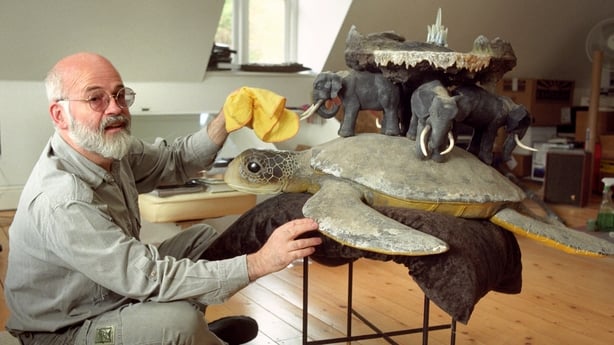
His sense of fun made him stand out in the often po-faced world of fantasy literature - he would turn up at conventions wearing a T-shirt saying: "Tolkien's dead, JK Rowling said no, Philip Pullman couldn't make it. Hi. I'm Terry Pratchett."
Towards the end of his life, he used his fame and wealth to campaign for a greater awareness of dementia and assisted dying.
In 2011, he featured in a documentary about suicide in which he followed a man with motor neurone disease to the Dignitas clinic in Switzerland where he ended his life.
Asked why he wanted to make the film, he said it was because he was "appalled" at the state of the law.
A year earlier, he had used the prestigious Richard Dimbleby Lecture to call for assisted suicide to be legalised.
Hilary Evans, director of Alzheimer's Research UK, said the death of Mr Pratchett would have "a profound effect on both literature and the 850,000 people who live with dementia".
She said his announcement of his own diagnosis was "a watershed moment" and "a call to arms for society to talk about dementia and take steps towards defeating it".
British Prime Minister David Cameron said: "Sad to hear of Sir Terry Pratchett's death, his books fired the imagination of millions and he fearlessly campaigned for dementia awareness."
Sarah Wootton, chief executive of Dignity in Dying, called him "a committed campaigner" for "assisted dying".
She said: "Sir Terry was fond of saying 'It's time we learned to be as good at dying as we are at living' and his brave approach to confronting issues of death, including his own, was a heartfelt demonstration of dignity."
British Alzheimer's Society chief executive Jeremy Hughes said Mr Pratchett had "fundamentally changed the way dementia is seen and understood".
Mr Pratchett started out as a reporter for the Bucks Free Press, later joining the Western Daily Press and the Bath Chronicle before becoming a press officer for the Central Electricity Generating Board, with responsibility for three nuclear power stations, in 1980.
He published his first novel, 'The Carpet People', in 1971 but his career really took off after the publication of the first ‘Discworld’ book, ‘The Colour Of Magic’, in 1983.
His books sold millions of copies worldwide and were translated into more than 30 languages.
Asked about his success in 2009 when he was knighted, he said: "Most writers don't make much money, they only happen to make some if they're standing in the station when the gravy train comes in.
"I thought I was lucky to make some money, then lucky to make a living, then lucky to be a millionaire."
Mr Pratchett had divided opinion even among staunchest fans of his literary work by speaking out in favour of euthanasia.
In 2007, when he was diagnosed with early-onset Alzheimer's, he told fans: "I am not dead. I will, of course, be dead at some future point, as will everybody else."
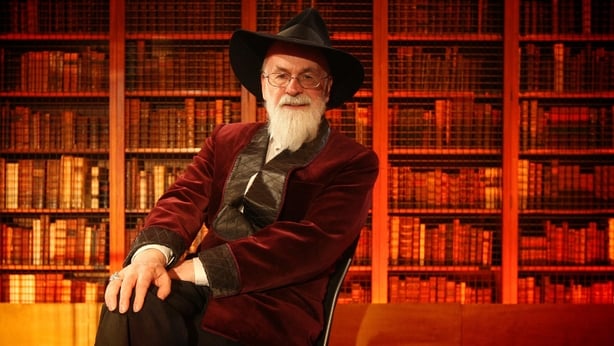
He was well-known for wearing large black hats but his sartorial style was once described as "more that of urban cowboy than city gent".
He was an avid computer games player and collaborated in the creation of a number of game adaptations of his books.
By the 1990s he was Britain's best-selling author. He was, at the turn of the century, Britain's second most-read author, beaten only by J K Rowling, creator of the 'Harry Potter' series.
Mr Pratchett wrote an average of two books a year and also held the dubious honour of being the most shoplifted author in Britain.
