


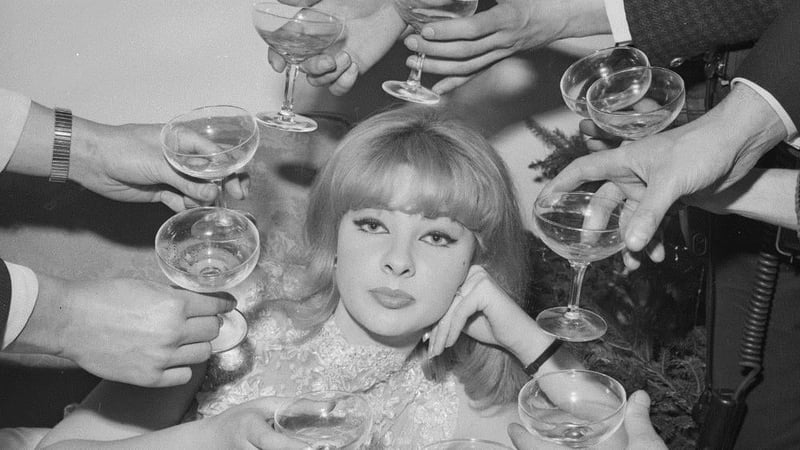
Mandy Rice-Davies, one of the women at the centre of the Profumo affair, which rocked British politics in the 1960s, has died aged 70.
A spokesman for the Hackford Jones PR agency said: "It is with deep sadness that the family of Marilyn Foreman, also known as Mandy Rice-Davies, have confirmed that she passed away yesterday evening after a short battle with cancer.
"They have asked for their privacy to be respected and no further comment will be made."
Disclosures of high-society sex parties and claims that the then Secretary of State for War John Profumo had shared a mistress with a Russian defence attache enthralled and scandalised early 1960s Britain.
Ms Rice-Davies, a nightclub dancer, gained notoriety when in the witness box of the Old Bailey she dismissed a denial by Lord Astor that he had slept with her, saying: "Well, he would, wouldn't he?"
Her insouciant response seemed to encapsulate a new lack of deference to the old order as the country emerged from the austerity of the immediate post war years.
Her claim to have had an affair with the peer - whose mansion at Cliveden was the setting for the scandal - was denied many years later by his wife, but she always stuck to her story.
"What was Bill (Lord Astor) doing? I didn't seduce Bill. I didn't even flutter an eyelash at him. I wasn't a temptress. He seduced me. In those days women did not leap upon men," she said.
Ms Rice-Davies, a key figure alongside Christine Keeler in the Profumo scandal, played her unwitting part in an affair which contributed to the downfall of the Conservative government the following year.
But unlike Ms Keeler, who afterwards slid into relative poverty and near obscurity, Ms Rice-Davies, a vivacious and bubbly character, continued to enjoy the high life, dancing, writing and acting, and marrying wealthy men.
However, she remained famous throughout her life for her comment she made in the witness box during the Old Bailey trial of society osteopath and procurer of women Dr Stephen Ward.
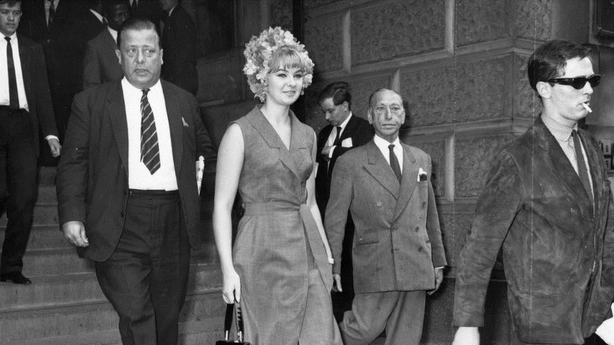
He was charged with living off the immoral earnings of both Ms Rice-Davies and Ms Keeler.
He took his own life at the Chelsea flat of a friend on the eve of the jury returning its verdict.
Ms Rice-Davies was born in 1944 in Solihull to Welsh parents.
Her twin loves as a child were her Welsh mountain pony, Laddie (doing paper rounds to support him), and the medical missionary Albert Schweitzer.
At the age of 12 she wanted to become a missionary. "I wanted to hug lepers, hug trees and to join him if I could. But then I did some research and changed my mind."
She left school without qualifications and eventually ended up in London, where she got a job as a dancer at Murray's Cabaret Club in London's Soho district.
There she began mixing with the rich and famous - something she continued to do throughout her life.
The Earl of Dudley, one of Murray's oldest clients, took such a shine to Ms Rice-Davies that by 17 she had had her first offer of marriage.
"I could have been a dowager duchess by the time I was 22," she said.
She also began her association with Ms Keeler, a fellow dancer, and with Ward. It was this which was to catapult her into the world of high society sex parties, particularly at Cliveden, the fairy-tale Berkshire mansion of the Astors.
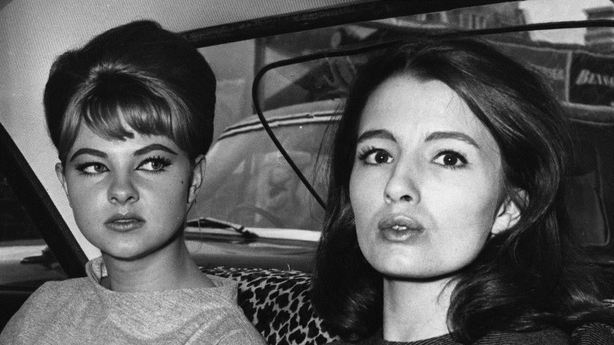
This was the scenario which led to the disgrace and downfall of Profumo, who falsely denied in the Commons that he had slept with Ms Keeler.
The Ward trial was to make Rice-Davies a household name.
She said later: "As soon as I realised that the whole thing was about to blow up, I went and told my parents absolutely everything that could possibly come out, and they were very supportive. Looking back on it, I was remarkably naive."
Later, she was to move in with notorious landlord Peter Rachman, and stayed with him for two years. Rachman died soon after they split up.
Afterwards, as the years rolled by, Rice-Davies was to appear in a Tom Stoppard play and in films. After the Ward trial, she accepted an offer to sing in a cabaret in Germany, and found solace with a half-French, half-Italian baron named Pierre Cevello.
From Germany, she moved on to Spain and then to Israel, still singing in cabaret. She married an Israeli businessman, Rafael Shaul, ran a chain of restaurants with him, a dress factory and acted in a Hebrew theatre.
They had a daughter, Dana, but after ten years they divorced.
Then she married a Frenchman called Jean Charles - but only for about a week, she claimed.
Soon afterwards she met her third husband, British businessman Ken Foreman and they married on a private island and lived on Grove Isle, a salubrious part of Miami. They had other homes, in the Bahamas and Virginia Water, Surrey.
She was to say later: "If I could live my life over, I would wish 1963 had not existed. The only reason I still want to talk about it is that I have to fight the misconception that I was a prostitute.
"I don't want that to be passed on to my grandchildren. There is still a stigma."
She also insisted there were no secrets which she would take to the grave. "Everything is out. That is why I have no concerns whatsoever about anything.
