


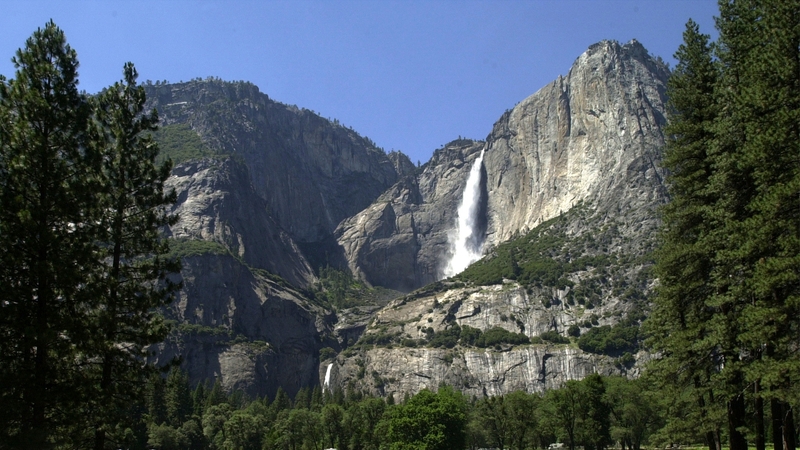
A US national park has doubled the scope of a hantavirus warning to 22,000 visitors who may have been exposed to the deadly mouse-borne disease.
The number of confirmed cases grew to eight yesterday and a third death was reported.
US officials issued a worldwide alert, saying that up to 10,000 people were thought to be at risk of contracting hantavirus pulmonary syndrome after staying at the Curry Village lodging area between June and August.
US health officials said as many as 2,500 of those people live outside the US.
Officials are concerned that more visitors to Yosemite National Park in California could develop the lung disease in the next month because the virus may incubate for up to six weeks after exposure.
The warning was expanded to 12,000 additional visitors to the park's more remote High Sierra Camps, after an eighth case of the illness was confirmed in a man who had stayed in tent cabins at three of those camps.
He also had stayed in a tent cabin at the Tuolumne Meadows Lodge and had camped in the wilderness, all locations in the park's high country, Yosemite spokesman Scott Gediman said.
His symptoms were so mild that he never went to a hospital, but after hearing about the outbreak he was tested, and laboratory results confirmed yesterday that he had been ill with the disease, Mr Gediman said.
The seven other confirmed victims are all believed to have contracted the virus while staying in one or more of the 91 insulated "Signature" tent cabins in Curry Village, located at a lower-elevation area of the park.
The 91 Curry Village tent cabins were shut down after deer mice were found infesting the double walls of the structures.
Officials in Yosemite, whose scenic vistas, hiking trails and wildlife draw 4m visitors a year, did not previously consider the High Sierra Camps to be at risk for hantavirus.
Those camps will remain open, based on recommendations from public health officials, Mr Gediman said.
He estimated that a few hundred notices also were being sent to individuals who still had reservations to stay at the High Sierra Camps before they close for the season on 17 September.
Health officials in France were also investigating two suspected hantavirus cases there of people who may have been exposed while at Yosemite, according to an assessment by the European Centre for Disease Prevention and Control.
Mr Gediman identified the third fatality as a West Virginia resident who contracted hantavirus while staying in Curry Village tent cabins in June.
That person died at the end of July, and laboratory tests confirmed yesterday that the death was due to hantavirus, he said.
The two others who died were a man from northern California and a man from Pennsylvania.
The World Health Organisation also issued a global alert this week over the cases of hantavirus linked to Yosemite, and advised travellers to avoid exposure to rodents.
The virus can lead to severe breathing difficulties and death.
Early flu-like symptoms include headache, fever, muscle aches, shortness of breath and coughing.
There is no cure for the lung disease, which kills over a third of those infected, but early detection through blood tests greatly increases survival rates.
Hantavirus is carried in rodent faeces, urine and saliva that can mix with dust and be inhaled by humans, especially in small, confined spaces with poor ventilation.
People can also become infected by eating contaminated food, touching tainted surfaces or being bitten by infected rodents.
The disease has never been known to be transmitted between humans.
Hantavirus previously was known to have infected just two Yosemite visitors, one in 2000 and another in 2010, both at higher elevations in the park.
