

The British Foreign Office has confirmed that Somali pirates have freed hostage Judith Tebbutt, more than six months after she was captured by gunmen who killed her husband David.
The couple were attacked on the Kenyan beach resort where they were staying on 11 September 2011.
TV footage showed the British woman running towards a plane, accompanied by a man with his arm around her shoulders.
In an interview with ITV news she said her son had secured her freedom.
"I am just happy to be released and I'm looking forward to seeing my son who successfully secured my release. I don't know how he did it, but he did. Which is great," the 57-year-old said.
"Seven months is a long time and... the circumstances, with my husband passing away, made it harder," said Mrs Tebbutt.
She said she had not been mistreated, but had endured "some very hard psychological moments".
As a hostage she had been moved from house to house, she said, especially after elite US Navy SEALs launched a rescue operation in January to free two aid workers who had been kidnapped in October.
"It was very disorientating. To be woken in the middle of the night and moved and you'd stay there for a little while and then you'd move again," Mrs Tebbutt added.
There have been conflicting reports as to whether a ransom was paid to secure Mrs Tebbutt's release.
Local Somali elder Mohamud Ibrahim said negotiations had been ongoing since her capture, and that "expenses incurred during the captivity were very high".
While a pirate, who identified himself as Ahmed, told Reuters a ransom had been dropped by air, although it was not clear who had made the payment.
He said $800,000 had been received and another $140,000 went to brokers and handlers.
The British government said it was not involved in any ransom payment.
A foreign office official said that Mrs Tebbutt is currently in a safe place in Nairobi.
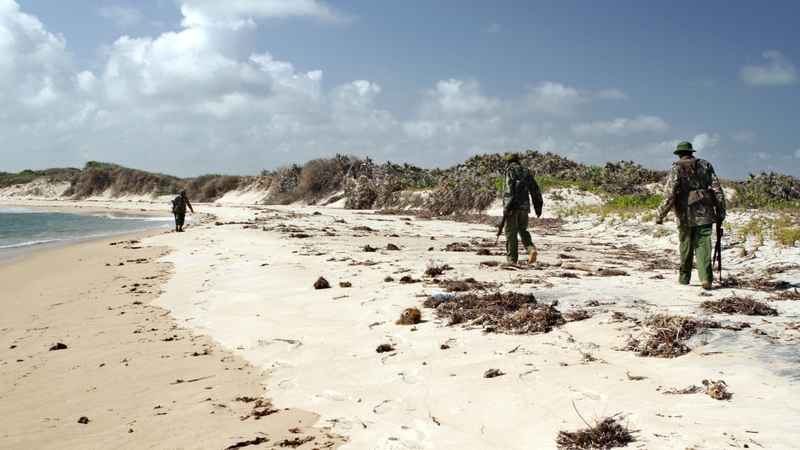
Gunmen raided the remote Kiwayu Safari Village in the early hours of 11 September, shooting dead 58-year-old David Tebbutt and taking his wife hostage before escaping by boat to nearby Somalia.
In the following weeks, attackers abducted a disabled French woman from another beach in northern Kenya and two Spanish aid workers from a refugee camp in the east African country.
Blaming Somali insurgents, Kenya deployed its forces across the border, attempting to beef up security along the porous frontier and reassure a spooked tourism sector.
The Al-Qaeda-linked Al Shabaab denied they were behind the wave of kidnappings.
Pirates who usually focus on hijacking merchant ships and private yachts, said they were holding Mrs Tebbutt.
Kidnapping for ransom has chiefly been carried out by Somali pirates in the Gulf of Aden and Indian Ocean but Somali gunmen have attacked Westerners just across the border with Kenya on several occasions.
Somalia has been mired in turmoil since warlords toppled dictator Mohammed Siad Barre in 1991.
