


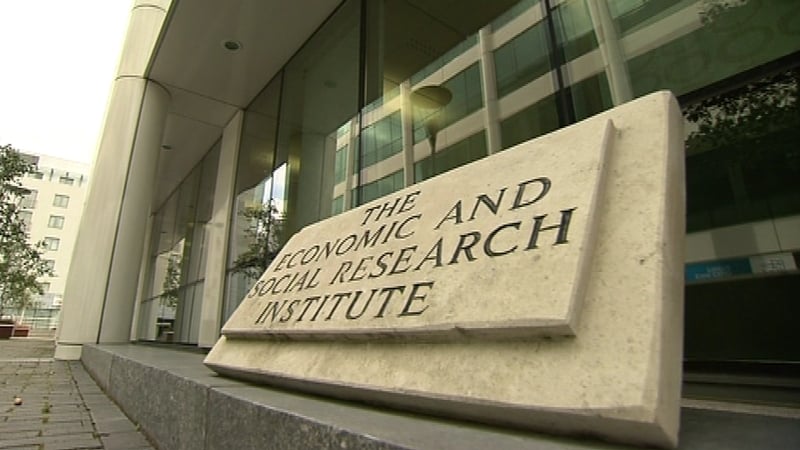
New research from the Economic and Social Research Institute says much stronger financial regulation may be required to protect consumers in their dealings with banks and other financial companies.
A review of some eighty studies of how people make financial decisions revealed systematic biases in financial reasoning that can result in consumers paying too much for financial products, or taking on too much debt or other financial risk.
The ESRI says consumers lack the knowledge to choose the best deals, and that information campaigns fail to correct this.
Even consumers with better levels of knowledge are also prone to reasoning that leads them to make bad financial decisions, it found.
The institute is suggesting tougher regulation be put in place to force firms to act in the consumer interest.
According to ESRI researcher Dr Pete Lunn this could include tougher inspections, bigger punishments and naming and shaming violators. If that fails, Dr Lunn suggested making financial products subject to licensing.
In a separate study, ESRI research says introducing loan to value (LTV) limits on mortgages may help to prevent another housing bubble, notably by stopping the re-introduction of 100% mortgages.
It found higher LTV levels drive up property prices, and points to Hong Kong’s success in using LTV limits to protect the banking system from property market volatility.
In Hong Kong the standard LTV ratio is 70%, with homes above €1m and all buy to let properties limited to a 50% LTV ratio.
