


The Vice President of the European Commission Olli Rehn has welcomed the positive vote of the Greek parliament in supporting the second bailout of €130bn.
The Greeks last night approved the highly controversial new austerity package, which was demanded by the European Union and International Monetary Fund to release a new tranche of bailout funds.
However, dozens of coalition MPs refused to back the deal and were subsequently expelled from their respective parties.
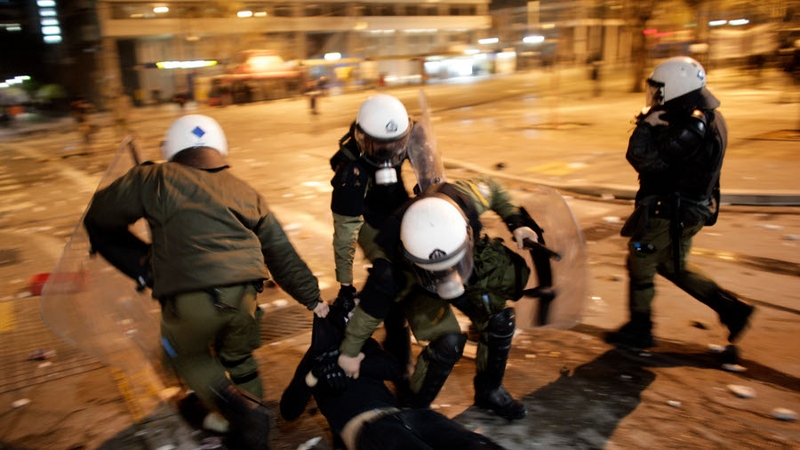
The political debate took place as violence erupted in the capital and other Greek cities.
Speaking in Brussels, Mr Rehn said the vote was an expression of the determination in the country to put an end to unsustainable public finances.
Mr Rehn said the EC remains strongly committed to assisting the government to achieve the objectives of returning to sustainable growth and employment.
However, he warned that this objective would take time and he called on the Greek authorities to take ownership of the bailout plan, make the case for it and fully implement it.
It is estimated that around 100,000 protesters took to the streets across Greece to oppose the harsh austerity measures.
In the capital Athens, the protests turned violent with more than 30 buildings set ablaze, as demonstrators and riot police clashed close to the parliament.
Violence occured in other Greek cities too.
During the highly charged parliamentary debate, Prime Minister Lucas Papademos denounced the breakdown of law and order saying vandalism, violence and destruction have no place in a democratic country and will not be tolerated.
Before the vote, Finance Minister Evangelos Venizelos told parliament that the alternative to the international bailout - bankruptcy and a departure from the eurozone - would be far worse for Greeks.
More than three dozen government MPs either voted against or abstained and were then expelled by their party leaders.
The Greek government has passed a significant hurdle in its attempt to access new finance, but implementing the austerity measures will be very difficult and it is still unclear if the EU-IMF plan will actually work.
