


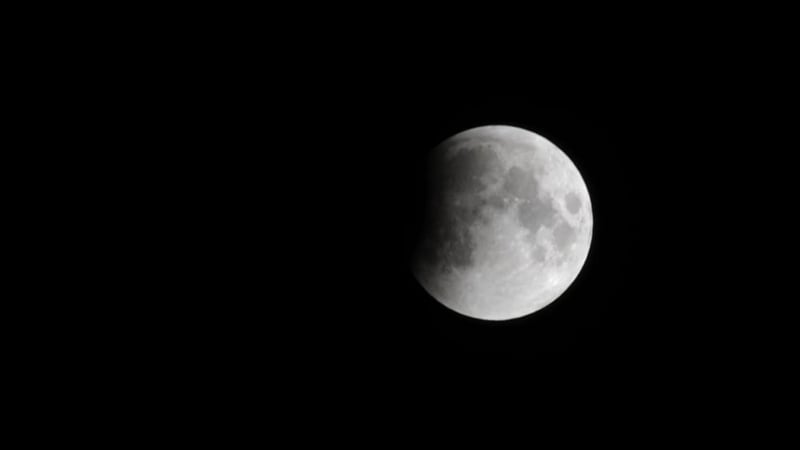
Two robotic probes began orbiting the moon yesterday in preparation for an unprecedented mission to map the lunar interior.
NASA's twin Gravity Recovery And Interior Laboratory, or GRAIL, spacecraft wrapped up the 2.6-million-mile journey to put themselves into lunar orbit on Saturday and Sunday.
Over the next two months, the probes' 34-mile-high orbits will be adjusted to get them into optimal position to measure the pushes and pulls of the moon's gravity.
Scientists can then use that data to model what is inside the moon.
"Pop the bubbly and toast the moon," NASA wrote on its Twitter feed after the first GRAIL spacecraft finished a 40-minute braking manoeuvre at 10pm Irish time on New Year's Eve.
The second spacecraft followed suit 25 hours later. Both are needed for the intricate gravity-mapping mission scheduled to begin in March.
Over the next two months, the probes' orbits will be tweaked until they are flying in formation low over the lunar poles.
As the spacecraft fly over denser regions of the moon, they will speed up slightly in response to the extra gravitational tugs.
By constantly measuring changes in the distance between the two craft, scientists can create a gravity map of the moon.
The changes in speed will be as subtle as a fraction of a micron per second. A micron is about the width of a red blood cell.
The data will be used to model the moon's interior - a key piece of information still missing despite more than 100 previous missions to the moon. There were six human expeditions during NASA's 1969-1972 Apollo programme.
Scientists believe the moon formed when an object about the size of Mars smashed into Earth shortly after the formation of the solar system about 4.5 billion years ago.
However, questions about how the moon evolved remain.
One longstanding question is why the far side of the moon is so different from the side that permanently faces Earth.
The near side is filled with large, dark plains formed by ancient volcanic eruptions, while the far side is virtually all highlands.
The mission is scheduled to last 82 days.
