


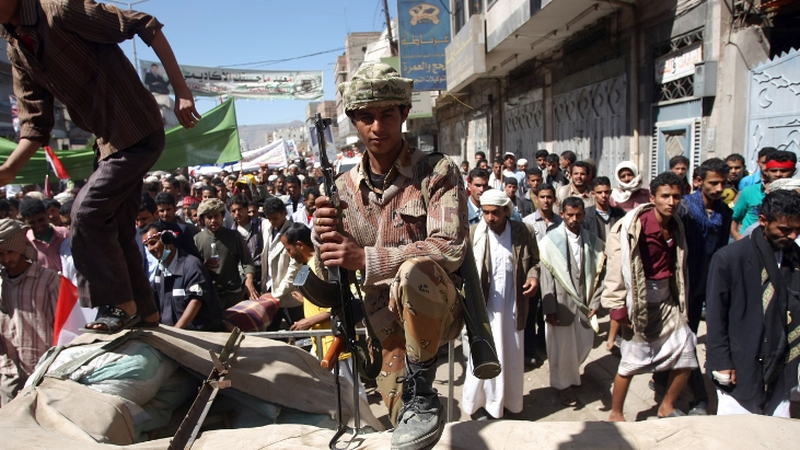
Yemen President Ali Abdullah Saleh is refusing to hand over power and resisting a UN backed plan to end months of political paralysis that has brought the impoverished state to its knees.
Mr Saleh has withstood nine months of protests against his rule and international pressure on him to quit.
Three times he has agreed to a Gulf-brokered power transition plan, only to back out of signing it at the very last minute.
Mediators, diplomats and Mr Saleh's deputy had said in recent weeks they were close to clinching a deal, but a senior member of the opposition has said that the veteran leader was stalling once again.
United Nations envoy Jamal Benomar, who left Yemen empty-handed in September after two weeks of shuttle diplomacy between the opposition and the ruling party, returned to Sanaa last week in a fresh push to persuade Saleh to leave office.
Under an "operational mechanism" proposed by Mr Benomar to implement the Gulf initiative, Mr Saleh would step down immediately, triggering the formation of a national unity government ahead of early presidential elections.
A body would also be set up to restructure the armed forces.
Deputy information minister Abdo al-Janadi said in a news conference that Mr Saleh had agreed to entrust his deputy with forming the national unity government, but made no mention of Mr Saleh resigning.
Mr Janadi also blamed violence that has killed at least 17 people over the past two days in Yemen's commercial capital on a "dangerous escalation" instigated by armed members of the opposition.
Witnesses, residents and medical staff blamed shelling on government forces.
