


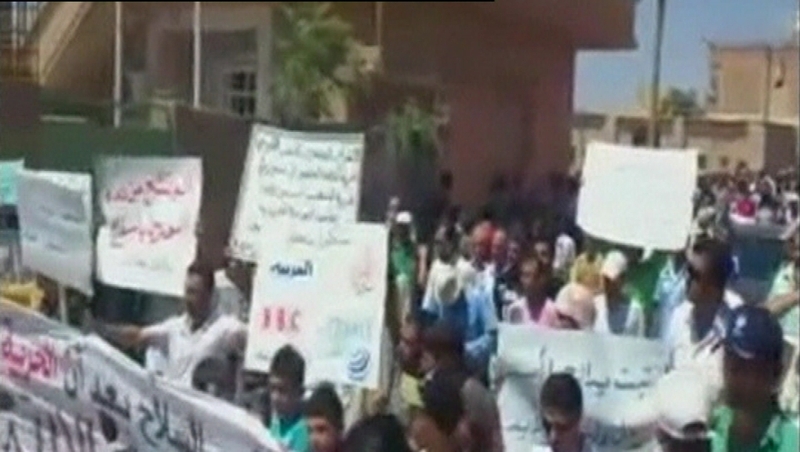
Syrian forces fired heavy machineguns at a residential district in the central city of Homs after protests against President Bashar al-Assad.
Residents said military helicopters also flew over the city in the early hours.
Electricity and landline telephones were cut yesterday following demonstrations in which crowds had waved shoes in a sign of contempt for Mr Assad.
However, a Syrian government official reiterated that all military action against protesters had stopped.
Assad's forces killed 34 people, including four children, across Syria yesterday in Homs and the southern province of Deraa, where the popular revolt began in March, as well as in suburbs of Damascus and the ancient desert town of Palmyra, activists said.
International pressure on President Assad ratcheted up this week after the United States and European allies called on the 45-year-old leader to quit, and imposed new sanctions.
Britain said it had not yet decided whether to back proposed European Union sanctions on Syrian oil, and is wary of measures that could hurt the Syrian people more than they hurt Assad.
The US imposed an oil embargo on Syria on Thursday in protest against Assad's crackdown on civil unrest that the United Nations says has killed around 2,000 people.
But the EU agreed yesterday only to expand the number of Syrian officials and institutions targeted, deferring discussion of an oil embargo until next week.
Encouraged by growing global pressure on Assad, the Syrian opposition in exile said it would set up a National Council in Turkey tomorrow to support the uprising and help fill any power vacuum should the protests oust the Syrian leader.
Similar initiatives in the past have failed to produce a robust umbrella group to unite the opposition, fragmented by 41 years of harsh rule by Assad and his father, Hafez al-Assad.
Syria has expelled most independent media since the unrest began, making it difficult to verify events on the ground.
