


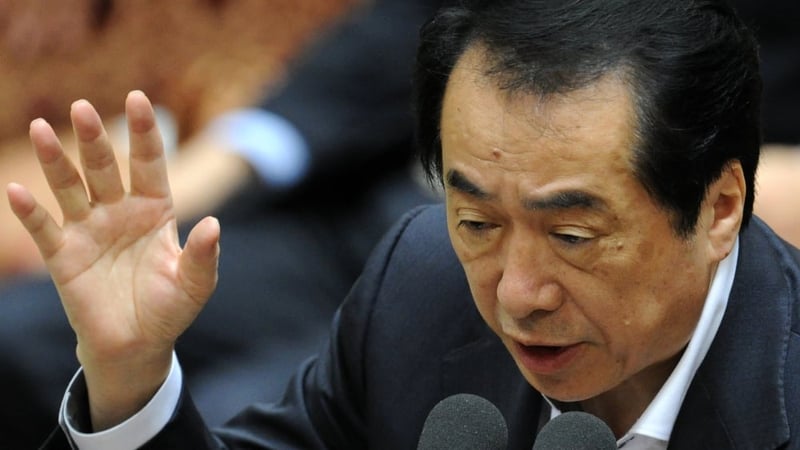
Japanese Prime Minister Naoto Kan has survived a no-confidence vote by offering to resign once he has overcome the worst of the country's nuclear crisis.
Mr Kan's offer to step down, probably in the autumn, buys him time to prepare an extra budget to fund the rebuilding cost of the 11 March earthquake and tsunami.
However, it does nothing to resolve the country's political and policy crises.
As a result of the deal, the parliamentary no-confidence motion brought by the opposition was comfortably defeated by 293 to 152 votes.
However, weakened by rifts within his own party, Mr Kan may be seen as a lame duck by an emboldened opposition.
It is will likely he will struggle to make much progress on tax and social security reforms needed to contain the nation's bulging debt.
Speaking shortly before the vote, Mr Kan told ruling Democratic Party of Japan (DPJ) members he would step down later.
'I would like for the younger generation to take over various responsibilities once I fulfil certain roles that I need to, as I work on handling the disaster,' a solemn Mr Kan told the gathering.
Some ruling party rebels, fearing Mr Kan's dismal ratings were hurting their chances of re-election, had said they wanted him out sooner and threatened to side with the opposition.
The prime minister's offer helped him win back the support of several potential rebels, including his predecessor Yukio Hatoyama.
Japanese voters are likely to welcome the deal since a majority want Mr Kan to leave, but not in the middle of a crisis.
Mr Kan did not say when he might resign, but Mr Hatoyama suggested that could happen once the outlook for an extra budget to fund rebuilding from the tsunami was clear, which would probably be around August or September.
Mr Kan, who took office almost exactly a year ago as Japan's fifth prime minister in as many years, is battling to control a radiation crisis at the Fukushima plant that was knocked out by the tsunami.
He also needs to come up with a solution to pay for rebuilding the tsunami-hit region north of Tokyo and prepare tax reforms to pay for rising social security costs.
