


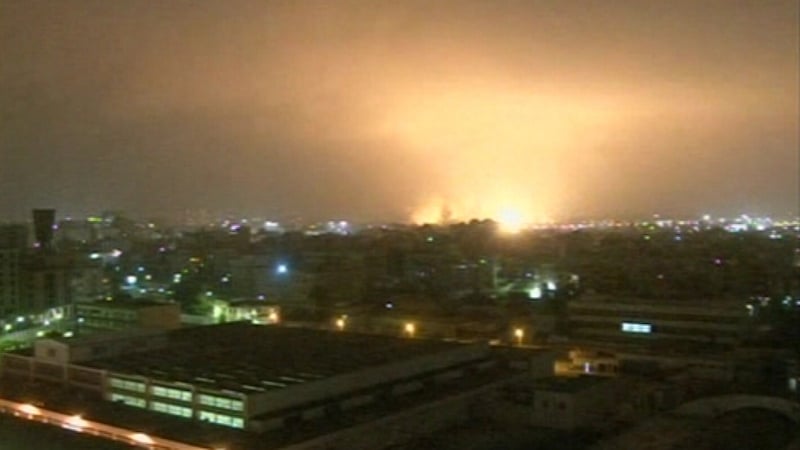
NATO warplanes attacked Tripoli in the early hours of this morning with some of the heaviest air strikes yet.
It came after the United States said Libyan leader Muammar Gaddafi would 'inevitably' be forced from power.
At least 12 huge explosions hit the capital this morning leaving three people dead and 150 wounded, according to government spokesman Mussa Ibrahim.
He said the strikes had targeted a compound of the Popular Guards, a tribally-based military detachment.
But he said the compound had been emptied of people and 'useful material' in anticipation of an attack and that the casualties were people living in the vicinity.
'This is another night of bombing and killing by NATO,' Mr Ibrahim told reporters.
Led by France, Britain and the US, NATO planes have been bombing Libya for more than two months since the United Nations authorised 'all necessary measures' to protect civilians from Gaddafi's forces in the country's civil war.
'We have degraded his war machine and prevented a humanitarian catastrophe. And we will continue to enforce the UN resolutions with our allies until they are completely complied with,' US President Barack Obama and British Prime Minister David Cameron wrote in The Times newspaper.
UN Security Council resolution 1973, passed on 17 March, established a no-fly zone and called for a ceasefire, an end to attacks on civilians, respect for human rights and efforts to meet Libyans' aspirations.
In upbeat comments, US Secretary of State Hillary Clinton yesterday told a news conference: 'We do believe that time is working against Gaddafi, that he cannot re-establish control over the country.'
She said the opposition had organised a legitimate and credible interim council that was committed to democracy.
'Their military forces are improving and when Gaddafi inevitably leaves, a new Libya stands ready to move forward,' she said.
'We have a lot of confidence in what our joint efforts are producing.'
