


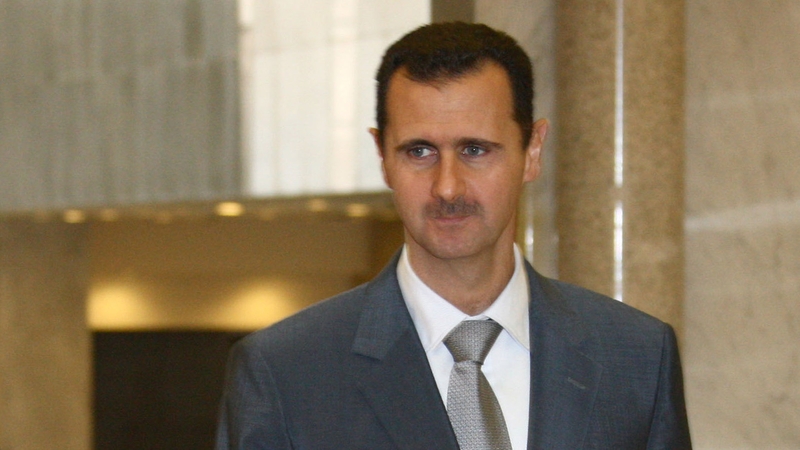
Syrian tanks shelled residential districts in two towns at least 19 people were killed across the country, as President Bashar al-Assad's forces fought to crush a seven-week uprising.
Assad, fighting the most serious challenge to his 11-year-rule, has sent troops and tanks into several cities in the last two weeks to try to bring to an end protests inspired by Arab revolts which toppled leaders in Egypt and Tunisia.
Protesters, who first called for reforms and greater freedoms, have hardened their demands with many chanting for the overthrow of the president who inherited the authoritarian powers of his father Hafez al-Assad, who died in 2000.
Today was one of the bloodiest days apart from the main Friday protest days, when thousands use the platform of weekly Muslim prayers to demonstrate. Most of the violence occurred in the southern Deraa province, where unrest erupted on 18 March.
Ammar Qurabi, head of the National Organisation for Human Rights in Syria, said 13 people were killed in the town of Harra, about 60 km (40 miles) northwest of Deraa city.
Most were killed when tanks shelled four houses. Two people, a child and a nurse, died in gunfire.
Tanks also shelled a residential district in Homs, Syria's third largest city, and at least five people were killed, a rights campaigner in the city said.
A sixth person was killed by a sniper shot to the head as he stood in front of his house.
There was no immediate comment from Syrian authorities, who have banned most international media from Syria, making it difficult to verify accounts of events.
In Syria's second city Aleppo near the border with Turkey, security forces used batons to disperse a pro-democracy demonstration by 2,000 students at a university campus, a witness at the scene said.
Another resident of Aleppo said secret police had closed the main road leading from the centre of the city to the campus in the western Furqan district.
The violence has been denounced in the West, where countries have imposed limited sanctions on Syrian leaders but stopped short of calling for Assad to step down, as they have in the case of Libya's Muammar Gaddafi.
Syria withdrew its candidacy today for a spot on the top UN human rights body. Its ambassador to the United Nations, Bashar Ja-afari, said Damascus was 'reconsidering our priorities' and would try again in 2013.
US Ambassador Susan Rice said Syria's bid was blocked by Asian states with the 'good sense' to withdraw support from a country 'in the process of killing its own people on the streets, arresting thousands and terrorising a population that is seeking to express itself through largely peaceful means.'
