


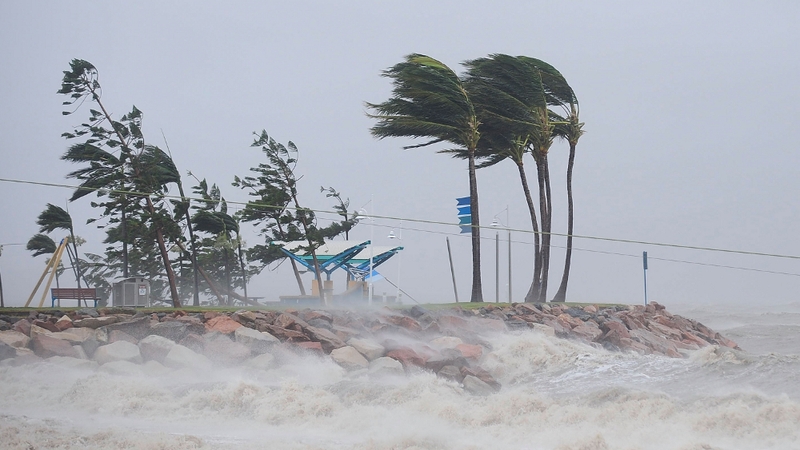
Australians voiced relief and surprise after one of the world's most powerful cyclones spared the nation's northeast coast from expected devastation.
There have been no reported deaths, despite winds tearing off roofs and toppling trees.
Cyclone Yasi, roughly the size of Italy and with winds forecast to hit at up to 300km/h, threatened Australia with its second major natural disaster in as many months, but ended up missing heavily populated areas.
The storm destroyed about 15% of the nation's sugar cane crop, pushing world prices to the highest in three decades, and prompted the evacuation of Xstrata Plc's Mt Isa copper mine, which lay in its path.
‘It's amazing no-one was killed. The wind was howling like a banshee,’ said farmer Nathan Fisher, speaking out the window of his four-wheel-drive vehicle as he returned to his property from a shelter in the small town of Innisfail.
But building engineers questioned whether Cyclone Yasi, rated at the top level category five, was as powerful as forecast and said large cyclones tend to be over estimated.
‘If winds were at 300km/h it would have been a 100% wipe out,’ said James Cook University's George Walker, adding the damage suggested a category three cyclone.
‘Even the newer buildings would by and large stay up but suffer some damage.’
Australia, a vast continent with less than three people for every square kilometre, is one of the few countries where a storm as large and terrifying as Yasi - with a diameter of up to about 500km - could simply miss major cities.
Even as Yasi began its 1,000km march into the outback, weakening as it went, tracking forecasts showed it was likely to hit only a handful of small towns in a region that is home to about 400,000 people.
The lack of any major damage or substantial casualties was also attributed to several days of preparation, early evacuations, laws that ensure newer homes and buildings are strong enough to survive a cyclone, and less than expected sea flooding as the cyclone missed peak tides.
The cyclone came ashore around midnight along hundreds of kilometres of coast in Queensland state and then drove inland, bringing heavy rain to mining areas struggling to recover from recent devastating floods.
‘Early reports have given us all a great sense of relief,’ Queensland Premier Anna Bligh told reporters.
Yasi was rated a maximum-strength category five storm, and drew comparisons with Hurricane Katrina, which wrecked New Orleans in 2005, killing 1,500 people and causing $81bn in damage.
It was downgraded to a category-one storm late last night as it moved towards Mt Isa, but its core continued to fuel damaging gusts and heavy rain, the Bureau of Meteorology said.
