


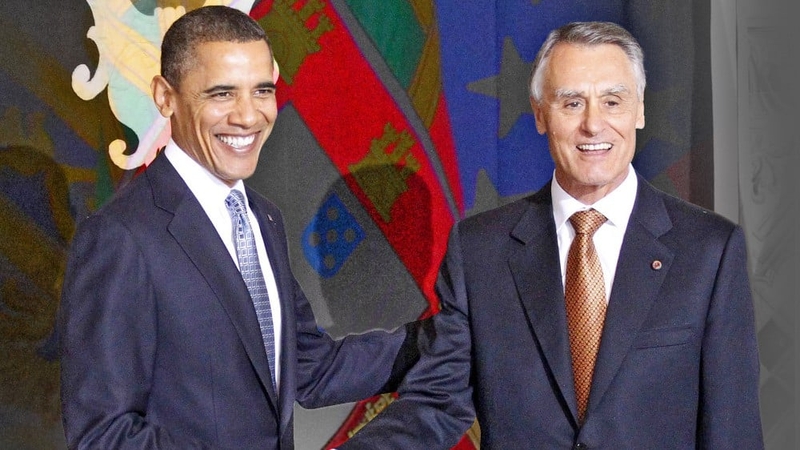
NATO allies have agreed to set up a new anti-missile defence shield across Europe and to invite Russia to take part.
The deal means NATO leaders will set up a network of radars and interceptors forming an anti-ballistic missile shield extending over Europe and possibly linking with Russia too.
US President Barack Obama said: 'I'm pleased to announce that for the first time, we have agreed to develop a missile defence capability that's strong enough to cover all NATO European territory and populations, as well as the United States.'
Mr Obama was speaking after a first session of the two-day NATO summit in Lisbon.
Russia had been fiercely critical of a US missile defence plans, seeing it as a direct threat to its nuclear deterrent.
But the 28 NATO powers hope President Dmitry Medvedev can be won over in discussions with the alliance tomorrow.
NATO Secretary General Anders Fogh Rasmussen said he expects Russia and NATO to begin a joint study of Russia's possible inclusion in the missile defence system.
The leaders agreed to 'develop the capability to defend our populations and territories against ballistic missile attack as a core element of our collective defence'.
'We will actively seek cooperation on missile defence with Russia and other Euro-Atlantic partners,' they said.
The broad agreement marks a significant advance for Mr Obama's scheme, first announced in November 2009 when he ditched plans for a missile shield in Eastern Europe.
Mr Obama decided to replace the shield with a more mobile system targeting Iranian short-range and medium-range missiles, initially using sea-based interceptors.
Before leaving Moscow, the Russian party said it was keen to share ideas about common missile defence but played down the chances of a major decision realigning the continent's security.
The main item on the agenda for the allied leaders is the war in Afghanistan.
The summit is expected to back a 2014 target date for turning over responsibility for security in the country to the Afghan government in Kabul.
However, the Pentagon said that President Hamid Karzai's target to take the lead from NATO in securing Afghanistan by the end of 2014 is only 'aspirational' and may not be possible everywhere in the country.
Mr Karzai has said he wants the Afghan army and police to take control of the country by 2014, a target US Defense Secretary Robert Gates and Secretary of State Hillary Clinton have called realistic.
