


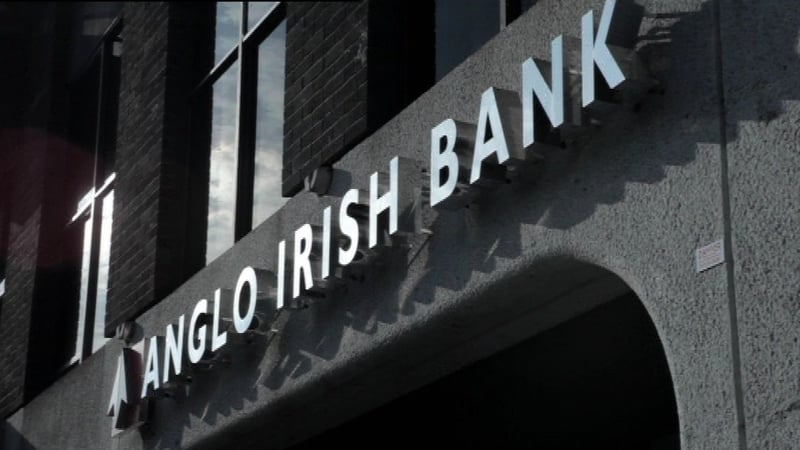
Ratings agency Standard and Poor's has said the final bill for Anglo Irish Bank is getting closer to its estimate of €35bn and could still exceed that.
Should this happen, S&P analyst Trevor Cullinan said, another downgrade of Ireland's rating is possible.
The S&P analyst's comments, made in a Prime Time interview, part of which was broadcast on Morning Ireland, sent the cost of insuring Irish sovereign debt against default to a record high this morning.
Five-year credit default swaps on Irish Government debt rose to 519 basis points, versus 488.5 basis points at yesterday's close in New York, according to data monitor CMA.
This means it costs €519,000 to protect €10m of exposure to Irish bonds.
S&P said if the agency's current €35bn estimate of the cost of supporting Anglo Irish Bank were exceeded, there could be further downward ratings action.
Commenting on today’s bond markets, the Taoiseach has said it is important people recognise the challenges facing the Irish economy.
Brian Cowen said The National Treasury Management Agency has confirmed Ireland is funded up to the middle of next year.
Meanwhile, Minister for Foreign Affairs Micheál Martin has said Ireland's coalition government is satisfied that it will see out its full term despite a rocky period.
'We're satisfied that we will go the full distance,' Mr Martin said.
'Obviously in this economic turbulent period, you will have rocky rides and issues will arise but we are very, very determined to see this through for the benefit of the country.'
Emergency funding not considered - EC
Eurozone emergency funding for Ireland is not being considered, European Commission spokesman Amadeu Altafaj said.
Asked if there was a chance that Ireland would tap the euro zone's €440bn emergency fund, the European Financial Stability Facility (EFSF) set up to help eurozone members who have problems financing themselves on the market, Altafaj said: ‘The issue is not being considered.’
He added the EC was confident that Dublin would do what is necessary to retain market confidence.
To get money from the EFSF, Dublin would have to request such aid, and the application would have to be reviewed by the Commission and the European Central Bank. Eurozone finance ministers would have the final say.
