


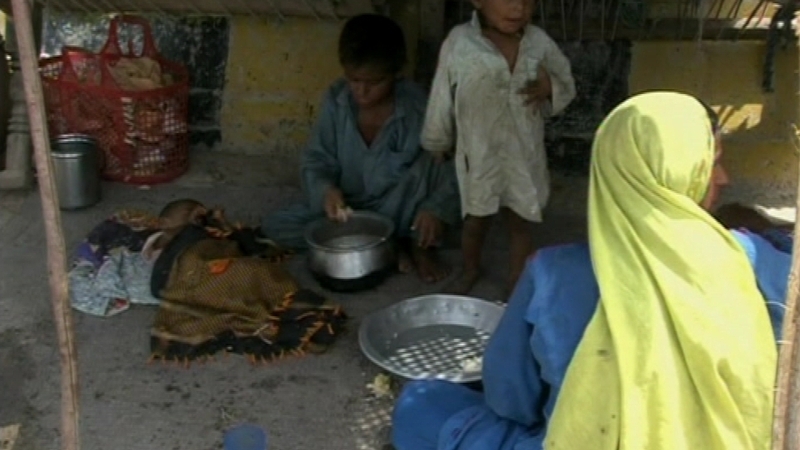
Oxfam is warning that Pakistan will face severe food shortages for at least a year because of the widespread devastation to farmland caused by four weeks of flooding.
The international aid agency says long-term relief work should be under way at this stage of the crisis, but it is being delayed because priority is being given to the provision of shelter, clean water and sanitation.
Orla Murphy of Oxfam said planning needed to be put in place now to make it possible for the millions of displaced people to survive the next 12 months.
Save the Children has warned that more than 100,000 heavily pregnant women face the risk of infection and disease in the aftermath of the flooding.
The aid agency said at least half a million expectant mothers have been affected by the floods, with tens of thousands of newborn babies and women in potential danger in the coming months.
It added many expectant mothers would be forced to give birth in temporary shelters or tents, with no access to clean water or healthcare.
Receding waters will see death toll rise
In Jampur, in southern Punjab, waters have begun to recede but thousands of people still live in relief camps.
'In about two weeks' time, when the river returns to normal, that's when we expect movement in the population (to go home),' Brigadier Zahid Usman told Reuters.
Further south in Thatta, in Sindh, the flooding that threatened the city of 300,000 has eased, said Saleh Farooqi, director general in Sindh for National Disaster Management Authority.
'There has not been a substantial relief but things have improved,' he said. 'Water is still flowing but the speed and levels are reducing. It will take another four to five days for things to improve further.'
The death toll from the flooding is expected to rise significantly as the bodies of the many missing people are found.
There is no official estimate of the number of missing because mass displacements have made accounting for them almost impossible.
The receding floods have also left behind huge pools of stagnant water, which in turn are breeding disease.
