


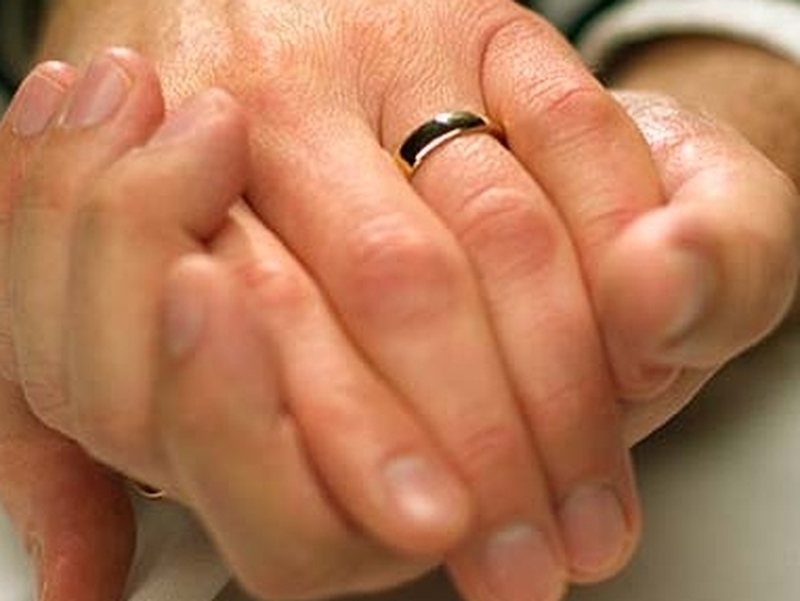
A landmark federal court case on same-sex marriage got under way in California, with attorneys arguing that outlawing weddings between gays and lesbians violates the US constitution.
In the latest twist in a case that could ultimately lead to a showdown at the US Supreme Court, gay rights activists are seeking to overturn a ban on same-sex marriage passed by California voters at the 2008 election.
The ban was upheld by California's top state court last year, prompting activists to take their case to the federal court system for the first time.
Analysts say the decision to fight the case in federal courts represents a high-stakes risk because it could result in a US Supreme Court ruling, which would settle the issue with no possibility of appeal.
Today's hearing in San Francisco began with around 100 supporters and opponents of same-sex marriage protesting outside the court house.
The no-jury trial was supposed to be streamed live via YouTube, but the US Supreme Court today issued a stay blocking live streaming of the proceedings beyond the courthouse proper while it considers the matter.
Opponents of same-sex marriage had opposed broadcasting the trial, claiming witnesses called to give evidence could suffer harassment if their identities were made widely known.
Supporters of California's same-sex marriage ban, known as Proposition 8, insist the federal case should never have been allowed to proceed and criticised Judge Vaughn Walker's decision to hear it.
'This lawsuit is an attempt by Judge Walker to put the voters of California on trial, and it's wrong. Walker has not dealt with this properly. He doesn't care about the law,' Brian Brown, director of the National Organization for Marriage, which opposes gay marriage, said.
'I think our founding fathers would be rolling over in their graves if they heard that the constitution guarantees the right to redefine marriage. This is absurd,' he said.
Those who support gay marriage believe the court case is an opportunity to enlighten the public.
'Discrimination hurts us and doesn't help anyone. The trial will offer a chance for the public to listen to the expert witnesses on both sides and hear the cross examinations of those witnesses,' said Jennifer Pizer, Director of Lambda Legal's national marriage project.
She added 'people have so many misconceptions and misunderstandings about gay people and what sexual orientation is all about.'
Ms Pizer is also counting on the two star lawyers representing the plaintiffs: Theodore Olson and David Boies, who are teaming up here after being fierce opponents in the 2000 Supreme Court fight for the presidency between George W Bush and Al Gore.
Mr Olson, who defended Mr Bush, is a prominent conservative but Ms Pizer believes 'his advocacy and passion for equal treatment of lesbian and gay couples here will reach the ears and hearts of many people who have not understood this issue before.'
But the stakes are huge for both supporters and opponents of gay marriage.
'No one in America thinks that this trial is going to end at this level,' Mr Brown said, 'eventually, it will go to Supreme Court.'
A Supreme Court ruling would seal the fate of gay unions across the United States, without possibility for appeal by one side or the other.
The California court case follows several setbacks for gay marriage proponents. On Thursday, New Jersey lawmakers rejected a bill authorizing gay marriages, as did lawmakers in New York state a few weeks ago.
Only five American states today permit gay unions: Iowa, Connecticut, Massachusetts, Vermont and New Hampshire.
