


Widespread ice and sub-zero temperatures continue to cause disruption across Britain, with the coldest weather in 30 years showing little sign of easing.
Temperatures as low as -17C saw yesterday's heavy snow ice over, creating more havoc on the roads, trains and at airports - and shutting hundreds more schools for another day.
Forecasters warned of icy roads and treacherous travel conditions across virtually the whole country - and no let-up yet in the arctic conditions.
Benson in Oxfordshire was one of the UK's coldest spots, plunging to -17C. Parts of Manchester saw the mercury plunge to -15C, with Glasgow seeing -9C and even central London falling to -3C.
The Federation of Small Businesses estimated about 10% of workforce missed work on Tuesday and Wednesday because of problems getting to work.
The Local Government Association said the equivalent of 1.7 million miles of road had been gritted by local councils in England over the last three weeks.
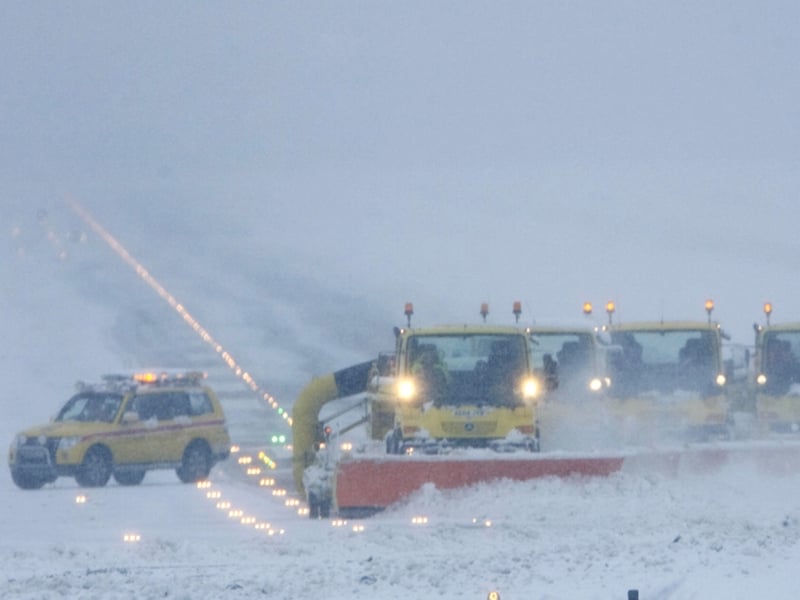
There were some small signs of respite today, with no extreme weather warnings for the first time in two days, all UK airports open and train operators putting on more services for hard-pressed travellers.
However, budget airline easyJet has already cancelled around 70 flights due in and out of Gatwick Airport, despite the airport opening its runway last night.
British Airways said it had cancelled a number of flights and was experiencing delays due to icy conditions at both Heathrow and Gatwick.
Luton, Birmingham, Stansted, Cardiff and Southampton Airports were also open after being forced to close yesterday, with all advising travellers of disruption and to check with their airlines.
Several police forces including Devon and Cornwall, Kent and Lothian and Borders were urging drivers not to travel unless absolutely necessary.
Yesterday scores of roads were closed and train journeys cancelled after the heaviest snow falls in years hit - leaving town centres deserted as people opted to stay at home.
The disruption is estimated to have cost businesses around £700m (€786m) alone, with much more financial damage to come as the country struggles to get back to normal.
If the extreme weather continues until Saturday, it is estimated that the disruption could cost the UK economy up to £2bn (€2.2bn).
