


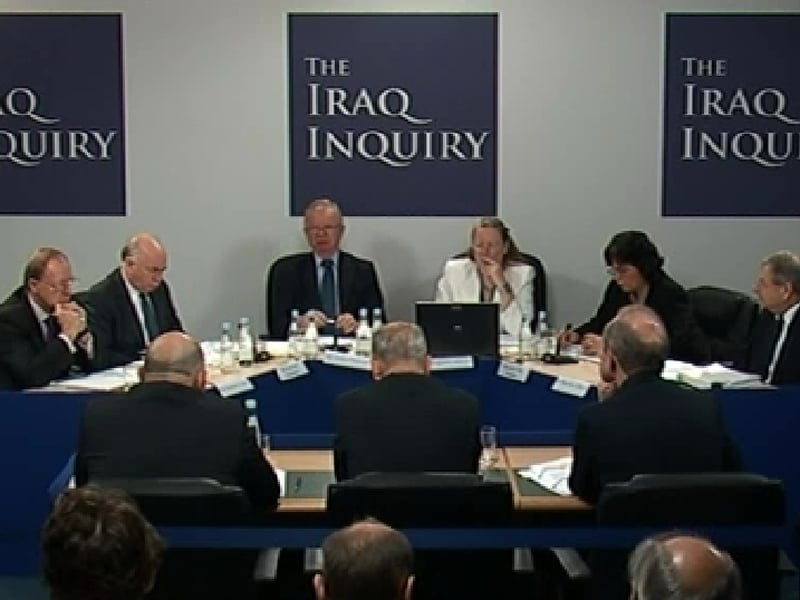
The long-awaited public inquiry into Britain's role in the Iraq war has opened with a promise not to 'shy away from criticism' of individuals or institutions.
The inquiry panel is chaired by Sir John Chilcot, a former head of the Northern Ireland Office.
But six and a half years after then prime minister Tony Blair led Britain in backing the US-led invasion to oust Saddam Hussein, inquiry chairman John Chilcot stressed that no-one was on trial in the inquiry, due to last a year.
'What we are committed to, and what I believe the British general public can expect from us, is a guarantee to be thorough, to be impartial, to be objective and fair,' he said in opening remarks.
'As I have said before, we are not a court of law nor are we an inquest nor indeed a statutory inquiry; and our processes will reflect that difference,' he added.
The opening weeks will include an examination of the intelligence available to the British government in the run up to the 2003 Iraq invasion.
There have already been four separate inquires into aspects of the Iraq war but none have had the remit given to this inquiry.
It will examine events from 2001 to this year, covering the decision to go to war, the conflict itself, and the aftermath.
All witnesses will give their evidence in public unless there are security reasons not to do so.
Both the former and current British Prime Ministers, Tony Blair and Gordon Brown, will be called to give evidence in the New Year.
The inquiry's findings are unlikely to be published before 2011.
