


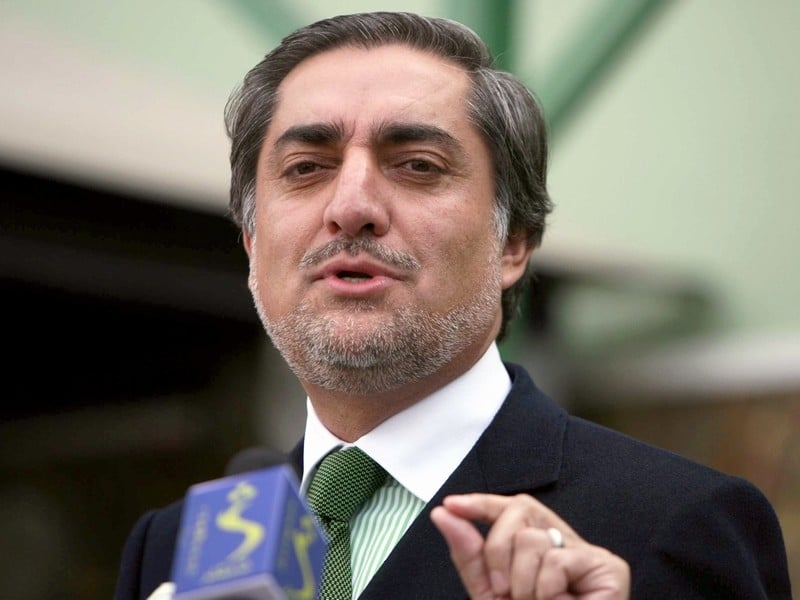
Afghanistan opposition candidate Abdullah Abdullah has pulled out of this week's run-off presidential election.
Mr Abdullah said: 'The decision which I am going to announce was not an easy one.
'It was a decision that I have taken after wide-ranging consultations, with the people of Afghanistan, my supporters and influential leaders.
'In protest against the misconduct of the government and the Independent Election Commission (IEC), I will not participate in the election.'
Mr Abdullah's decision not to contest the run-off leaves doubts over the legitimacy of the next government.
President Hamid Karzai has said that he hopes there would be an election run-off but would abide by any ruling against the ballot.
'My hope is that the election is conducted and people elect their president,' Mr Karzai said in an interview with a local radio station.
'I will proceed in the light of Afghanistan's constitutional previsions (but) we are obliged to follow whatever the Independent Election Commission (IEC) orders at a later stage,' he said.
Commission expects run-off
The IEC has said the run-off election will take place as scheduled this week.
Daoud Ali Najafi of the IEC said: 'The deadline to withdraw has passed, therefore the commission is determined to conduct a run-off election.'
Following the widespread vote-rigging in the first round on 20 August, Mr Abdullah had demanded President Karzai sack the head of the IEC Azizullah Ludin and suspend four ministers who campaigned for the incumbent.
Mr Abdullah's camp had set a deadline of yesterday for Mr Karzai to bow to his demands, saying that he would not take part in a contest that would not be free and fair.
Mr Karzai's share of the vote in the first round fell to 49.67% after an UN-backed watchdog deemed around a quarter of all votes cast to be fraudulent.
Mr Abdullah had won just over 30% of the vote in the first round.
UN seeking legal conclusion
The head of the UN mission in Afghanistan said he wants a legal and timely conclusion to the election.
Kai Eide said: 'This is clearly a decision he has taken after a long period of discussion and reflection.
'The next step must be to bring this electoral process to a conclusion in a legal and timely manner.'
British Prime Minister Gordon Brown said he hoped an Afghan government that responds to the will of the people emerges following the decision.
Mr Brown said: 'This decision was clearly carefully considered, and I welcome Dr Abdullah's readiness to play a continued role in the national dialogue.
'I am confident that Afghanistan's leaders will support the remaining steps of the democratic process.'
