


Zimbabwe's government has applauded the failure of a UN attempt to impose fresh sanctions on President Robert Mugabe and his close officials, but there was exasperation in London and Washington.
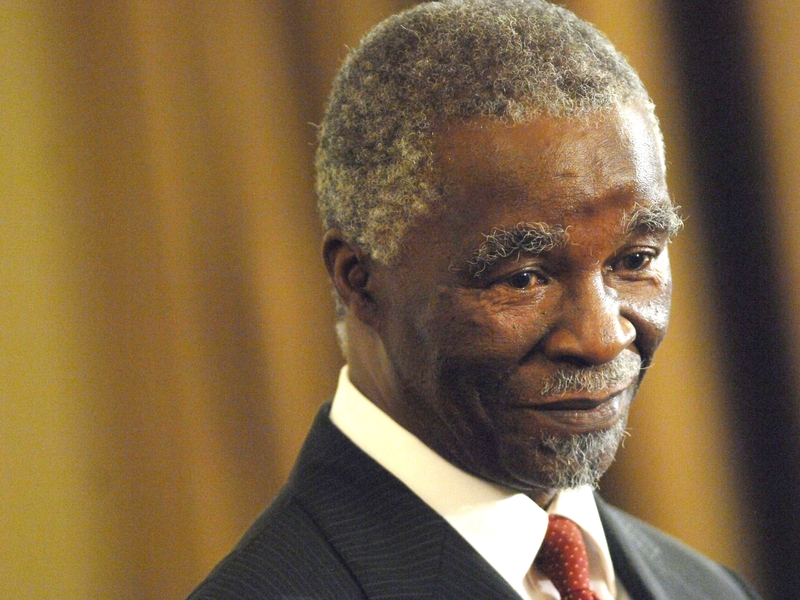
Particular praise from the Harare regime was bestowed on South African President Thabo Mbeki, who has been criticised for his policy of 'quiet diplomacy' by those who want to put Mr Mugabe under greater pressure.
'We would like to thank President Thabo Mbeki, who is a leader par excellence, as he has not yielded to international pressure and to the machinations of the West led by Britain and United States,' Zimbabwe's Information Minister Sikhanyiso Ndlovu said.
Yesterday, China and Russia vetoed the US draft resolution that would have imposed an arms embargo on Zimbabwe, as well as an assets freeze and travel ban on Mr Mugabe and 13 of his closest officials. South Africa, Libya and Vietnam voted against the resolution, while Indonesia abstained.
British Foreign Secretary David Miliband said the decision would be 'incomprehensible' to the people of Zimbabwe.
America's UN envoy warned that Russia's veto cast doubt on its reliability as a G8 ally. Russia later slammed this criticism as 'unacceptable'.
Mr Mugabe was re-elected in a run-off last month after the main opposition leader Morgan Tsvangirai pulled out, citing a campaign of intimidation and violence against his supporters that killed dozens and injured thousands.
Mr Mbeki is trying to mediate between Zimbabwe's ruling ZANU-PF party and Mr Tsvangirai's Movement for Democratic Change, but has come in for increasing criticism, particularly from Britain and the US, for not being more outspoken against Mr Mugabe.
'We are surprised by what appears as Mbeki appearing to protect Mugabe while Mugabe uses violent means to fragment the opposition, US Ambassador to the UN Zalmay Khalilzad said after the UN vote.
'I think he [Mbeki] is out of touch with the trends inside his own country.'
The South African government insisted, however, that dialogue between Zimbabwe's rival political parties would be enhanced by the rejection of the sanctions.
A second day of talks between representatives of ZANU-PF and the MDC were held in South Africa yesterday as the parties work to prepare ground for substantive negotiations on the country's crisis.
