

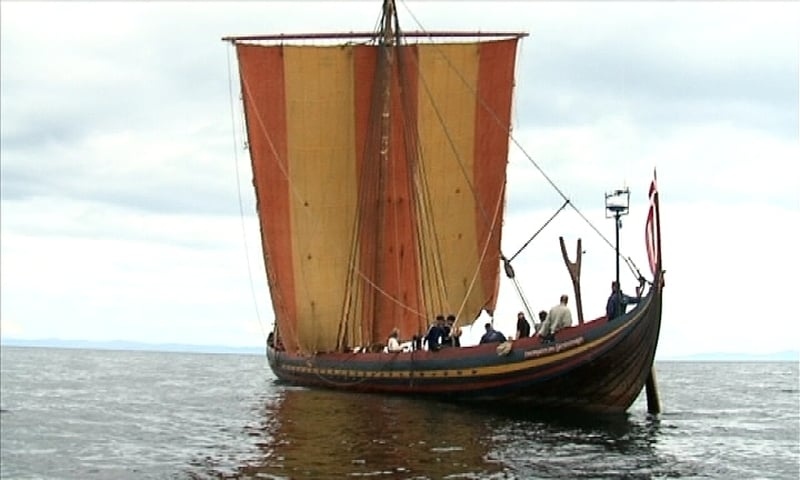
A replica Viking longship has set off on a 2200km return journey from Dublin to Denmark.
The Sea Stallion of Glendalough began the six week trip from the mouth of the River Liffey after almost a year on display in Collins Barracks museum.
More than 1,000 people turned out to wish the vessel and its 65 crew a safe journey.
Dr Martin Mansergh, junior minister responsible for culture and arts, led the tributes as the boat set out from Custom House Quay to the sound of a piper's lament.
‘This magnificent ship symbolises the shared history of Ireland and Denmark and will continue to link in friendship and community, both our peoples and countries now and into the future,’
he said.
The 30m Sea Stallion is a direct copy of the Skuldelev 2 built in Dublin in 1042 and believed to have been scuttled in Roskilde Fjord, near Copenhagen, later that century.
The remains of the ship were excavated in the early 1960s along with four other similar vessels.
The four year reconstruction took place at a boatyard attached to the Roskilde Viking Ship Museum before a crew was drawn up to complete the voyage to Ireland.
The return journey will take place along the south coast of England with the vessel due to berth in Portsmouth in a fortnight's time.
The opened decked Sea Stallion put to sea as heavy downpours hit the city, giving the crew an early taste of life on the open water.
The vessel, packed with food, lifejackets and survival suits will be accompanied on the journey by a supply ship.
It is expected in Roskilde, the Danish capital at the time of the Vikings, on August 9.
The Sea Stallion has been on display at the National Museum at Collins Barracks since last August as part of a special Viking-themed exhibition.
The trip, tracing the path Vikings took as the visited the shores of Britain and Ireland 1,000 years ago, was part of the Danish maritime archaeological project 'Thoroughbred of the Sea' the most ambitious project of its kind ever undertaken.
The expedition tested the ship's seaworthiness, speed giving valuable information on Viking longships, their construction, use of raw materials, navigation, sailing skills and organisational strengths.
Paul Maloney, chief executive of the Docklands Authority, said: ‘Once again we acknowledge the crew and all those involved with this magnificent longship which has been such a wonderful asset to our city.’
‘We wish them well over the coming weeks as they set sail on their final voyage.’
