


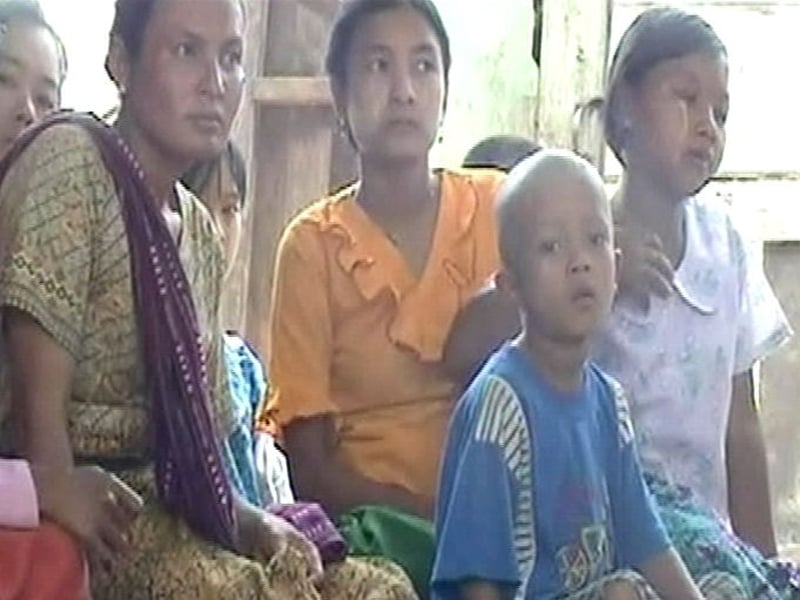
The Burmese authorities have agreed to invite neighbouring countries to provide aid workers to help victims of cyclone Nargis.
However, more than 100 international UN aid workers already in Burma are not being allowed beyond Rangoon.
And it is not clear whether the aid workers from Bangladesh, China, India and Thailand will be permitted to enter the worst-affected regions.
The official death toll in Burma, also known as Myanmar, is estimated at 66,000, and the UN has warned of a second wave of deaths unless aid reaches up to 2.5m people.
The UN is to send one of its most senior officials, humanitarian chief John Holmes, to Burma. He says the country's military government must accept more help.
The EU's top aid official has also warned that the military government's restrictions on foreign aid workers and equipment were increasing the risk of starvation and disease in the country, which is also known as Myanmar.
Nearly two weeks after the deadly storm tore through the heavily populated Irrawaddy delta rice bowl, medicine and temporary shelter have been sent out in dribs and drabs to devastated communities.
'People all over the world want to help Myanmar but the government is blocking medical teams,' said one relief worker in Rangoon.
The UN has called for a high-level donors' conference to deal with the crisis.
Louis Michel, the EU's top aid official, is in Rangoon for talks with the junta but his mission comes a day after Thailand's Prime Minister, Samak Sundaravej, was told Burma could deal with 'the problem' by itself.
'We want to convince the authorities of our good faith. We are there for humanitarian reasons,' Mr Michel earlier told reporters.
He dismissed suggestions from some European countries that they should bring in aid without waiting for permission from the authorities.
Britain's UN ambassador, John Sawers, has indicated that a high-level conference would be more than a donors' meeting, calling it a 'major international meeting' in line with British Prime Minister Gordon Brown's calls for a UN summit on co-ordinating aid efforts in Burma.
UN Secretary-General Ban Ki-moon has also proposed appointing a joint coordinator from the UN and the Association of Southeast Asian Nations to oversee aid delivery and has said he would soon send humanitarian chief Mr Holmes to Burma.
Signs of aid 'stacking up'
A senior US military official in Washington said there were signs aid was stacking up at Rangoon airport and Washington wanted to fly helicopters to the areas worst hit.
Officials said that despite reports some supplies were being stolen or diverted by the army, the humanitarian needs were so great that they would keep making deliveries - while continuing to urge that US aid workers be granted visas.
'I think at this moment we have to drop politics and just help,' said Frank Smithius, head of Medecins Sans Frontieres.
'The army is definitely distributing food in certain areas, they're not doing nothing. But it's not enough. In some areas there's enough food but not enough water and shelter. In other areas we see that they have nothing,' he added.
