

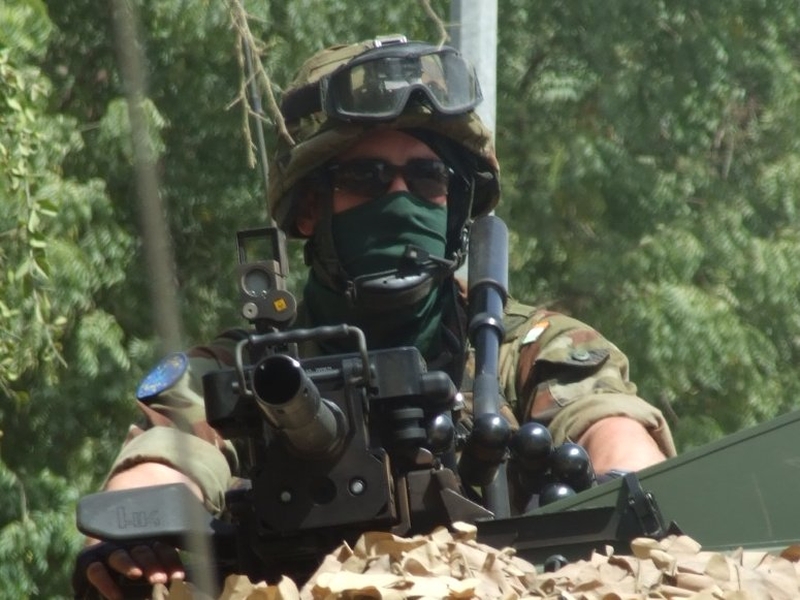
All of the 50 Irish Rangers deployed to Chad in the past few weeks have now taken up position in their temporary base at Abeche, 965km from the capital N'Djamena.
They will spend the next few weeks assessing security in the designated Irish territory, and identify likely locations to accommodate the main body of 400 Irish troops being deployed there by the middle of May.
All of the vehicles, weapons, and supplies flown from Dublin on huge cargo aircraft have also arrived in Abeche.
Meanwhile, Minister for Defence Willie O'Dea has said that the disappearance of a French soldier will have no impact on the Irish mission.
The soldier apparently crossed the border from Chad to Sudan by mistake early this week. Discussions are now under way between the French and Sudanese authorities about identifying the body.
Events to mark Ireland's UN involvement
Arrangements are being made to celebrate the 50th anniversary of Irish Defence Forces involvement with UN peace missions.
A military parade is planned in McKee Barracks in Dublin on 26 June to which surviving veterans from all early deployments will be invited.
A special commemorative stamp will be issued, and a major photographic display is being organised at Collins Barracks Museum.
 The Defence Forces made thier first contribution to peacekeeping in 1958, when 50 officers joined the UN Observer Group in Lebanon.
The first mission with an armed Irish contingent was to the Congo from 1960 to 1964.
Large groups of Irish soldiers have since served on UN missions in Cyprus, Sinai, and Lebanon (for 23 years). They have also served in Eritrea, East Timor, Liberia and in Lebanon for a third time.
Irish troops have served on humanitarian missions in Rwanda, Macedonia and Sri Lanka.
There are currently 470 soldiers serving on 18 missions abroad. The largest are in Kosovo, Chad and Bosnia. All of these are UN mandated operations.
