


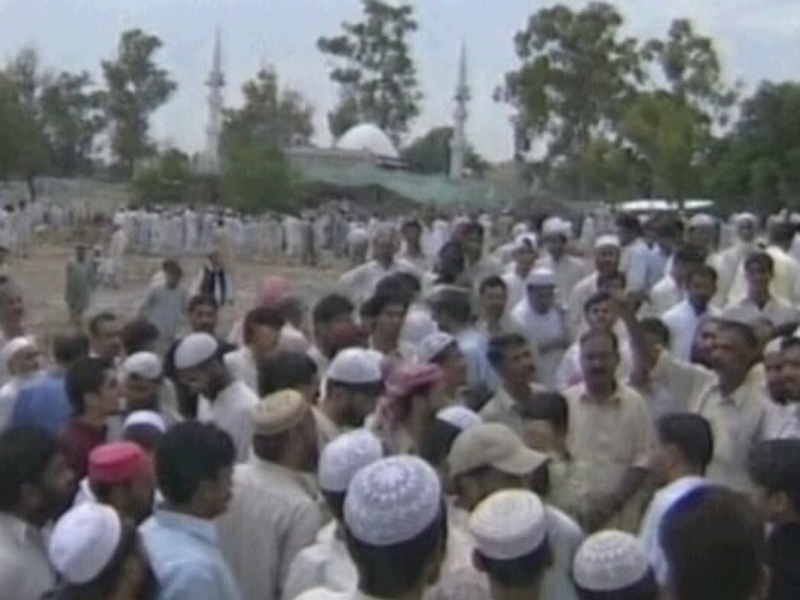
Security has been heightened in Pakistan after yesterday's suicide bombing during protests at Islamabad's Red Mosque killed 13 people.
There are fears of further attacks and authorities are investigating how yesterday's attacker was able to strike at a crowded market in the heart of the capital.
The bomber targeted officers who were policing Islamic students occupying the controversial Red Mosque. The students were demanding that their jailed former cleric lead prayers at the reopening of the mosque.
56 people were arrested over the disturbance, but no one has yet claimed responsibility for the attack.
Following heavy fighting between government troops and militants at the mosque earlier this month, the badly-damaged building was repaired.
Government workers repainted the formerly red building in pale yellow and patched bullet holes and scorch marks from explosions.
The mosque was formally reopened for traditional prayers yesterday.
However, hundreds of radical students chased out a government-picked religious elder who was meant to lead the prayers and demanded the return of the mosque's chief cleric, Maulana Abdul Aziz, who is now in jail on terror charges.
The protestors daubed red paint over the walls and police in riot gear later fired teargas at rock-throwing demonstrators.
The situation ended with the death of 13 people in the blast at the Aabpara market a few hundred metres away.
The mosque has now been closed indefinitely.
