


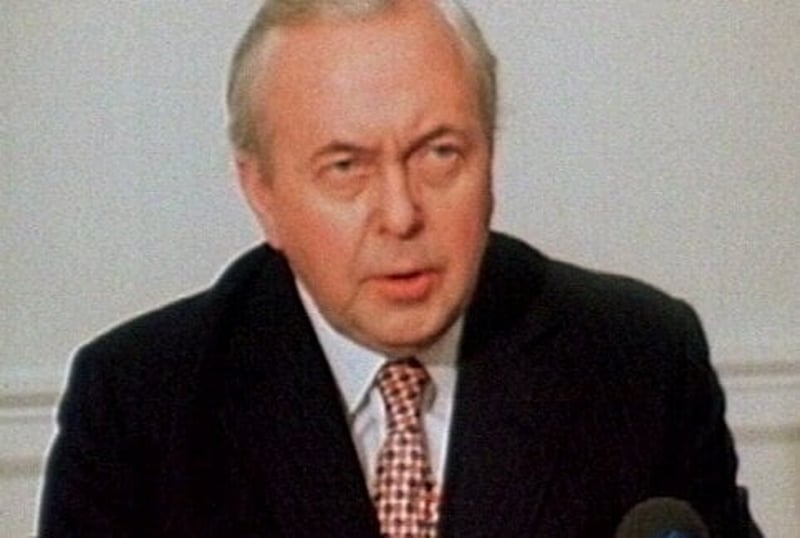
Confidential Government documents from 1976, which have been released today under the 30-year rule, shed new light on the relations between Dublin and London in the year that saw the British Ambassador to Ireland assassinated by the IRA.
They also show that British Prime Minister Harold Wilson was considering withdrawing from Northern Ireland, but that there was a very different tone from London when he was replaced by Jim Callaghan.
The confidential State papers from Dublin, London and Belfast, mainly cover the year 1976.
It was a time of considerable tension between the two governments, with Dublin deeply suspicious of Harold Wilson, because he had authorised contacts with Republicans, and because they believed he wanted to pull out of Northern Ireland.
On 10 January 1976, Mr Wilson wrote what he described as an 'apocalyptic note', speculating that Britain could be forced out.
That did not happen and Mr Wilson stood down to be replaced by Jim Callaghan, regarded by the Government as a safer pair of hands.
But Anglo-Irish relations were rocked in July by the assassination of newly arrived British ambassador Christopher Ewart-Biggs.
Before his arrival, the Irish Embassy in Paris, where he was then based, said Mr Ewart-Biggs cultivated a somewhat eccentric manner, but was highly professional and had an acute mind.
After presenting his credentials to President Cearbhall Ó Dalaigh, the ambassador reported to London that the President was 'perhaps not a very high calibre first citizen, but he is friendly'.
12 days later, Mr Ewart-Biggs was dead, blown up by an IRA bomb outside his residence in Dublin.
