


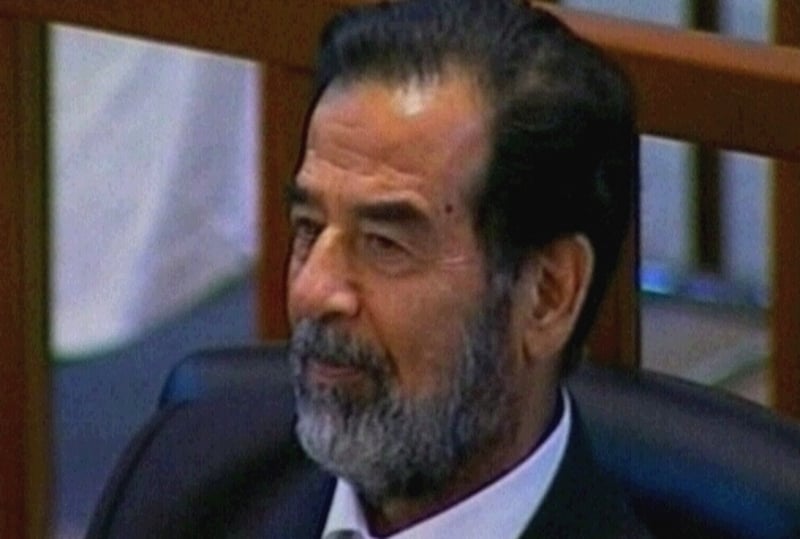
There has been mixed reaction to the death sentence imposed on former Iraqi leader Saddam Hussein.
The Minister for Foreign Affairs, Dermot Ahern, said that in the past Ireland and its EU partners had made it clear to the Iraqi authorities that they were opposed to courts applying the death sentence, and that Ireland was opposed to it being applied in this case.
Finland, which currently holds the rotating EU presidency, said the hanging should not be carried out.
Meanwhile US President George W Bush hailed the verdict as a 'major achievement' and a 'milestone' for Iraq's move to democracy.
US officials have denied suggestions that the verdict was hastily delivered to help the Republican campaign in advance of mid-term elections on Tuesday. However a full written version of the ruling will not be available for several days.
Welcoming the ruling, Iraqi Prime Minister Nuri al-Maliki said Hussein was a criminal who deserved the punishment he was given. He hailed the sentence as a 'verdict on a whole dark era'.
Trial flaws highlighted
Amnesty International said the trial was 'marred by serious flaws' and a Derry solicitor who advised Hussein's legal team, Des Doherty, said the court was an 'illegitimate creation', set up by US and British authorities.
UN human rights chief Louise Arbour called for a moratorium on executions and said the rights of the defendants to a fair appeal must be 'fully respected'.
During the trial, three defence lawyers were murdered, a judge resigned over political interference and numerous flaws in evidence were highlighted.
Saddam Hussein, 69, was sentenced to death for crimes against humanity in ordering the deaths of 148 Shia residents of Dujail, north of Baghdad, after an assassination attempt in 1982.
An appeal is due to begin immediately and deliberations are expected to last one month although no date has been set to announce the final decision.
If the nine-judge appeals panel upholds the verdict, Saddam Hussein will be hanged within 30 days of its ruling.
