




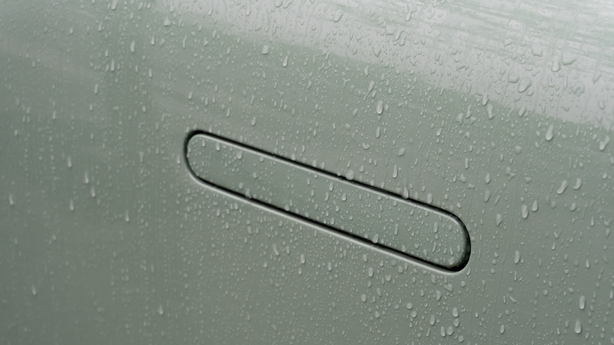
They are much favoured by car designers these days because they help to reduce drag and look a lot smarter, but hidden or retracted door handles are now the focus of a ban by the Chinese government.
They were originally pioneered by Tesla but have been adapted by many other car companies, such as Xpeng, BYD and Lexus, because of their aesthetic appeal.
The handles are usually opened by using a fob or a phone or, manually, by pressing them in. However, after investigations into two fatal crashes involving Xiaomi EVs in China, when doors could not be opened by rescuers, the Ministry of Trade says they will no longer be allowed on new cars from January of next year.

Instead, doors will have to have a mechanical release - internally and externally - to allow easier access in the event of a crash or battery failure.
The US National Highway Traffic Safety Administration is already investigating the issue after a number of accidents when the doors of cars could not be opened by emergency crews.
Tesla is currently looking at the issue, and Bloomberg News reports that the company’s chief designer has indicated a redesign might be in the offing.
CBS News quoted Chris Liu, a Shanghai-based senior analyst at technology research and advisory group Omdia, saying:
"The global impact of China's new rules could be substantial, and other jurisdictions may follow suit on retractable door handles. Carmakers will be facing potentially costly redesigns or retrofits.
"China is the first major automotive market to explicitly ban electrical pop-out and press-to-release hidden door handles," he said. "While other regions have flagged safety concerns, China is the first to formalise this into a national safety standard, Mr Liu told CBS.
