


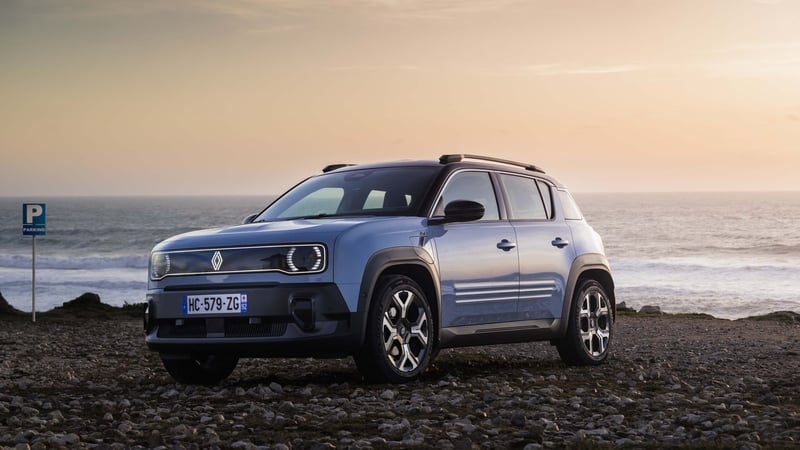

Not all car name revivals are successful. Volkswagen's attempt to revive the Beetle in 1998, for example, wasn’t exactly a runaway success, although we may yet see the iconic name revived again as an all-electric model.
Renault will be hoping for a little more impact with the reintroduction of the Renault 4, a car that bounced its way from the early 1960s to the early 90s as an idiosyncratic alternative to traditional family cars - some even see it as the original SUV, although the concept didn’t exist back then.
It was popular in Ireland - it was even assembled in Dublin and Wexford - and was adapted as a Garda car and a delivery van for An Post at the height of its popularity.
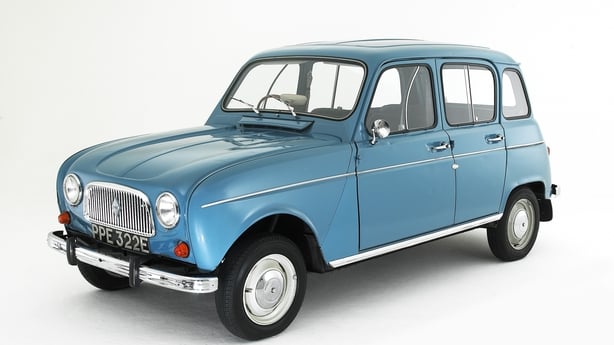
What defined the 4 was its relatively chic design for the time and its versatility. The same can be said for the latest version, with its design nods to the original, such as the circular headlights, the three-part lights at the rear and slightly boxy stance.
But nostalgia only goes so far, at least until we see the electric canvas retractable roof that Renault will introduce next summer.
This time, the car is all-electric and has two battery options. The entry-level battery is a modest 40 kWh unit with a claimed range of 308 kilometres and the second option is a 52 kWh unit with a claimed range of 408 kilometres. The power outputs are 120 horse power and 150 horse power respectively.
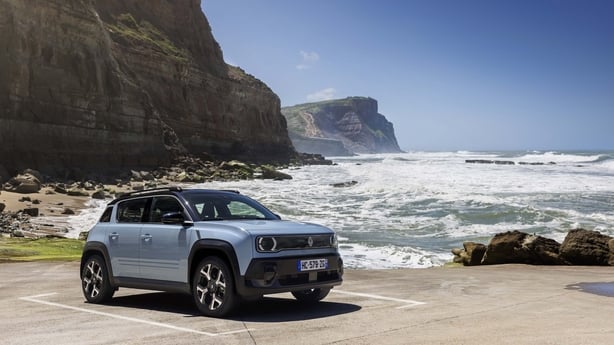
Cold weather experience in EVs recently prompts me to again draw attention to claimed ranges and the fact that that is exactly what these projections are.
The smaller battery version costs from €27,995 (after grants) and the bigger one from €32,995. The top of the range version starts at €34,995. For a car of its size and spaciousness, the pricing is certainly keen. Most people, however, will gravitate to the bigger battery for more comfortable ranges.
Much use has been made of the interior of the new Renault 5, and the 4 gets the same elements of flair, including colourful materials throughout the car - something other manufacturers should take note of to give their cars less plastic and more recycled chic.
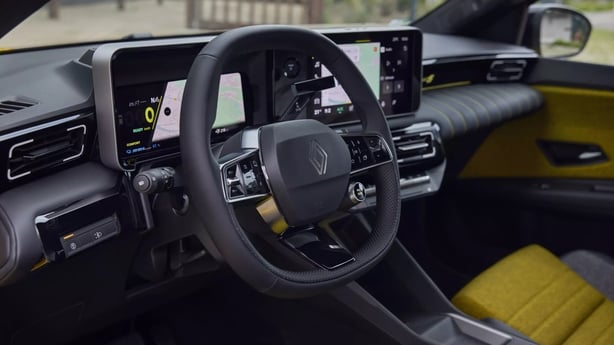
Another big plus is the availability of a 10.1" infotainment screen with built-in Google services, including Google maps, but this isn’t available on the entry level. It comes on the next version up, which starts at €32,995.
Unlike the new Renault 5, the 4 gets some welcome extra space, especially in the rear. Back seat passengers get more legroom because the 4 is 222 mm longer than the 5.
The boot is a reasonable 420 litres, and more space can be had by dropping the back seats. Because of battery alignment, however, the seats do not fold flat, which will be a disappointment to some who want that extra loading space.

The new One Pedal function - available from the middle version up - is the system we have seen in Nissan cars. It optimises regenerative braking and allows for the pedal to be used for both braking and acceleration
Renault says the 52KWH battery can be charged from 15% to 80% in about 30 minutes on a fast charger, but don’t expect all fast chargers to be that fast in Ireland. The home charging time is just under five hours, but remember you do need home charging to live comfortably with an EV.
Standard equipment includes 18" steel wheels, automatic high/low beam adjustment, automatic windscreen wipers with rain sensor, electric front windows, keyless entry, automatic air conditioning and a suite of safety features.
