


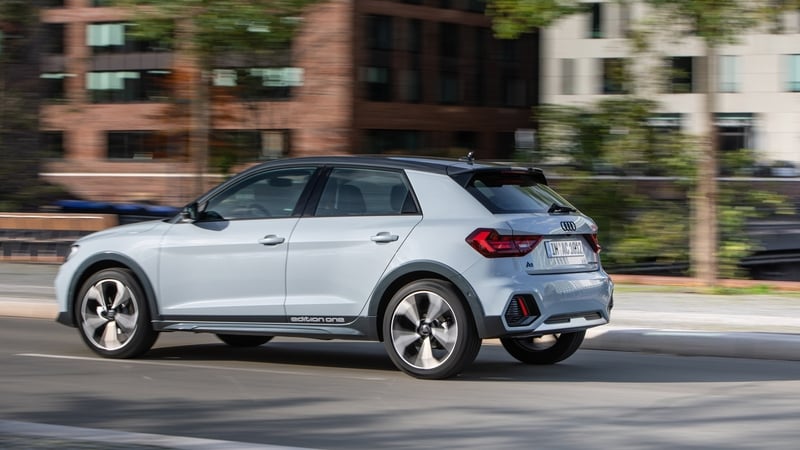
Audi's plucky Citycarver is a razor-sharp statement in the supermini market, but will its price tag be bluntly rejected by car buyers, asks James McNamara.
For those who can afford one, the 'little run around’ on the driveway has long been the preserve of the modern two-car family; the one for nipping to the chipper, leaving at a friend’s house overnight after a dinner party and the perfect car to eventually teach your kids in.
But that very handy second vehicle always had limitations - it was not one to venture too far in, certainly not with four passengers and a boot crammed with luggage in poor driving conditions.
Nowadays, for sensible reasons like the environment, improved public transport and rising running costs, many households find it increasingly difficult to justify the expense of running anything more than one car.
But what if an extra set of wheels could deliver more than just local convenience? What about a compact commuter car that simultaneously boasts all the qualities of a much larger family motor?
Enter the Audi A1 Citycarver. Its striking name alone makes a lasting first impression, conjuring up images of a rapier-like vehicle, scything through rush hour and refusing to succumb to the inconvenience of urban congestion.
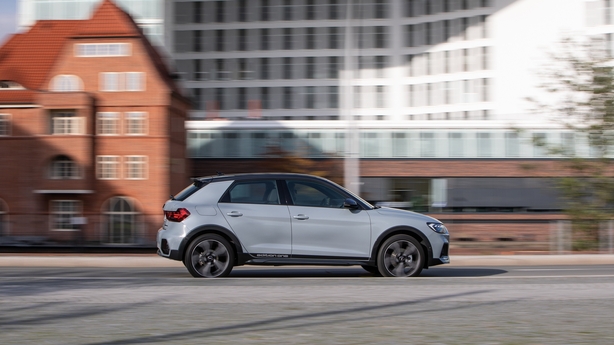
This precocious compact crossover isn’t found wanting in the looks department. It’s dinky but substantial, with what on first inspection resemble four hand grenades pinned to the corners of the front and rear bumpers.
While its rough and tough plastic armour gives it a slightly military vibe, it really doesn’t feel at all aggressive.
LED headlights give this mini a steely stare, while its black glossy roof perfectly offsets this version’s gleaming white exterior.
Inside things are equally impressive. The Citycarver’s hexagonal honeycomb charcoal grey patterned seats offer fabulous contemporary styling.
The digital dashboard is clean and reassuringly uncomplicated, without the confusion of multiple settings that make some car manufacturer’s equivalents more of a nuisance than desirable feature. It essentially mimics classic car dials with a rev counter and speedometer, but also displays the car’s current range based on fuel levels and, most importantly, fuel efficiency.
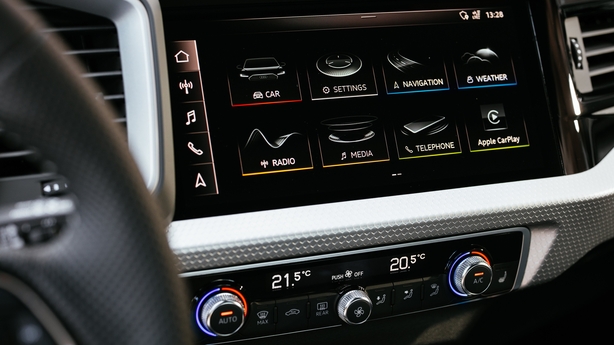
The car’s infotainment dashboard is seamlessly integrated into the dashboard and when powered off takes on the sympathetic appearance of a glossy black panel, rather than a gloomy deactivated electronic device.
"The car's extra height also helps further soften the ride and it doesn’t bounce its occupants around, unlike some less refined crossovers on the market"
Further kudos to the folks at Audi for keeping fundamentals like air temperature and fan levels operated by physical twisty dials, removing the frustration of haplessly prodding at a smeared touch screen to defog the dashboard when temperatures fall.
Just below, the gearstick knob – shaped with a nod to the hexagonal seat pattern - is pleasantly chunky in the hand with a metallic finish to keep palms cool when shifting through the gears.
So where does all this enhanced sense of space and presence come from?
Despite having the genetic code of the humble Audi A1, the Citycarver has cleverly increased its capacity with some good old-fashioned height - 50mm to be exact achieved through a 35mm boost from taller suspension and another 15mm leg-up from its chunky tyres.
The extra height certainly does what was intended. The cabin has the feel of a much larger vehicle and the perceived roominess extends to the rear as well, with no reports of feeling cramped from passengers young and old.
The only clue that this is actually a small car is its boot space which, while generous, is limited at 335 litres, which is small enough to concern those who might well want a small car but who occasionally require the space to carry more than a couple of bags of shopping.
Time to move to performance – a key factor that can often result in smaller cars being marked down.
This is only a 999cc three-cylinder turbo and super-charged engine, something I had an inkling of but deliberately didn’t investigate initially in order to keep an open mind.
Usually, the biggest clue you are driving a small engine souped up with a punchy turbo is how the vehicle responds from a standing start.
The CityCarver is a little vague, if only for a moment, when pulling away from the lights. Once in motion, however, everything goes swimmingly. This TFSI 6-speed CityCarver with 116bhp is really quite exhilarating and capable of hitting 100km/h in 9.9 seconds – it's not lightning quick but this is essentially a city car that may roam further on occasion.
It would be sheer folly to give a car a name like this and not pay close attention to its handling during the design phase.
Audi certainly weren’t slacking in this department and the CityCarver tidily obliges around corners and doesn’t even consider budging when weaving along windy roads at speed.
The car’s extra height also helps further soften the ride and it doesn’t bounce its occupants around, unlike some less refined crossovers on the market.
Economy wise, according to its own calculations, this car was coming in at 6.3l/100km, which is pretty respectable given it was being put through its paces. It’s also slap bang in the middle of the manufacturer’s claimed efficiency range and an impressive average for a car that did mostly city driving on the test.
The Citycarver has a very attractive annual road tax of just €200. But at €30,150, the version of the Citycarver I test drove might give your wallet short sharp stabbing pains.
So what else is out there in the compact rugged crossover market?
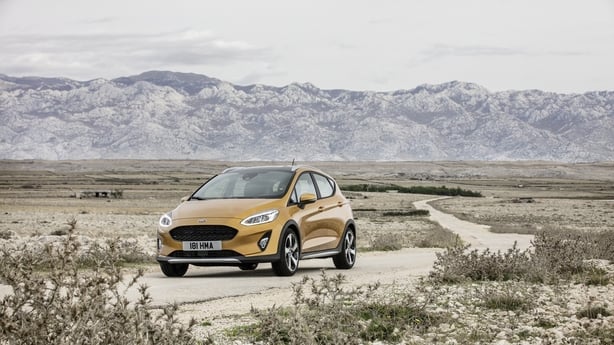
One to consider is the hardy Ford Fiesta Active, which has also been given a slight stretch and a robust exterior. It suddenly becomes even more appealing with prices starting at at €21,690 - around a €10,000 saving on the Citycarver.
If you’re still chasing your dream SUV but with a smaller budget, the Dacia Sandero Stepway might be even more attractive with almost €20,000 sliced off the cost of a Citycarver.
And let’s not forget, underneath its Audi A1 Sunday best, the Citycarver is perched on a Volkswagen Polo platform. It does have the Audi name though, and you pay for it. Just throwing it out there...
