


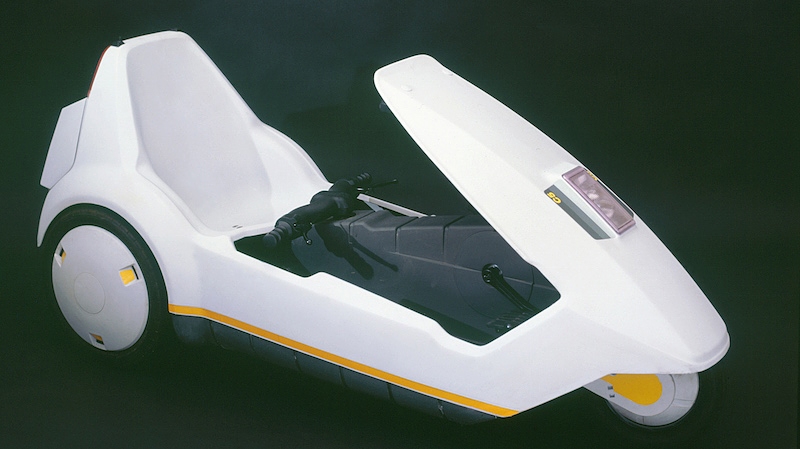
First on display in the museum following its launch on January 10 1985, visitors can again see this electrically-powered tricycle, which was gifted to the museum by its manufacturer.
Despite failing to catch the public's imagination at its launch, today the C5 is regarded as an icon of 1980s design and a pioneer of alternative-fuelled transport, as well as an endearing British failure.
The Sinclair C5, masterminded by inventor and entrepreneur Clive Sinclair, was designed to be an inexpensive and nimble alternative for one person to travelling by car, bus or bicycle.
Marketed as "a new power in personal transport", it had a retail price of £399 and could reputedly be driven for five miles on just one penny's worth of electricity.
However, the C5 was poorly received by the press and public alike.
Its diminutive size made it vulnerable on the road, while the claimed range of 20 miles on one battery charge was modest, due to the limitations in contemporary battery technology.
Even if the 'weather cheater' poncho, offered as an accessory, was worn by the driver, the C5's lack of rain protection also ensured a short production life.
Although Sinclair had expected to sell up to 100,000 units per year, only 9,000 C5s had been built by October 1985, following the end of production and the collapse of the company that Sinclair had set up to produce it.
