


Over 100 years after Henry Ford pioneered the moving assembly line, Ford is still refining its founder's industry-changing innovation.
To address issues such as an ageing workforce and the physical tolls of long-term working on the line, Ford convened a team of occupational physicians, production specialists, labour groups and representatives for disabled employees to improve ergonomics, safety and productivity.
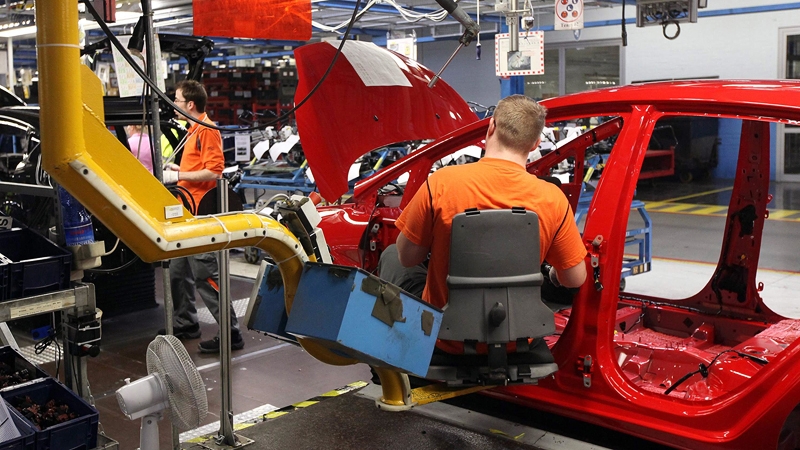
This led to the creation of the 'Happy Seat' - an ingenious swivel chair attached to a rod-shaped suspension. It enables workers to sit in comfort on the production line while assembling cars.
The seat allows workers to sit and glide into the car while fitting pedal boxes, for example, instead of bending over.
The first 'Happy Seat' was installed at the workstation wiring roof antennae at Genk, Belgium, in 1998 with Cologne's 'Happy Seat' following in 2002.
Today, 'Happy Seats' are also in use at Valencia, Spain, and Saarlouis, Germany.
"It's called the 'Happy Seat' for a good reason," says Eilis Carey, senior ergonomist for Ford of Europe, "it makes a tough job easier for workers in our plants."
Carey continued: "Operations which previously required awkward postures to be maintained for prolonged periods can now be performed in a seated position with adequate lumbar support."
"The ergonomics of the workstation are improved and operators' discomfort and fatigue are reduced, leading to reduced injuries and illnesses, fewer lost work days, and improved quality of the operations," he added.
