


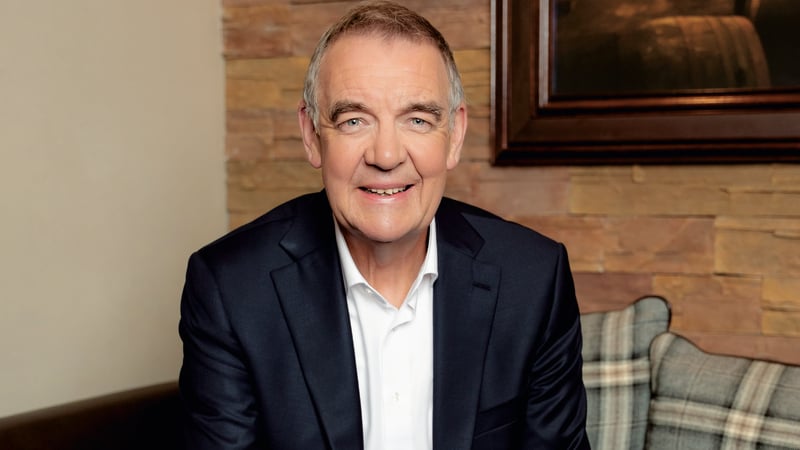

In a new TV series, Museum of Me, broadcaster Bryan Dobson reels in the lives of his father and grandfather, as well as his own career. Donal O’Donoghue meets him at home.
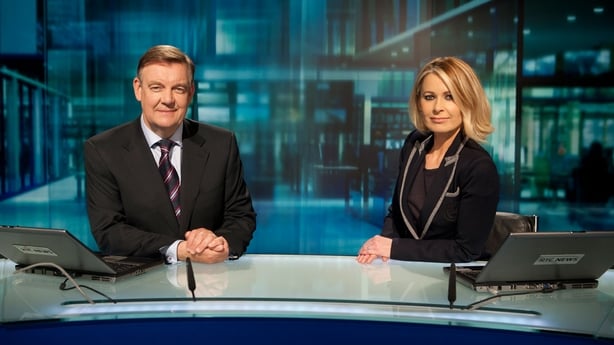
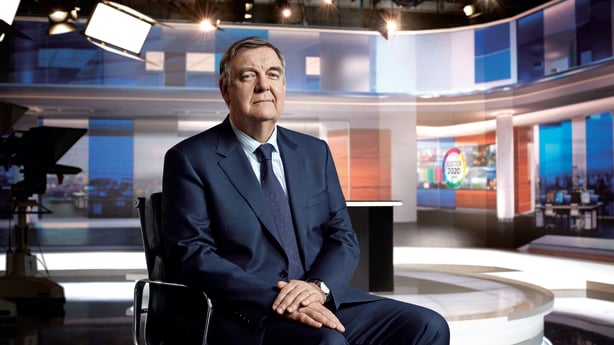
"It’s the voice," says Bryan Dobson, the former RTÉ broadcaster, who for 37 years up to his retirement in 2024 was a household face and voice. Two years on from that May, he still gets the odd look and the inevitable question.
"People will ask, 'where do I know you from?’ when they hear me speak," he says. "Of course I don’t walk around dressed as a newsreader." He laughs. In his news anchor Six One days Dobson, or ‘Dobbo’ as he was known, cut a stylish figure; never without his trademark newsman braces over an immaculate shirt.
To many, he was the face and voice of ‘The News’: authoritative, warm and utterly believable (he’d make a great Traitor, of which more later). But now he’s back on primetime in a new TV series, Museum of Me, a show wherein he’s heard to quip at one point, ‘I should be in a museum myself!"
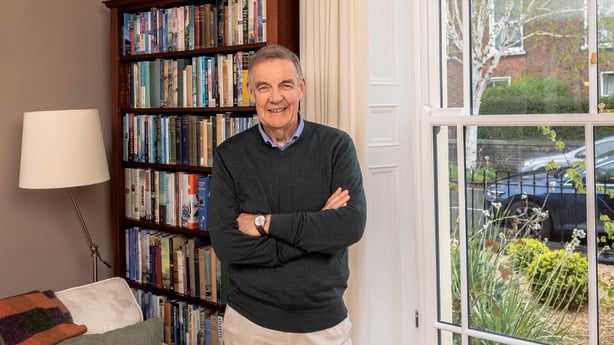
One morning recently, I stopped by Dobson’s terraced home in Portobello, Dublin, to talk of such matters. The bijou front garden bustled with climbing roses ("My wife, Crea, is the gardener; I cut the grass.") and inside the house, the high walls were alive with paintings and books: history, travel guides, memoirs.
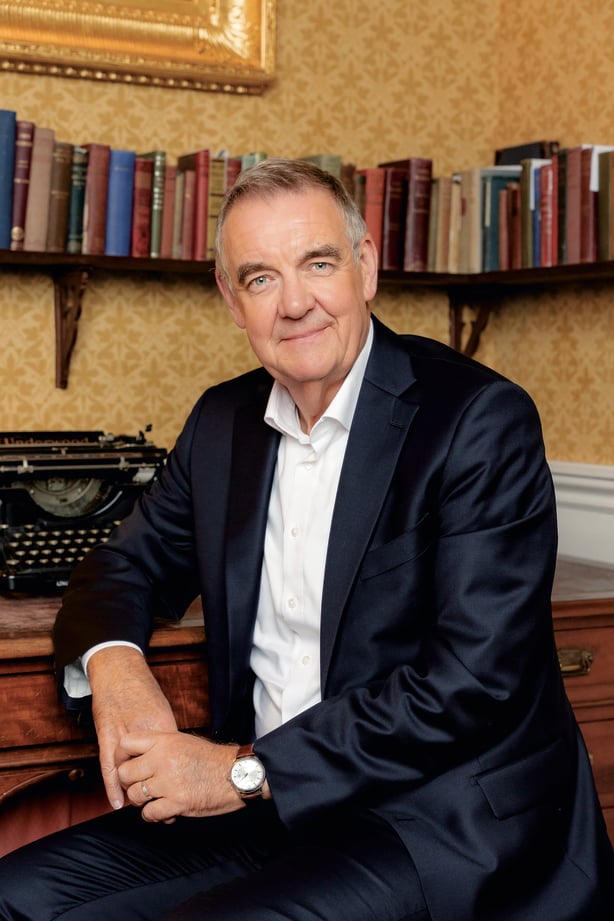
In one corner, a modest TV sat on an antique writing desk. Bryan brings out the biscuits and brews up a pot of tea (he won’t leave home without a well-known Cork brand). ‘How do you like it?" he asks, before pouring in the milk, before the tea.
"It’s probably a Protestant thing," he says, adding that he believes it dates to an 18th century tradition to prevent the cracking of the crockery. It was, he tells me, his wife’s last day at work. "I’ll pop out and buy her some flowers later."
Dobson, who took early retirement at the age of 64, has no regrets. "I miss the company, but I bump into old colleagues now and again," he says. "I had some 37 years in RTÉ and covered so many stories [including the election of Nelson Mandela as South Africa’s president in 1994, the signing of the Good Friday Agreement in 1998, the historic 2011 visit of Queen Elizabeth II] that I didn’t leave anything unfulfilled.
"I still watch and read a lot of news, but my perspective on it has changed. Whereas once I’d look at stories with a professional interest, wondering is there a news angle, now I’m just watching and reacting to the news as a citizen. My wife says that I’m much more annoying now as I’m always giving out about things [he laughs]. But I’ve always been inquisitive, long before I worked as a journalist. And that’s unlikely to change."
Since retiring, Dobson has presented a few documentaries, popped up in a brace of podcasts (Mark Moriarty, his friend Sean O’Rourke) and pens an occasional opinion piece for the Sunday Independent. Museum of Me (imagine an abridged cocktail of Who Do You Think You Are? and The Repair Shop) is hosted by Dermot Whelan, who quizzes six celebrities about three items of personal significance, including a piece for restoration.
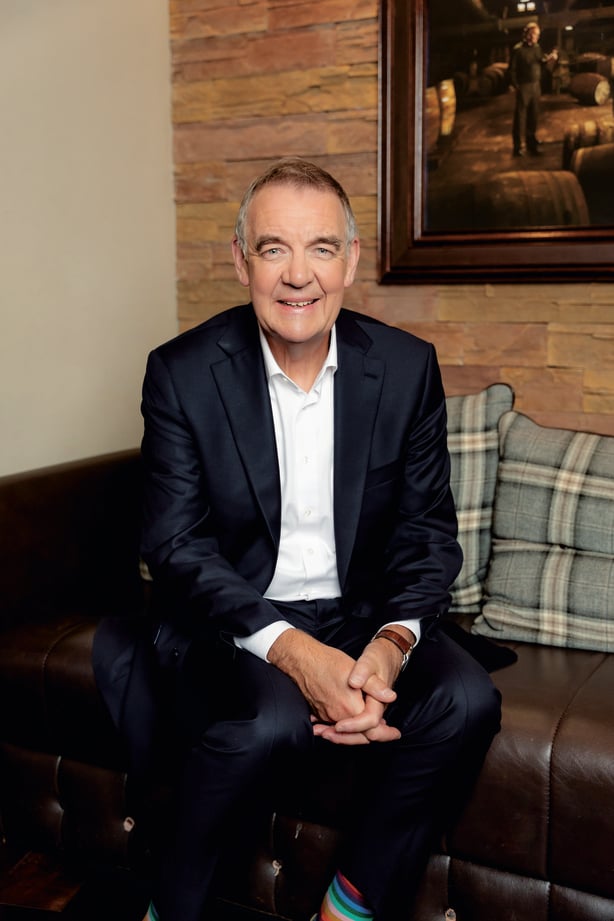
Dobson’s choices are the World War One medals of his grandfather; a wooden bookshelf made by his father (the item for restoration), and a copy of the Good Friday Agreement, autographed by key signatories.
All the pieces, including his mother’s old sewing machine, are then displayed for one night only at Fota House, Cork. "That was a bit disconcerting," says Dobson of the finale. "Like going to your own funeral."
But for a man with a lifelong interest in history, Museum of Me was hard to resist. "The appeal was that it offered an opportunity to reflect on your life and family," he says. "The catalyst was my grandfather’s war medals, the chance to tell that story through his perspective."
The medals, which were bequeathed to Dobson, are in great nick and are accompanied by a packet of tobacco, still intact. "Apart from a small tear on the side of the packaging, which my father told me was done by him as a child, as he was curious about the contents," says Dobson.
"As well as my father’s bookcase, I also offered my mother’s Singer sewing machine, which had been previously used by my grandmother and latterly by my sister, Jane. I chose that because it was the sound of my childhood."
Bryan Dobson grew up in the leafy Dublin suburb of Sandymount. His parents, Violet and James, championed the education of their two children. Even then, Bryan had his nose perpetually in a book.
"There weren’t many books in the family home growing up, but my parents were in a book club, and I lived in the local library in Ballsbridge," he says. "I used to read Ladybird books on history and was always fascinated by history and the history of that part of Dublin I grew up in. I would pore over old maps and compare with the place then and now, that sense of how we live in a constantly changing world. I’ve always taken the view that to understand the present you must understand the past. So, I read history really to try and understand the present rather than the past."
He learned his trade on the beat: firstly, with the pirate radio stations (Southside FM, Radio Nova) and then as a reporter with BBC Radio Ulster from 1983 to 1987. "It was my university as I didn’t go to journalism college," he says of what was also his first time living away from home in Belfast.
Does the Good Friday Agreement stand out as a high point in an illustrious career? "Absolutely," he says. "The background to my growing up in the late ‘60s and ‘70s was The Troubles. It was on the radio every day, discussed at home, and as a journalist, I worked and lived in Belfast. During the darkest days of The Troubles, nobody imagined that there could be an end to it. So yes, [the Agreement] is one of the of the biggest, if not the biggest story of my career in journalism. There still are political challenges in Northern Ireland, but hopefully they will be resolved."
His mother, who died in 2019, was one of his biggest fans. "My mother used to keep all the old news cuttings and interviews I did down the years," he says. "She had a huge interest in people, and maybe that’s where my curiosity comes from. My father died in 1991 when I was just 30. I never really got a chance to know him as an adult, as I’d been living and working in Belfast and then Crea and I were busy starting our own family. It would have been lovely to have had that bit more time with him."
Are there any words of wisdom that he carries from his parents?
"My mother used to say to me when I was jumping around as a kid with the other lads, ‘calm down or this will all end in tears.’ That phrase came me during the crazy days of the Celtic Tiger, and I thought, ‘if we’d only listened to my mother’s advice."
He met Crea when they were both holidaying on Inshbofin. "It was a chance meeting," he says of a relationship that has endured. They have two daughters, Sophie and Hannah, both in their thirties, and two grandchildren, Myles and Lucy. "We don’t have to be asked twice," he says of babysitting duties. "Myles and Lucy are great fun."
But following Crea’s retirement, they’ve planned a road trip to the west of France. His dream holiday would be Antarctica (one of his heroes is the polar explorer, Ernest Shackleton), but that may never happen. "I think Crea would require a bit of persuasion."
In any case, he is essentially a homebird (he co-owns a sailing boat, and the couple have a holiday home in Leitrim). "I really don’t have a huge grá to take off around the world, I like places closer to home."
I’m guessing that down the years, Bryan Dobson has been asked to participate in Dancing with the Stars. "A few feelers were made", he concedes. But it was not for him. Is he a good dancer? He laughs. "I was in the audience during the last series when my friend and former RTÉ colleague, Anne Cassin, was a contestant," he says, waltzing past the answer.
And if there was a celebrity version of The Traitors Ireland, would he participate? He shakes his head: hasn’t seen the show and has no clue what it’s about. I offer a brief description of the reality juggernaut involving liars, truthtellers and backstabbers, and ask Dobson if he thinks he’d make a convincing liar.
"No, I’d be very bad at that," he says. "I have lots of tells, and nobody would believe me."
He recently finished Shane Ross’s book on RTÉ, Saints, Scholars and Scandals, wherein Bryan Dobson is mentioned on page 322. "I saw that," he said, adding that he was a bit disappointed with the publication. "I was hoping that there would be new material, but a lot of it was recycling what we know already, and [Ross] didn’t get any of the key players to speak to him. There is still an untold story there."
I wonder what Bryan Dobson in his interviewing heyday would make of it all, but that time has passed just as he passed on penning a memoir or hosting a podcast ("too much like a full-time job"). But he did get a job last year, appointed by the government as chair of the State Commemorations Advisory Committee.
"It’s my first experience of working inside government as opposed to being on the other side of the fence."
Spending time in Dobson’s company is, as you might imagine, wonderfully pleasant. He shows me two side tables carved by his father (who worked in the wine trade) as well as a stylish wooden lampstand. In the hall, an old grandfather clock ticks the day away, and he tells me that the writing table, on which the TV has taken up residence, used to be a home for empty wine bottles in the days they hosted dinner parties.
And he gives a brief history of how he and Crea found their home some forty years ago. "There was a two-line ad in the back of the Evening Herald which said simply: House for Sale: South Circular Road, City End.’ And they had their home.
Now, at the door, he tells me to stop by again, though I reckon I’d better ring ahead as you never know where he might pop up next.
