


Journalist Caoimhe Mahon documents her experience of microneedling, and shares whether the treatment was worth the results.
Skincare is currently dominating the beauty industry and, in a generation who look towards prioritisation of self-care, developing a unique and beneficial skincare routine has become a must.
With an abundance of brands available, a skincare routine from all your favourite celebrities and a plethora of TikTok trends online, there is no shortage of products to buy or tools to try.
Perhaps one of the procedures having the biggest 'moment' in 2026 is microneedling.
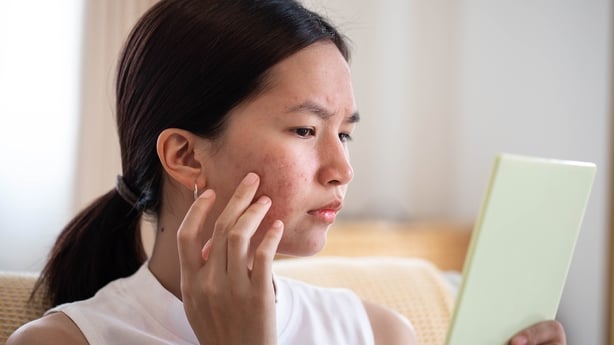
As someone who has always struggled with skin issues, particularly as I entered my mid-twenties, the claim that microneedling could reduce acne scars and dark spots was enough to have me down a research rabbit hole.
After asking friends who had gotten the procedure for their feedback and scouring the internet for ‘before and after’ results, I decided to speak to a local medical lead aesthetic professional, nurse Emma Anderson.
Nurse Emma, ‘The Honest Injector’ based in Killyleagh, Co. Down, is a specialist in full face refinements, a clinical educator and owner of her own award-winning clinic.
Sitting down together, we dissected my skin with a fine-tooth comb – my skin health history, lifestyle, morning routine, product inventory, and what results I hoped to achieve.
Two sessions in and as I wait for my third appointment, I thought I would look back on the experience thus far, offering an insight into my experience and hopefully helping a few of you who may be wondering what exactly this is all about.
Before we dive into my results, though, I thought it would be helpful to have nurse Emma explain exactly what micro-needling is and who it might benefit the most.
What exactly is micro-needling?
"Microneedling is a skin treatment that is used in many clinics across the world. The treatment uses very fine, sterile needles to create tiny and controlled micro-injuries in the skin. These then trigger your body’s natural healing response, boosting collagen and elastin production – two key components for smooth, firm, healthy skin."
Who will benefit most from microneedling?
Microneedling works best for patients with the following skin concerns:
- Acne scarring (especially atrophic scars)
- Fine lines and early skin ageing
- Enlarged pores and uneven skin texture
- Mild pigmentation issues (with caution)
- General skin dullness/loss of elasticity
"Whilst most skin types can be treated through microneedling, it may be more suitable for patients who are unable to tolerate aggressive treatments such as lasers or peels.
"Also, it is always important to me that the patient is a good behavioural fit for the treatment, as it is important they understand that results are not instant and that they will have to correctly follow all pre and aftercare steps."
What can I expect at a microneedling appointment?
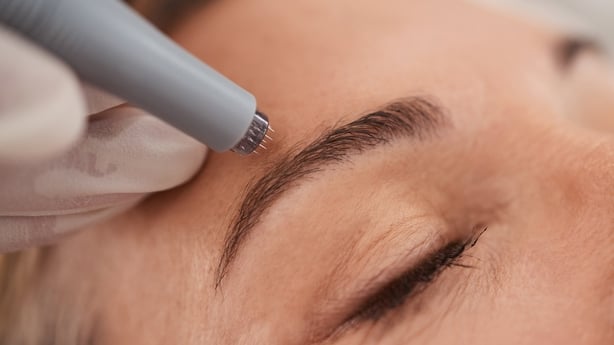
"Each microneedling appointment will last for approximately 40 minutes. Initially, I will carry out an assessment/consultation phase of the appointment where I assess the skin and decide the depth of the needles - these can be adjusted depending on the individual and what they require.
"After this, I prepare the skin for the treatment; this involves cleaning and disinfecting the skin and applying a numbing cream, if needed. After this, the treatment is carried out by moving the device in deliberate motions across the skin.
"Following this, post-treatment care is applied/ advised. There are both post-procedure balms and masks available to help assist the skin in its recovery."
Can factors, such as periods, impede the progress of microneedling?
"Yes, progress with microneedling is not just about the treatment itself. Internal and external factors can absolutely slow results or temporarily worsen the skin, and hormonal fluctuations (like your period) are a big one. Inconsistent aftercare and skincare, such as skipping SPF, are also very important and if not followed can limit or impede results."
So, how have I found the experience thus far?
Since starting this treatment, I have come to realise that this is not a ‘quick fix’ but rather requires commitment and discipline.
When I first considered microneedling, I, rather naively, felt like I had found the ‘perfect’ solution to tackle those unwanted acne scars and stubborn dark spots altogether. As I sat down to book my consultation, clicking the ‘confirm appointment’ icon, I really felt like this would be a one-stop shop to fixing my skin.
However, microneedling is an investment in yourself and your skincare routine. Multiple sessions are often required, usually every four to six weeks, and the most effective results come when used in conjunction with other treatments and products, as directed by your practitioner.
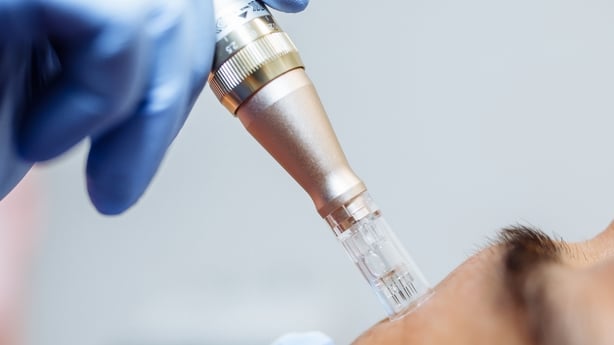
In fact, carrying out this process under the guidance of an experienced practitioner is key. Whilst microneedling is deemed to be safe, it should be performed by a licenced professional, using sterile equipment in a sanitary clinical area.
It is also important that you speak to a licensed professional to ensure you are eligible for this procedure and your skin is compatible.
Personally, I was pleasantly surprised by my experience. In my opinion, the procedure itself was not painful and having that initial consultation whereby my questions were answered and everything explained really put my mind at ease.
In the hours after my appointment, I usually feel as though my skin is tightening, whilst my skin tone deepens in colour. If I were to compare this feeling to another, I would say it creates a similar sensation to sunburn, whereby the skin becomes warm and delicate.
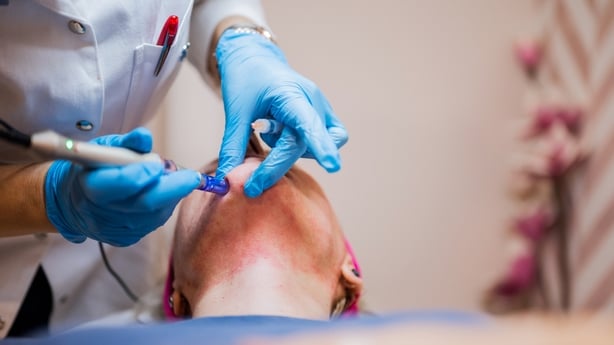
Whilst you can certainly feel and see the impact of the treatment, it is not painful and is soothed by the aftercare treatment provided by your practitioner. Your practitioner will also look at your current skincare routine and will advise on any short-term adjustments that need to be made in the immediate days after your appointment to encourage the best results.
I try to book my appointments for a Saturday, on a quiet weekend when I know I can work from home on a Monday. The timing of your appointment is something I would recommend you consider, as your skin will usually deepen in redness, and make-up should be avoided.
Personally, I feel more comfortable having a few quiet days to myself after my treatment before I have to go back into the office.
Have I noticed any results?
Especially after my second session, I noticed my skin looked brighter and lighter, it felt plumper, and the dark spots left behind from acne scarring had certainly reduced in colour intensity.
I felt pleased with my results, aware that it would take time but hopeful that I was moving in the right direction.
Then, after my period and a skin flare, I found new breakouts had left their mark on my skin, and the purple spots had deepened once more. Afraid I was reverting back on my progress, I contacted nurse Emma to ask her if periods could impede my progress.
As stated above, the answer is sadly: yes. Internal and external factors can absolutely slow results or temporarily worsen the skin.
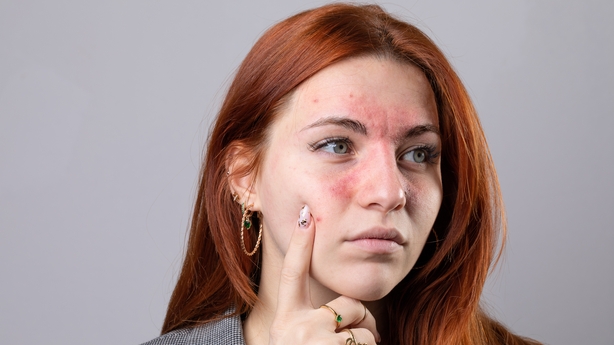
Whilst it is certainly a relief to know the facts, it also cements the realities of skincare, especially if you have sensitive or temperamental skin.
Skincare is a commitment, a discipline and requires patience and consistency, especially if you incorporate tools such as microneedling.
As I approach my third appointment, I feel my skin is improving from the set back caused by my last period, and I am eager to see how this next treatment will help.
My skincare routine has become one of my most time-consuming yet favourite activities and one that certainly now involves microneedling.
The views expressed here are those of the author and do not represent or reflect the views of RTÉ
