


Maintaining the motivation to hit the gym or get out for that weekly 5k you promised yourself can be tough, not least after the optimistic rush of January has passed, and the weeks of wet and stormy weather.
But a sweaty weights session or run isn't the be all and end all when it comes to fitness. In fact, 'exercise snacking' might be one way to counteract the risk of chronic diseases as we get older.
Dr Ciara McCormack, Assistant Professor of Exercise and Health Science in Maynooth, joined Drivetime to discuss the negative health effects of prolonged sitting and how exercise snacking can help.
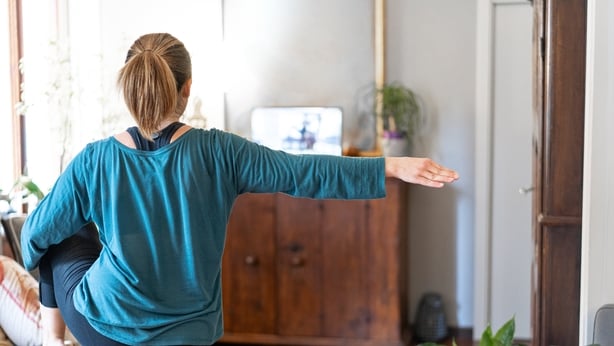
She describes exercise snacking as "small bite-sized bursts of movement scattered throughout the day", adding that the ease of it comes from fitting it into whatever available time you have, rather than carving out an hour or two in your day.
As for intensity, McCormack says that research shows that higher intensity is more ideal but it "depends on where the person is at".
"The underlying message is any movement is better than none. Even if it feels more light or moderate intensity, that can be beneficial and the important thing is that we accumulate that over the course of the day and on a regular basis."
Research shows that "as little as 30 seconds of movement can be beneficial, particularly at that higher intensity", she adds. But don't expect it to fully replace a brisk walk, some weight training or other forms of exercise.
"It's not just something that we do once", McCormack adds. She explains that it depends on what kind of movement you're doing, whether it's strength movements like sit to stand which will improve muscle strength and balance, or movements that will raise your heart rate such as climbing the stairs quickly, which will improve your cardiovascular and metabolic health.
She suggests doing a mix of casual exercise snacking and structure it with dumbbell or exercises at certain points of the day.
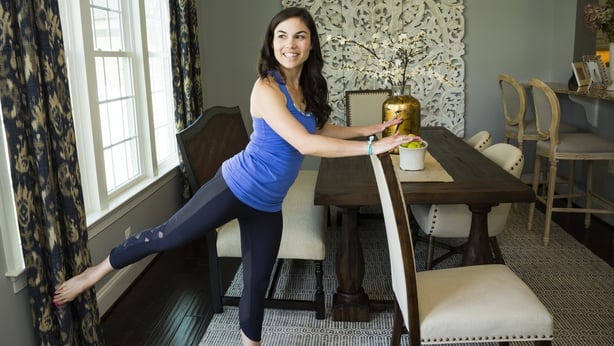
The main focus for this, she says, is to reduce the amount of time we spend sitting per day. Some experts have suggested that sitting is the new smoking, is that too far of a jump?
According to McCormack, it isn't.
"If we spend prolonged amounts of time sitting, or sedentary behaviour as we call it, it is an independent risk factor for chronic disease", sh explains.
"When we sit for long periods of time, our muscles start to switch off, our blood flow slows down, our blood sugars can stay elevated and this can over time increase our risk of heart disease, type 2 diabetes, poor circulation.
"Really, it is as detrimental as smoking", she says, adding that any movement that can "interupt that sitting behaviour" is beneficial.
