


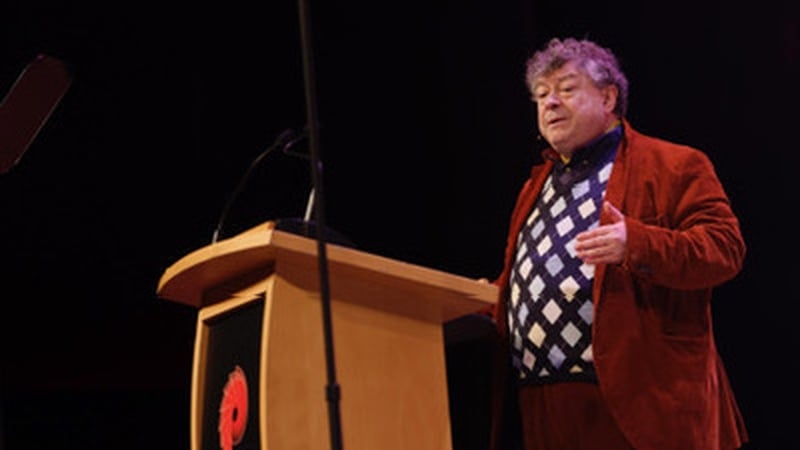

"One of the things that surprised me when I had children was how early they develop a sense of humour," says British advertising executive Rory Sutherland.
"It's something innate, and it's evolved; it's not learned in any way, and therefore, it must serve some real advantage."
The author of Alchemy: The Power of Ideas That Don't Make Sense was at the Pendulum Summit in Dublin's Convention Centre to speak about the power of creative thinking and empathy in business strategy.
"It's a form of neurodiversity, comedy," he continues. "It's a different way of looking at the world, and there's some wonderful academics now who are arguing that neurodiversity isn't a bug, it's a feature.
"That, actually, in an evolutionary environment, one of the most dangerous things you could do is have a group of people who all saw the world in exactly the same way."
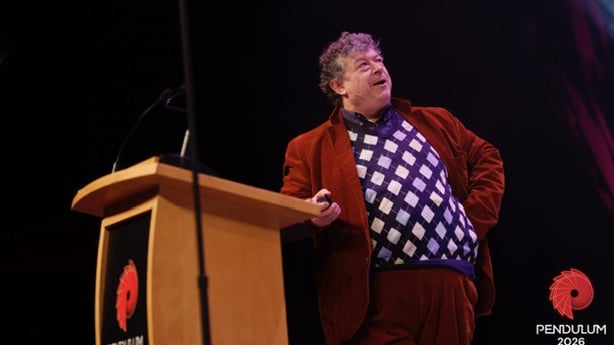
According to Sutherland, although many businesses tout the importance of innovation, few will invest their time and money in the unpredictable process of creativity.
Without it, though, he insists that leaders are destined to encounter "ridiculous feedback loops and collective insanity".
Neurodiverse thinking, he says, acts as the "control rods in a nuclear reactor", preventing things from overheating. For this reason, he believes we need to not only cherish this diversity but, encourage it.
"There's an argument that these things are only problematic because we've designed the world for somebody else," he adds. "We're increasingly designing a world around some very narrow requirements."
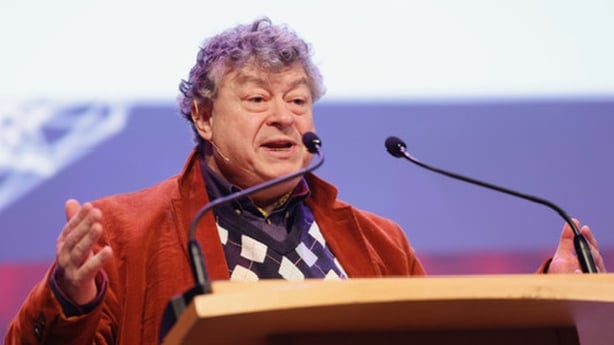
If you have a business or organisation that you want to change for the better, Sutherland believes you should embrace "irrational ideas" and "optimise for surprise".
"Creative people are waiting to be lucky," he posits. "They don't want to start work until they've had a flash of inspiration or a really interesting insight. Consequently, the worst thing you can do as a creative person is start work straight away."
In terms of corporate behaviour, the Vice Chairman of Ogilvy UK suggests that the best thing a team can do is embrace uncertainty and allow time to ask new questions and develop new metrics.
"The quality of being comfortable in a state of uncertainty or ambiguity is a strength," he insists.
Although it is often believed that innovation comes with a large price tag, Sutherland insists that small changes can make the biggest difference.
This can be through thoughtful design that assists customers in a practical way or a visual reassurance that removes anxiety from the user's experience.
British Gas, for example, added a torch button to their app, allowing users to see their meters better as they record their latest reading.
These "little moments of empathy", which don't come at a financial strain, are what make your brand memorable, leaving customers with a positive association.
Reverse benchmarking is another suggestion that Sutherland makes for business owners.
For example, rather than looking at the 10 things your competitors do well and trying to replicate them, look at the two things they're overlooking and fill that gap in the market.
"The intangible value is every bit as important as the functional value," he insists, noting that those in hospitality will already know the power of things that can't be measured through data, such as atmosphere and thoughtful customer service.
"In an age of AI, really good human skills, customer-facing people skills are going to be at a premium. Arguably, all the nerdy, technocratic jobs - for which universities were preparing people - are going to disappear," he says, smiling wryly.
"Whereas the art of being a charming barista is going to become more and more valuable."
