


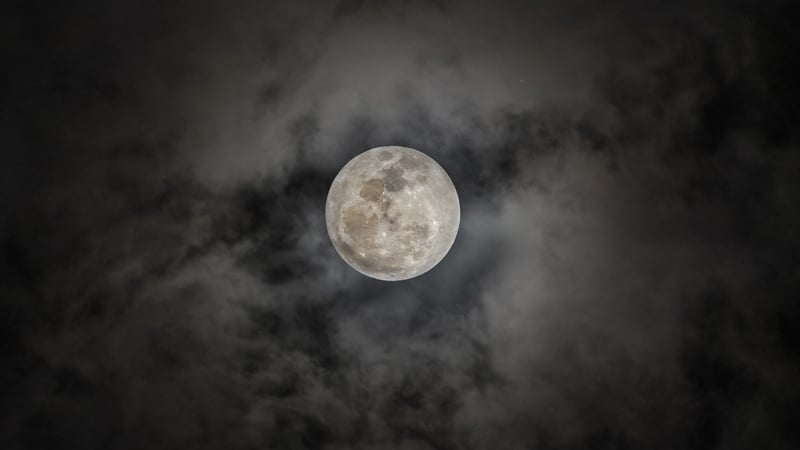
There's something special about spotting a full moon in the night sky. While some will associate it with mythical legends of werewolves, and others will swear by old wives' tales of babies being born thanks to the moon's gravitational pull, the lunar phases are always worth noting.
In 2026, we will enjoy an incredible 13 full moons:
- Wolf Moon - 3 January (supermoon)
- Snow Moon - 1 February
- Worm Moon - 3 March
- Pink Moon - 2 April
- Flower Moon - 1 May
- Blue Moon - 31 May
- Strawberry Moon - 30 June
- Buck Moon - 29 July
- Sturgeon Moon - 28 August
- Corn/Harvest Moon - 26 September
- Hunter's Moon - 26 October
- Beaver Moon - 24 November (supermoon)
- Cold Moon - 24 December (supermoon)
Blue Moon
As well as having three supermoons, this year will enjoy a Blue Moon in May.
According to NASA, the moon goes through eight lunar phases - a cycle that repeats about every 29.5 days. This sometimes falls short of the days in a calendar year, and so two full moons appear in one month.
As the common phrase 'once in a blue moon' suggests, this is not an annual event but happens roughly every two and a half years.
Moon Names
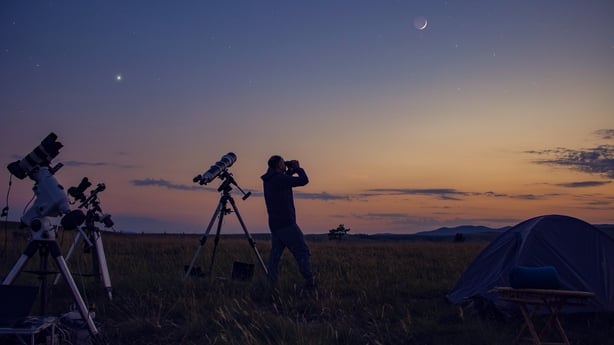
Sadly, despite what the names suggest, star-gazers won't see the shape of a wolf or flower when they look up to the sky during full moons.
Instead, these names are believed to have largely originated from Native Americans who used the lunar phases as a way of time-keeping. The number of names would differ slightly between tribes, but many assigned either 12 or 13 full moons to the year.
According to The Old Farmer's Almanac, it's thought that January's Wolf Moon was named as such because wolves were more likely to be heard howling at this time, while February's Snow Moon got its title from the likelihood of snow.
March's Worm Moon was believed to have originated with the appearance of earthworms in spring, but other research suggests the name refers to beetle larvae, which worm their way from the thawing bark of trees at this time.
April's Pink Moon corresponded with the blooms of a colourful wildflower native to eastern North America - Phlox subulata, commonly known as "moss pink."
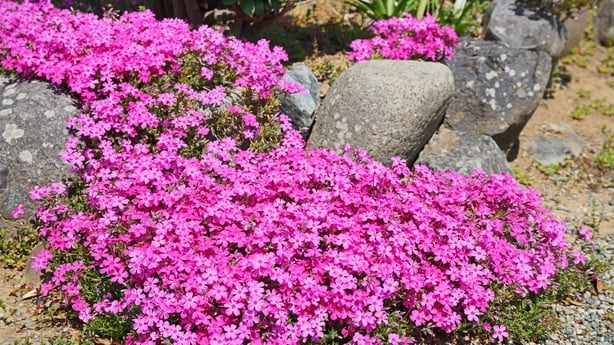
Similarly, May's Flower Moon is inspired by the fresh blooms of springtime, while June's Strawberry Moon was named to mark the ripening of "June-bearing" strawberries.
July's Buck Moon celebrates the antlers of male deer (bucks) being in full-growth, August's Sturgeon Moon refers to the giant lake sturgeon that were readily caught in late summer, and September's Corn Moon heralded a time to harvest corn in much of the northern United States.
November's Beaver Moon likely referred to the practice of trapping beavers for their warm pelts in winter, while December's Cold Moon alludes to the drop in temperature.
Every two and a half years or so, we have a second full moon (known as a Blue Moon) that will appear within a calendar month.
Lunar phases
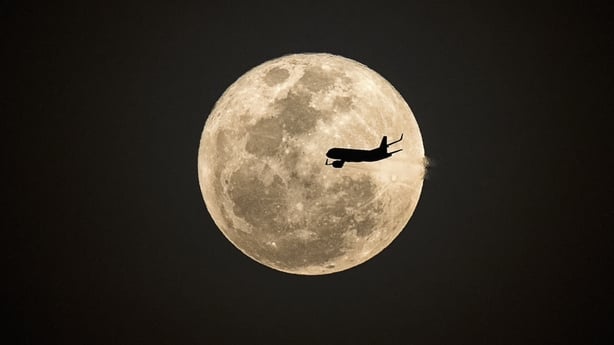
Put very simply, we see the moon thanks to the light of the sun. While half of the moon is brightly sunlit, the other half is in the dark. According to NASA, we always see the same face of the moon from Earth - the "lunar nearside."
Throughout the month, as the moon rotates and orbits, day and night occur on different parts of its surface, meaning that we see it go through its lunar phases.
Over the course of about 29.5 days, the moon will go through eight lunar phases: new moon, waxing crescent moon, first quarter moon, waxing gibbous moon, full moon, waning gibbous moon, last quarter moon, waning crescent moon.
The 'full moon' phase is as close as we come to seeing the sun's illumination of the entire day side of the moon.
For more information, check out NASA's daily moon guide.
