



Dublin entrepreneur and 'green witch' Feebee Foran speaks to Sínann Fetherston about the success of her skincare line, Forager.
"I work with nature all day, that's my whole world," Feebee Foran tells me over the phone, explaining how a fun hobby turned into a full-time career.
"I've always had a fascination with nature since my childhood. During COVID, when we all got let go from our jobs - that was great craic - people were making banana bread and sourdough, and I started making potions in my kitchen."
Collecting plants on her daily walks with the dog, Sika, Feebee says she put her knowledge of botanicals to use and began sharing the results of her work on social media.
Before long, requests for balms that would treat everything from arthritis to psoriasis began to flood in, leading the potion maker to build a beauty empire.
"I started selling in farmers' markets, and now we're stocked in over 100 stores around the country, we're in 12 States [in America], and we opened in the UK last week," she lists. "It's been a trip!"
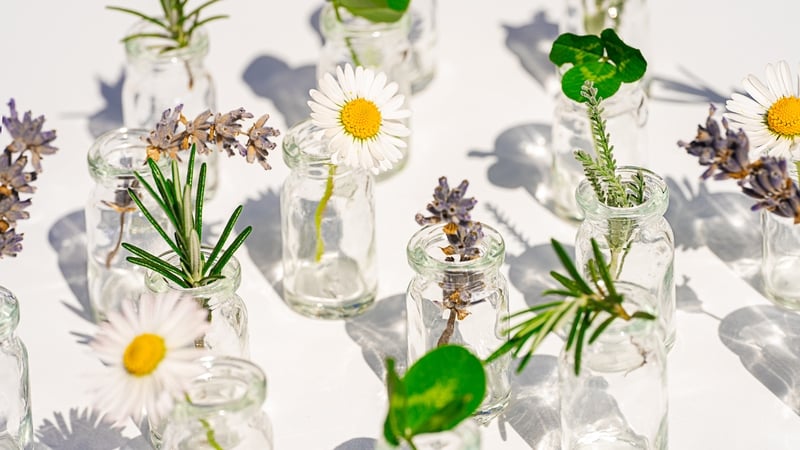
Starting with the small but mighty daisy, Feebee has created a range of natural products, relying on resources that are abundant - but often overlooked - in Ireland.
"The Daisy Balm is made of wild Irish daisies," she explains. "It's a plant that everyone can identify - you don't have to be a forager to identify a daisy. They're in our gardens, we put the lawn mower over them, and we curse them. Realistically, they're actually one of the most potent plants that we have in this country."
"Daisies were known throughout history as the poor man's arnica because they do the exact same thing - they treat bites, stings, bruises, and fading freckles. The saying that we have, 'fresh as a daisy', comes from the fact that maidens in Medieval times would have used daisies to wash their faces because they can help to take dead skin cells."
"Nothing that I forage for my skincare is something rare," she adds. "They're plants that grown in abundance, plants that people refer to as weeds. I see these plants as the most untapped natural, sustainable and renewable resource that we have on this island."
Made from ethically and sustainably hand-foraged daisies in Dublin and the surrounding countryside, the Daisy Balm became a hit with customers thanks to its fast-acting ingredients.
The next product to get a cult-following was the F.T.X - Face & Eye Elixir (previously called Fotox), made with wild-foraged plant extracts from the Dublin Mountains.
"Rosehip seed oil is great for dark circles, puffy eyes, anti-wrinkles, plumping out lines," she explains. "We live in a climate where our hedgerows heave with rosehips."
"There's no grease in it, there's no fat in it," she says of the elixir. "It's really, really light and almost serum-y, so people use it around their eyes, anti-wrinkle areas, their trigger spots. It also acts as a really lovely primer for your make-up to sit on."
Reflecting on her methods and recipes, the entrepreneur says that much of her work can be credited to the generations of women who came before her.
"Women would go to the earth to try and heal people," she muses. "A lot of this has been passed down through verbal communication, learning about what plants can be used for what."
"My whole mission is to take what I learn in herbalism, which is science-backed, and apply it to history," she adds. "The stuff that women would have used - the midwives, the carers and the witches of the land before there were any doctors.
"I call myself a green witch because I felt that the world witch became such a dirty word because people didn't like women having knowledge and power, and they knew how to fix people. That was a powerful thing."
Despite her love for holistic treatments, though, the Dublin woman insists that everything is best used in moderation, and that extremes are rarely the answer: "By no means would I ever tell anyone to throw out their modern medicine," she says.
Instead, she wants to encourage people of all ages to get back to nature in simple ways, foraging ethically in their area.
"I see the shift in people who are interested," she says of her foraging workshops. "A lot of the people who come along are in their 20s and younger.
"I mean, when I was in my 20s, I was out in discos every night," she laughs. "It's completely different now, they're going for saunas and yoga and Pilates - it's much more grounded and slower and sustainable."
To get started in foraging, Feebee says you just need a camera and some common sense: "If you don't know what something is, don't pick it. Look at it, smile at it, say hello to it, but don't pick it, touch it or stick it in your gob!"
Start simply by looking for five plants you can identify while you're out on your walk, and one that you can't name. Take a photo (no need to pull anything from the ground) and look it up online to learn more about it. From there, keep going! Your daily walks can become a treasure hunt.
To learn more about foraging and to check out the Forager beauty products, visit Forager.ie.
